
Last updated September 23, 2026
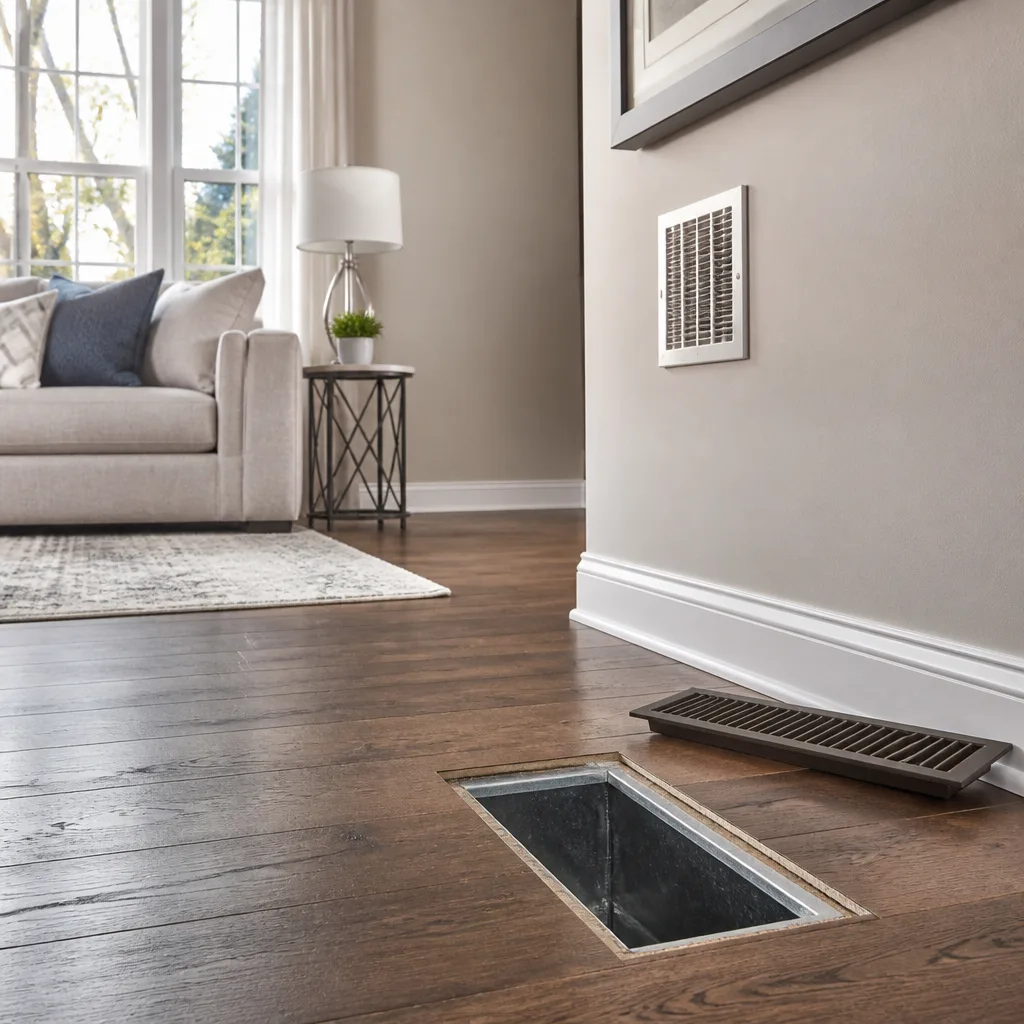
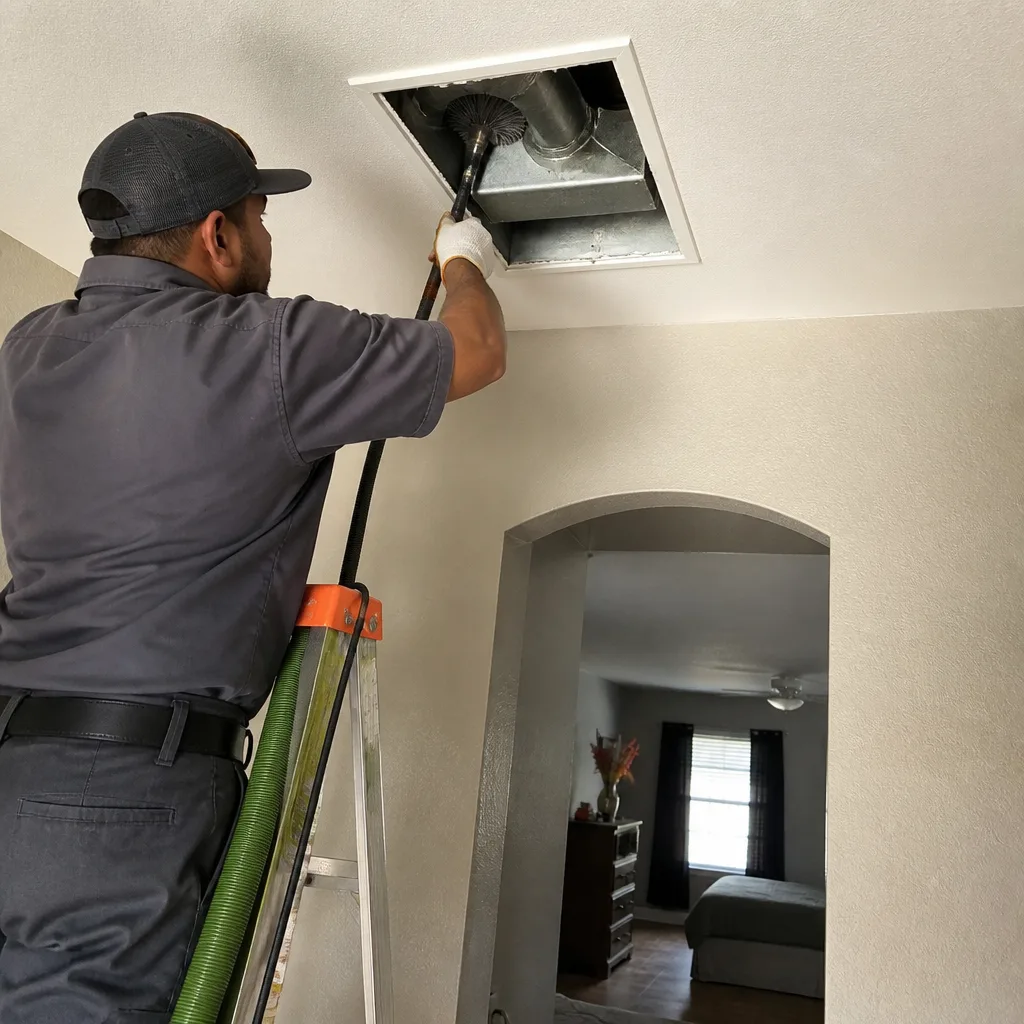
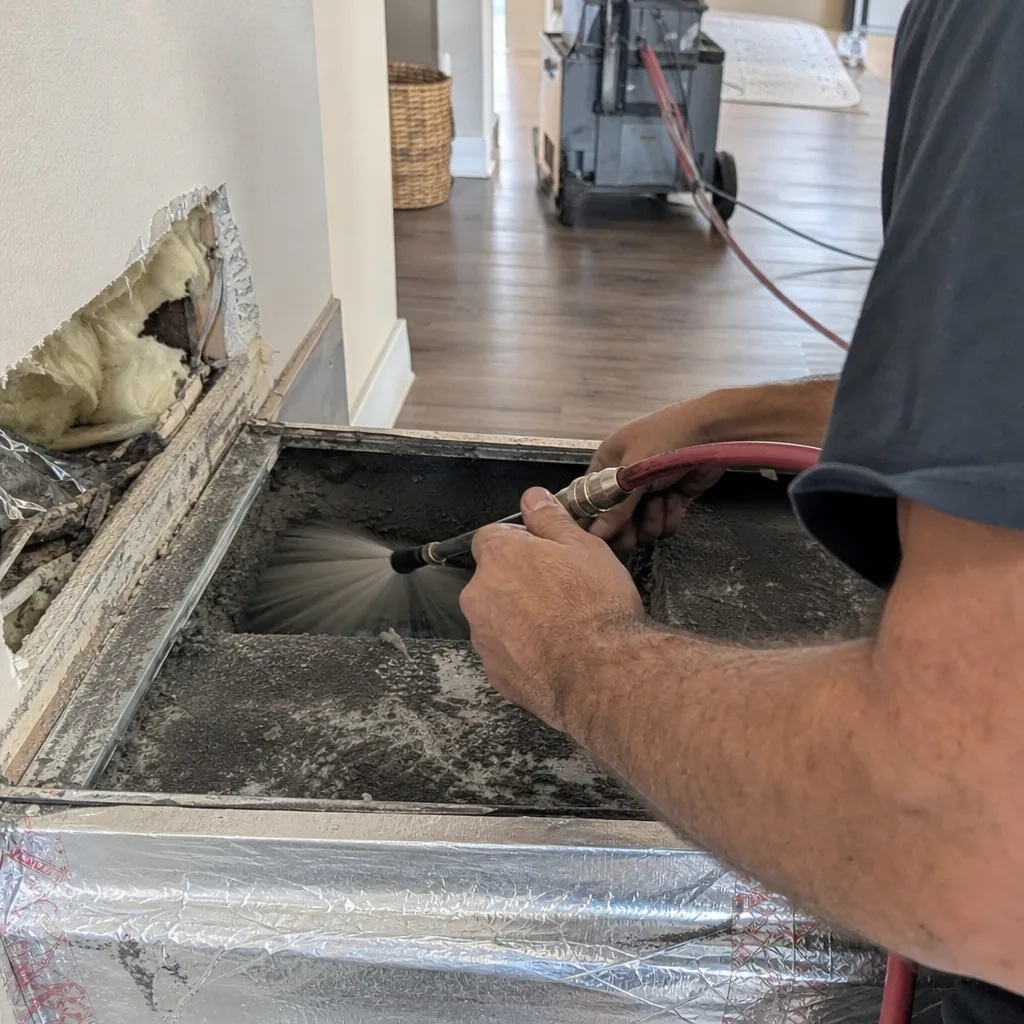
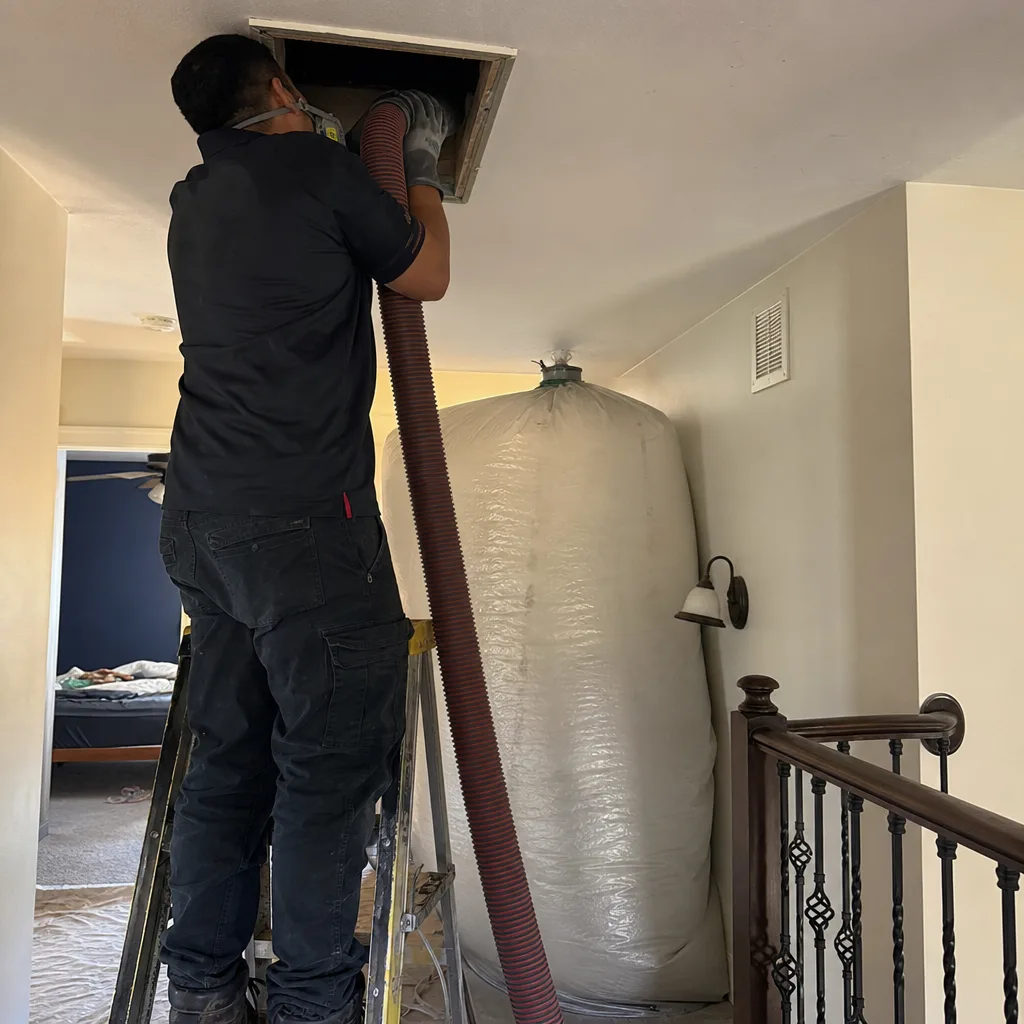
Whole-system duct and dryer vent check with before-and-after photos - you see exactly what came out of your vents
That "$99 whole-house special" is a bait ad - the real number appears once they are in your hallway, or the "clean" is a shop-vac at the register. We photograph the inside of your ducts before and after instead.
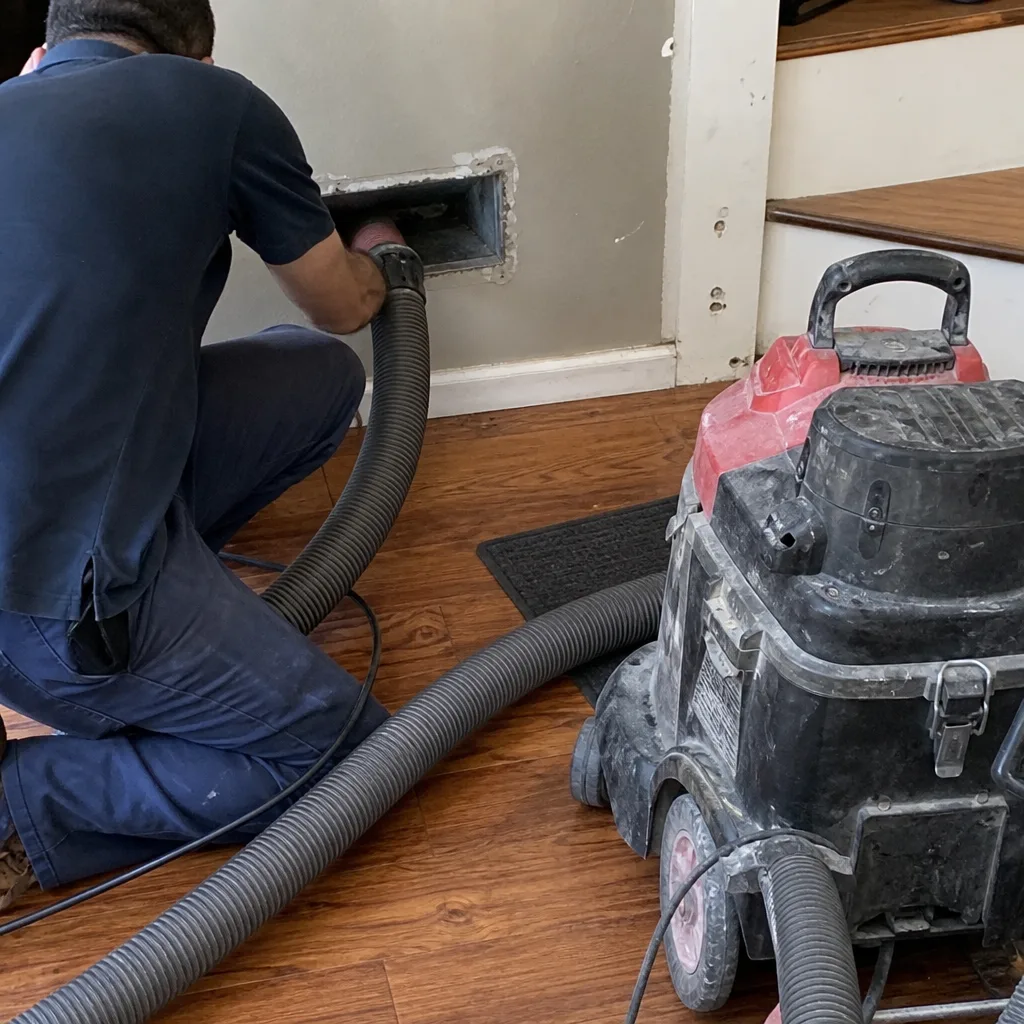 Before
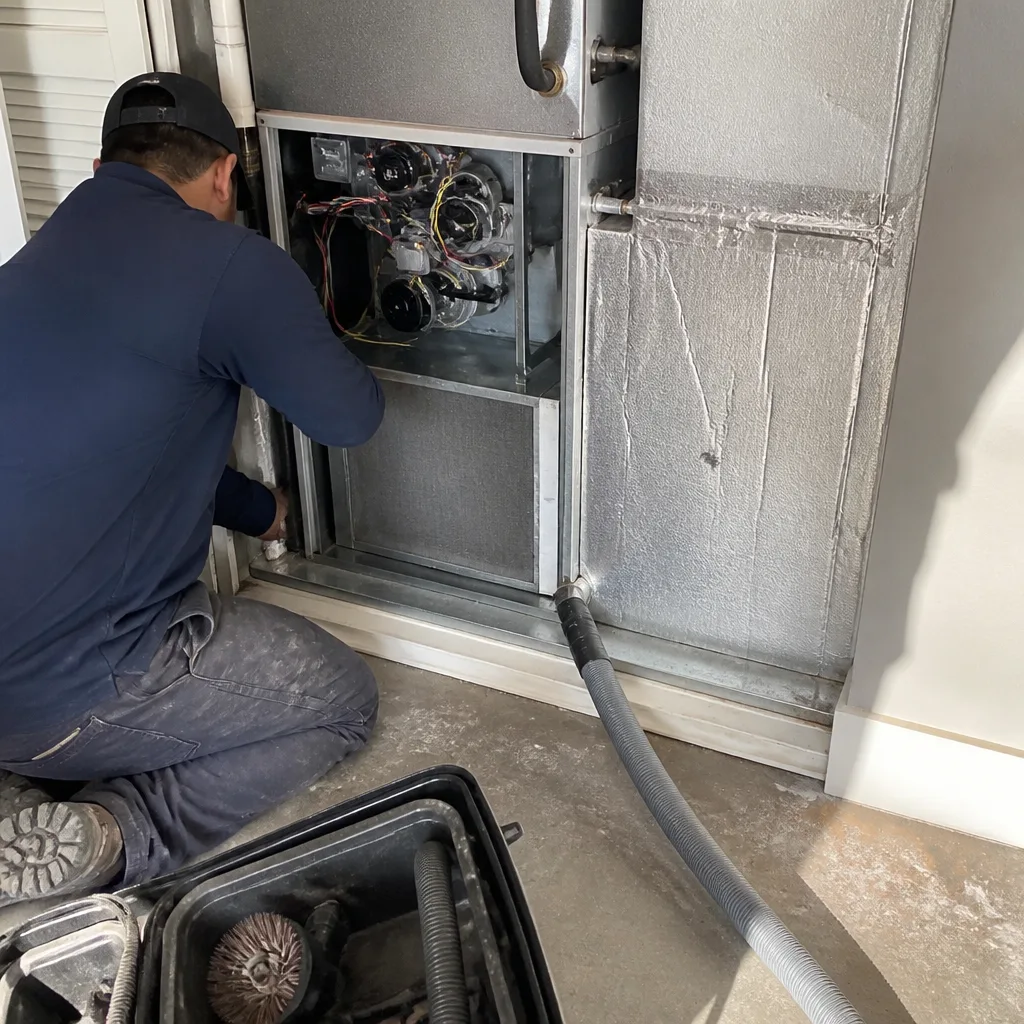 After
After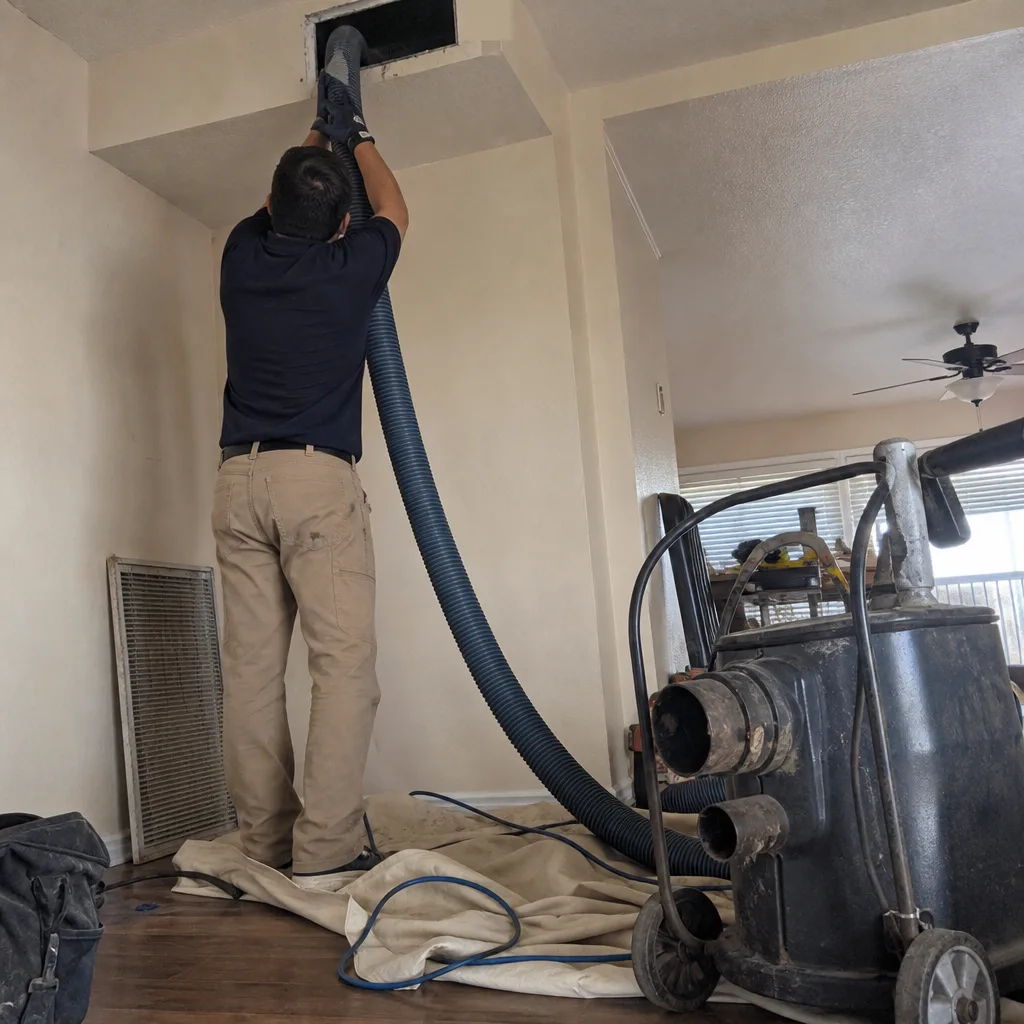 Before
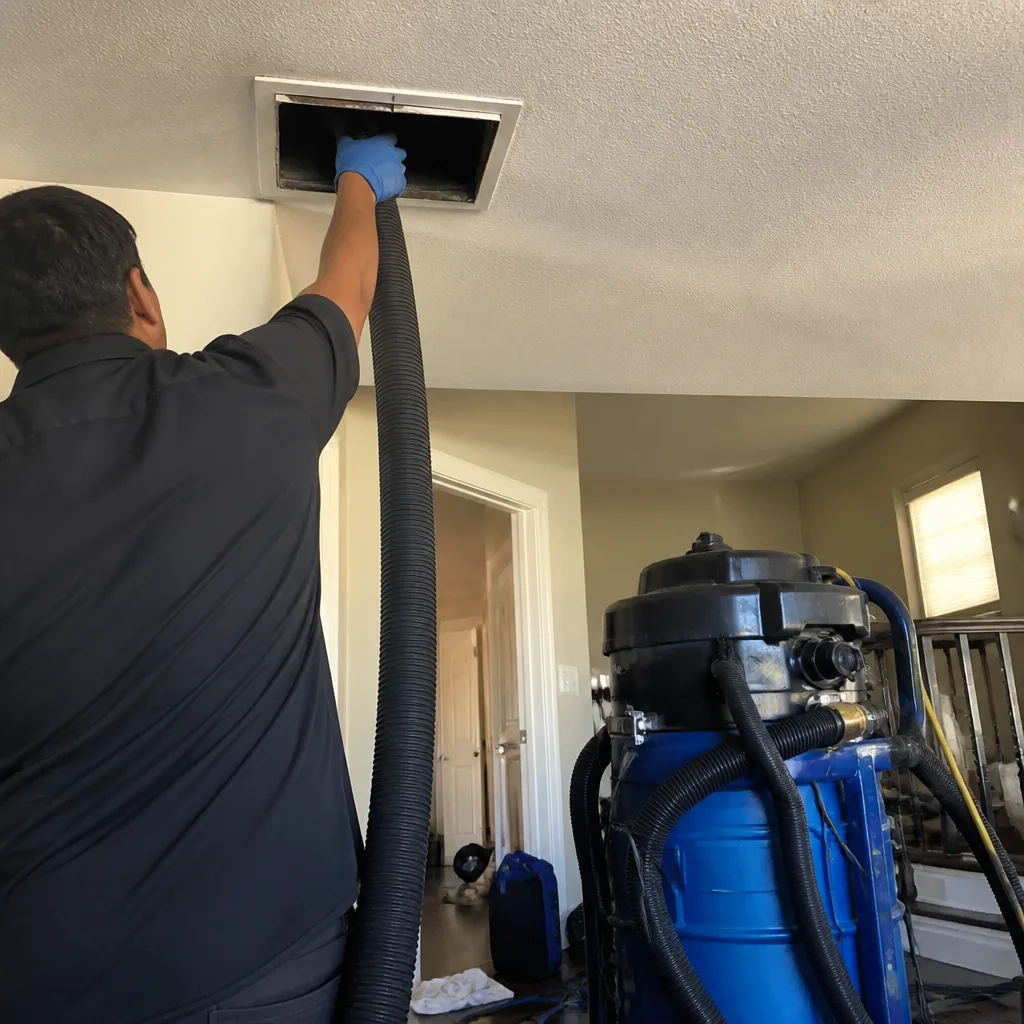 After
After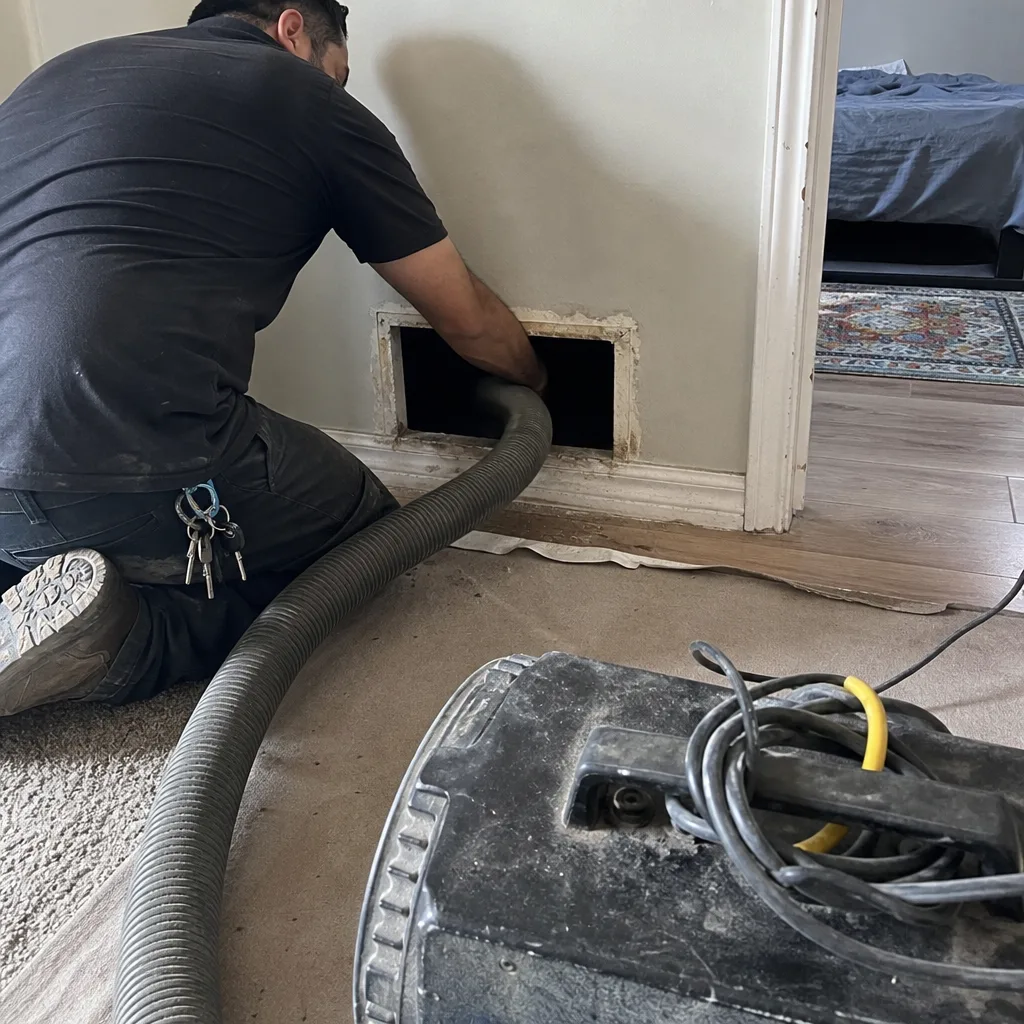 Before
 After
AfterAir Duct Cleaning Warning Signs: A Fort Worth Homeowner’s Reference Guide
Here’s what most duct cleaning articles won’t tell you: dust on your supply registers is not a warning sign that your ducts are dirty. It’s a warning sign that your filter is undersized, misseated, or the wrong MERV rating for your system. Clean the ducts and the dust returns in six weeks, because the root cause was never in the ductwork. In Fort Worth, where HVAC systems run hard from March through November, we’ve seen homeowners pay for full cleanings when the real problem was a 1-inch filter jammed into a 4-inch media cabinet, or a filter grille left unlatched after a tenant change. For The Complete Guide to Air Duct Cleaning in Fort Worth and related resources, see our blog; this guide maps each visible symptom to its actual mechanical cause, so you can describe what you’re seeing accurately before any technician arrives. You’ll learn how to inspect your own registers with a flashlight and phone camera, how to distinguish mold from ordinary dust accumulation, and how to spot duct damage that cleaning alone cannot fix.
Quick Answer
The warning signs that actually indicate dirty ductwork in Fort Worth homes are: visible debris buildup inside supply registers that persists after filter replacement, musty odors that strengthen when the blower cycles on, uneven airflow between rooms with no damper adjustment, and debris blowing from vents after recent construction or remodeling. Dust on the outside of registers, brief odors at startup, or single-room temperature differences typically point to filter, equipment, or envelope issues, not duct contamination.
Table of Contents
- Dust on Registers: Filter Problem or Duct Problem?
- Musty Odors: Mold vs. Dust Accumulation
- Uneven Room Temperatures and Airflow
- How to Inspect Your Own Ductwork
- Warning Signs of Duct Damage, Not Just Dirt
- Allergy Symptoms and Indoor Air Quality
- Post-Construction Debris and Contamination
- Decision Tree: What Your Symptom Means
BeforeAfterDust on Registers: Filter Problem or Duct Problem?
We start here because this is the most common misdiagnosis in Fort Worth homes. A homeowner notices gray dust collecting on the fins of a supply register, assumes the ducts need cleaning, and calls a contractor who is happy to oblige. Six weeks later the dust is back.
Here’s what is actually happening. Your HVAC system’s filter is the primary barrier between return air and the blower cabinet. When that barrier is compromised, unfiltered air bypasses the filter and carries particulate through the entire system, including the supply ducts. The dust you see on the register is often the least of it; the blower wheel, evaporator coil, and secondary heat exchanger are collecting the same debris where you cannot see it.
The three most common filter failures we document in Fort Worth:
- Wrong MERV rating for the system. A filter that is too dense for the blower’s rated static pressure creates high negative pressure in the return plenum, which pulls unfiltered air through gaps around the filter frame. The filter looks clean because air is going around it, not through it.
- Improper seating or size. A 16x25x1 filter in a 16x25x4 media cabinet rocks in its track, leaving a 3-inch gap. A filter grille with a broken latch sits a quarter-inch proud of the gasket. In either case, the filter is present but not functional.
- Missing filter after service. We have photographed blower cabinets in Ridglea and Tanglewood where the filter was simply absent, sometimes for months after another contractor’s service visit.
When dust on registers is accompanied by a clean or lightly loaded filter, suspect bypass. When the filter is heavily loaded and seated correctly, but dust still accumulates rapidly, suspect a return duct leak downstream of the filter, pulling air from an attic or crawl space. This is common in Fort Worth homes built between 1985 and 2005, where flex duct connections to the return plenum were often sealed with tape that has since degraded.
The self-check: remove the register, wipe the duct interior 12 inches back with a white cloth, and replace the filter with a correctly sized MERV 8 pleated filter. If the cloth shows heavy debris and the register re-dusts within two weeks with the new filter properly seated, you have a return leak or duct contamination worth professional evaluation. If the register stays clean, you just saved the cost of an unnecessary cleaning.
Air Duct Cleaning in Fort Worth addresses contamination that persists after filter and envelope issues are ruled out.
Musty Odors: Mold vs. Dust Accumulation
Not every dark stain in a duct is mold. In Fort Worth’s climate, where cooling season runs from late March into November, we see two distinct phenomena that homeowners routinely confuse.
Surface dust accumulation is exactly what it sounds like: a layer of particulate, skin cells, and fiber that clings to duct walls. It darkens over time, especially near dampers and elbows where turbulence deposits heavier particles. It may smell faintly earthy when disturbed, but the odor does not intensify when the blower cycles on. It wipes away with a damp cloth and does not recur rapidly if the underlying moisture source is absent.
Active biological growth requires sustained moisture, typically above 60% relative humidity at the duct surface. In Fort Worth, this most often occurs where supply ducts pass through unconditioned attic space and the vapor barrier is compromised, allowing humid attic air to contact the cool duct surface. Condensation forms, and within 48 to 72 hours in summer conditions, mold colonies establish. The odor is sharp, musty, and unmistakably stronger when the blower first engages and pushes air across the growth site.
Here’s how to tell them apart with a flashlight and your phone camera:
- Remove the register and photograph the duct interior with flash, holding the camera 6 to 8 inches from the surface.
- Zoom the image. Dust accumulation appears as a uniform, matte layer with no dimensional texture. Mold growth shows as raised, branching, or spotted structures with slight sheen under direct light.
- Touch the surface with a cotton swab. Dust transfers readily and evenly. Mold may resist, or may show green, black, or gray color on the swab tip.
- Note the location. Growth on the top surface of horizontal duct, or at the 6 o’clock position of vertical duct, indicates moisture deposition patterns. Dust accumulates more randomly.
Fort Worth’s clay soils and seasonal foundation movement create another moisture pathway: slab ductwork, common in 1960s through 1980s construction in Wedgwood and Benbrook, can crack and draw groundwater. The odor is musty but may carry a mineral or earthy note distinct from attic condensation. Cleaning does not address the moisture source, and growth returns.
We do not recommend DIY biocide application in ductwork. The EPA registers specific products for HVAC use, and misapplication can distribute chemical residues through the living space. If you photograph active growth, the next step is professional evaluation of both the contamination and the moisture source. CleanRun Air Duct Cleaning Fort Worth home includes moisture source identification in every assessment.
Uneven Room Temperatures and Airflow
A bedroom that runs four degrees warmer than the hallway is not automatically a dirty duct problem. In our Fort Worth work, we trace uneven temperatures to five causes, and duct contamination is rarely the primary one.
Duct leakage is the most common actual duct issue. A disconnected flex duct in an attic, a torn collar at a branch takeoff, or a failed seam in galvanized trunk line dumps conditioned air into unconditioned space before it reaches the register. The room starves; the attic or crawl space gets cooled. We pressure-test duct systems with a Duct Blaster (a calibrated fan and manometer set that measures leakage to outdoors) and regularly find 20% to 35% total leakage in Fort Worth homes, well above the 10% threshold where energy waste becomes significant.
Blockage is the second. A duct run partially collapsed by a storage box in the attic, or occluded by a damper that has slipped closed, delivers reduced airflow. A phone camera inspection of the register boot often reveals the obstruction.
Oversizing or undersizing of the duct run relative to the room load is a design issue, not a cleanliness issue. A 6-inch flex duct serving a west-facing Fort Worth bedroom with original single-pane windows and minimal attic insulation cannot deliver sufficient airflow regardless of how clean it is.
Equipment problems include a failing blower motor, dirty evaporator coil, or refrigerant charge issue that reduces total system capacity. The entire home may trend warm, but the most exposed rooms fail first.
Thermostat location and solar gain are envelope and control issues. A thermostat in a central hallway cannot respond to a south-facing room with inadequate window shading.
The diagnostic sequence: check the filter, check all registers for full opening, check the attic for visible duct damage, then call for pressure testing if the problem persists. Cleaning a duct that is leaking 30% of its air solves nothing. HVAC Cleaning in Fort Worth addresses the full system, not just the duct runs.
How to Inspect Your Own Ductwork
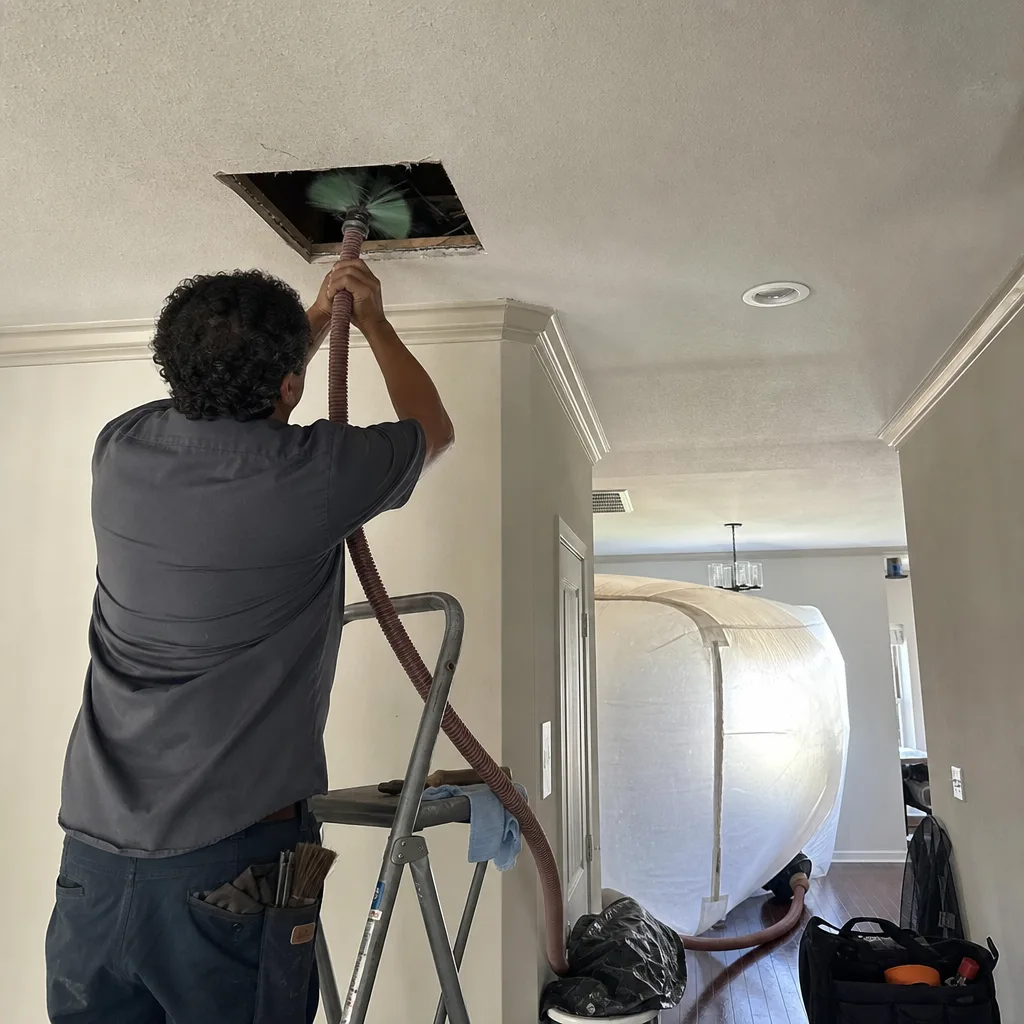
You do not need specialized equipment to perform a basic inspection that will save you from paying for unnecessary work or help you describe symptoms accurately to a contractor. Here’s the procedure we recommend to Fort Worth homeowners before they call us.
Tools Needed
- Flashlight with fresh batteries (phone flashlight is usually insufficient for deep duct views)
- Smartphone with camera and flash
- White paper towel or cloth
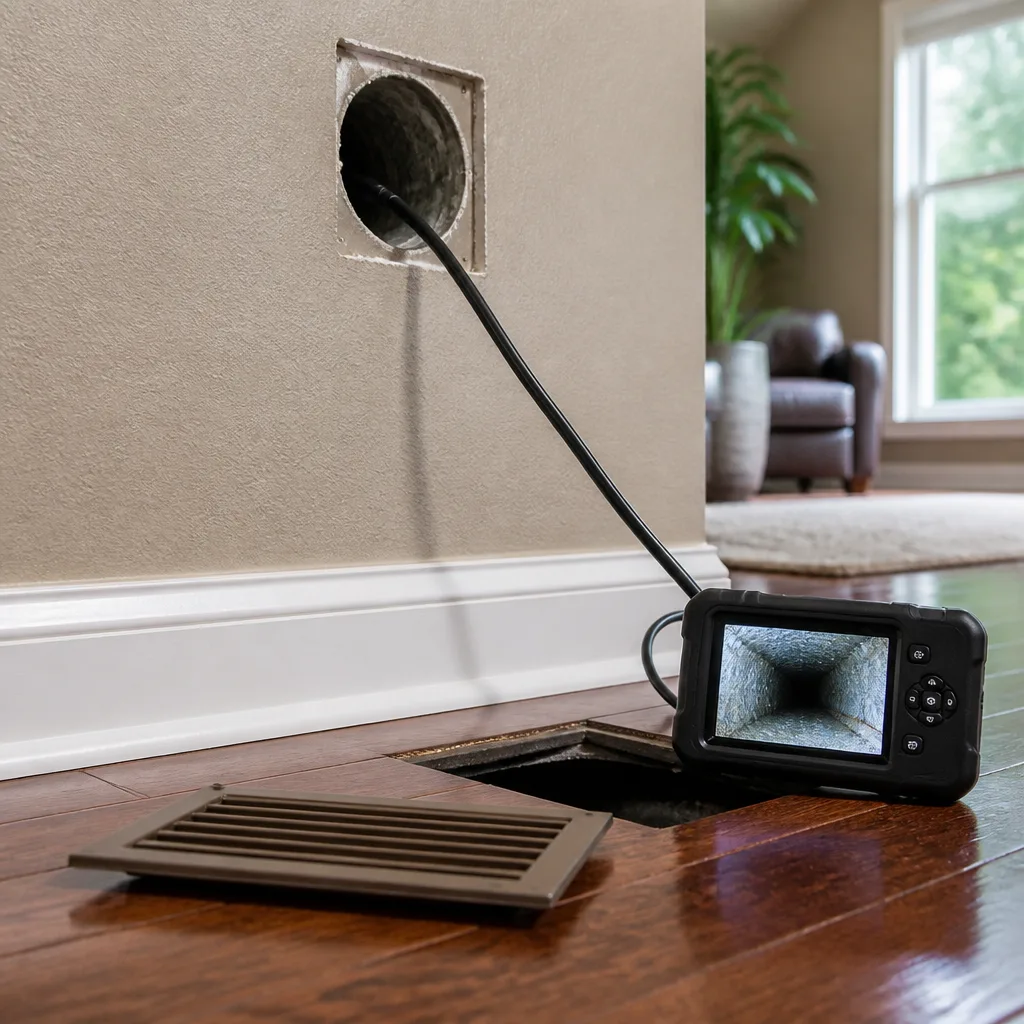
- Long-handled mirror or borescope if available (not required)
- Step ladder for ceiling registers
Step-by-Step Inspection
- Turn the system off. You want still air for photography and no debris blowing during inspection.
- Start with the return registers. These are the largest, usually on walls or in hallways, and they show the condition of air entering your system. Remove the grille, photograph the duct throat and any visible duct beyond, then wipe the surface with your white cloth. Note the debris color and quantity.
- Inspect the filter location. Photograph the filter in place, then remove it and photograph the filter slot. Look for gaps, bypass channels, or evidence of air movement around rather than through the filter. Note the filter dimensions and MERV rating printed on the frame.
- Move to supply registers in each room. Remove, photograph, wipe, and document. Compare debris levels between rooms. A supply register with heavy debris when others are clean suggests a localized problem: nearby construction, a return leak drawing from that space, or a room that is rarely occupied and thus rarely cleaned.
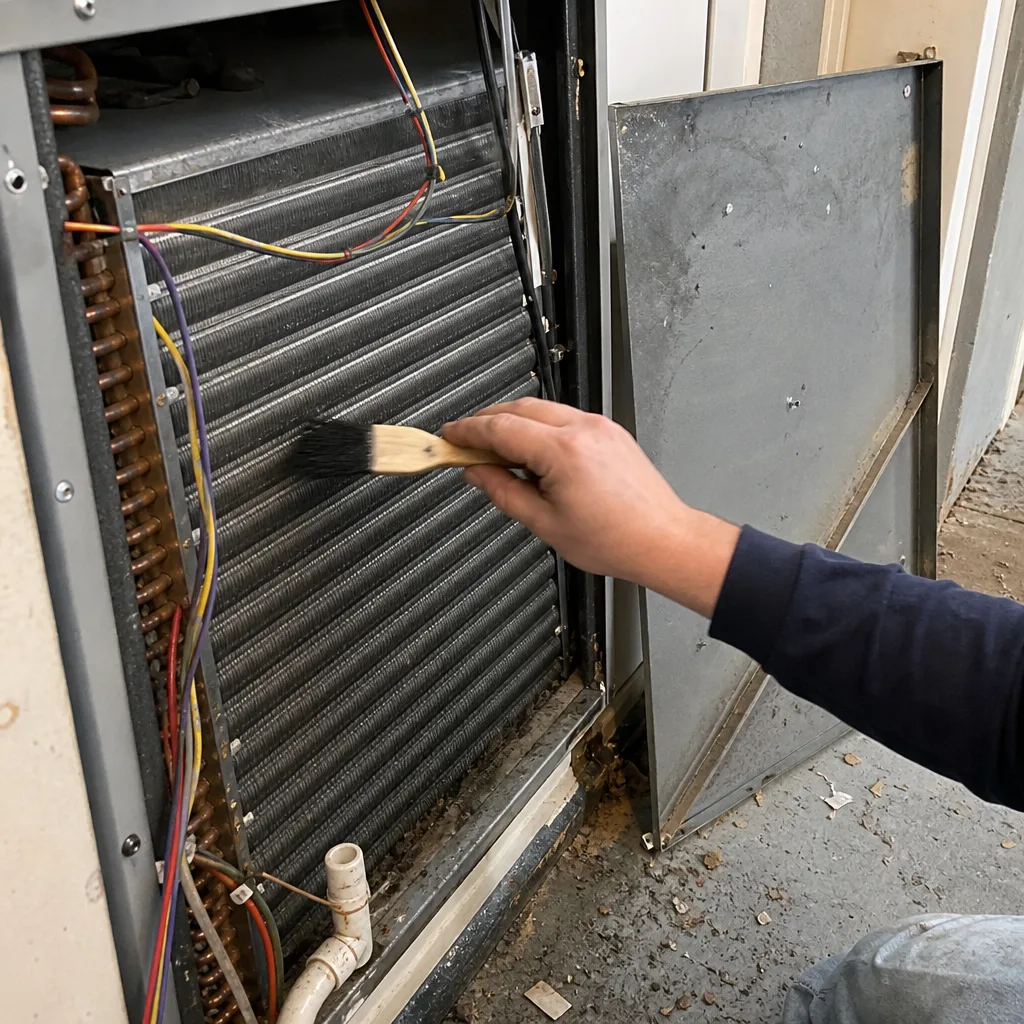
- Check the condensate drain and evaporator coil access. In Fort Worth, the coil cabinet is typically at the furnace or air handler. If you have a viewing port or can safely remove a panel, photograph the coil face. Heavy debris on the upstream side indicates filter failure. Debris on the downstream side indicates duct contamination being recirculated.
- Photograph any anomalies. Dark stains, standing water, insect debris, or construction materials (we have found drywall scraps, soda cans, and insulation fragments) should be documented with location notes.
Keep these photographs. A reputable contractor will want to see them. They establish baseline conditions and protect you from claims that contamination was worse than it appeared. At CleanRun, we build our written scope from customer photographs when provided, then confirm with our own inspection before any work begins.
The inspection takes 20 to 30 minutes for a typical 2,000-square-foot Fort Worth home. It costs nothing and often reveals that the problem is a $12 filter, not a $600 cleaning.
Warning Signs of Duct Damage, Not Just Dirt
Some symptoms that look like contamination are actually structural damage, and cleaning will not repair them. In fact, aggressive cleaning can worsen damaged ducts. Here are the four damage patterns we document most often in Fort Worth.
Collapsed flex duct runs. Flexible duct with a damaged wire helix, often from a storage box placed in the attic or a rodent nesting in the insulation, collapses into an oval or pinched shape. Airflow is restricted; the room starves. A phone camera pushed gently into the register boot may show the collapsed section a few feet back. Cleaning brushes will not pass and may lodge in the duct. The repair is replacement of the damaged section, not cleaning.
Disconnected joints. A takeoff collar that has separated from the trunk line, or a splice between two flex duct sections that has slipped its clamp, dumps conditioned air into the attic. The register may still flow weakly from attic pressure, or may flow nothing at all. You may feel temperature variation in the attic directly above the affected room. Cleaning a disconnected duct fills the attic with debris.
Torn vapor barriers. The plastic outer jacket of flex duct protects the fiberglass insulation and maintains the duct’s thermal and acoustic properties. When torn, attic humidity enters the insulation, degrading R-value and potentially wicking to the inner liner where condensation forms. We see this frequently in Fort Worth attics where summer temperatures exceed 140°F and brittle vapor barriers crack at bends. The symptom is weak airflow and musty odor; the repair is replacement or professional wrapping, not cleaning.
Corroded or separated galvanized seams. Older metal ductwork in Fort Worth homes from the 1950s through 1970s can corrode at seams or where condensate has pooled. Air leaks at these seams reduce delivery and can draw attic air into the system if the leak is on the return side. Cleaning brushes may snag and enlarge the opening.
The common thread: if your inspection reveals deformation, separation, or damage to the duct material itself, the next step is repair or replacement evaluation, not a cleaning quote. CleanRun’s assessment protocol includes structural inspection of accessible ductwork before any cleaning scope is written. Haven Standard Clause 1, Written Price Before Any Work Starts, applies to repair scopes as well; we will quote both cleaning and repair when both are needed, and explain why each is necessary.
Allergy Symptoms and Indoor Air Quality
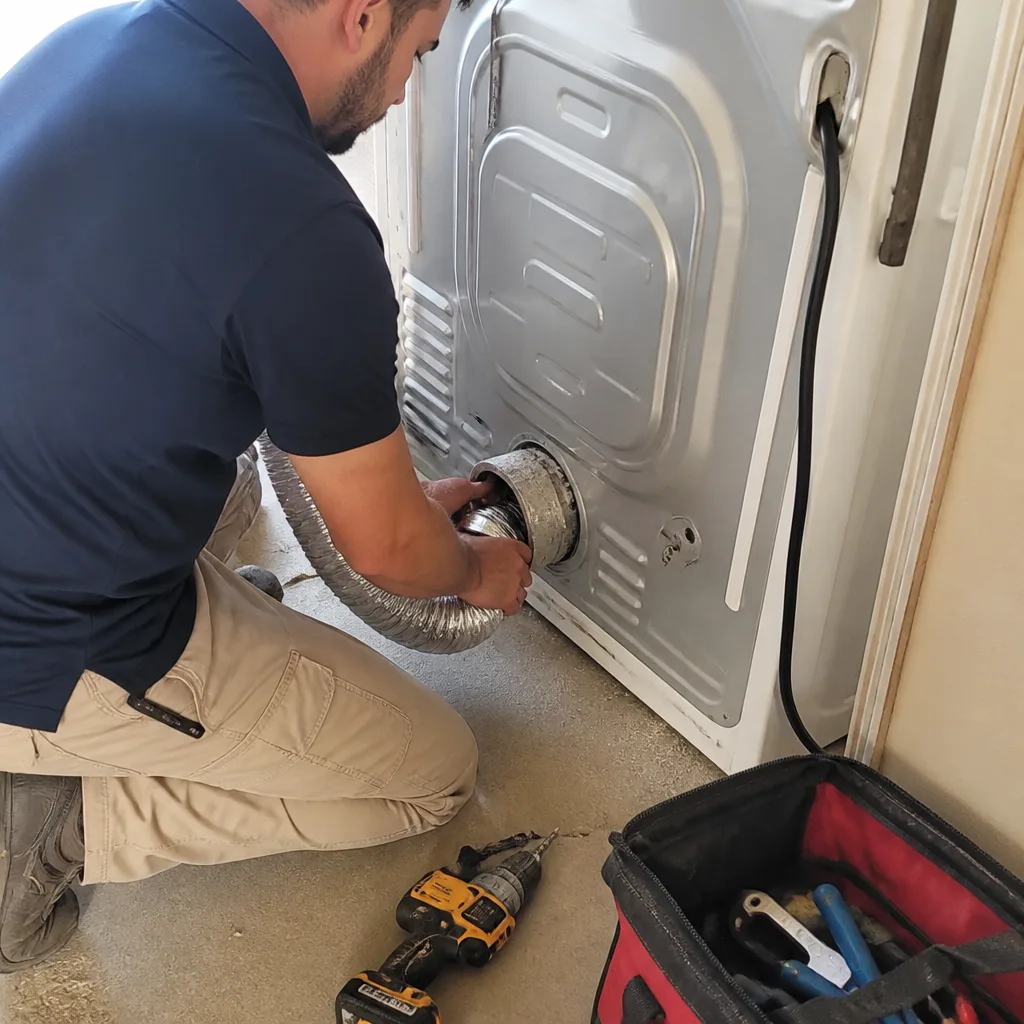
We are careful here because the connection between duct cleaning and health outcomes is frequently overstated. The EPA and limited clinical research indicate that duct cleaning has not been shown to prevent health problems, and no study conclusively demonstrates that cleaning reduces indoor particulate levels long-term. What we can document, from 52,000+ homes served since 2013, is what we find and what customers report.
When allergy symptoms worsen seasonally in Fort Worth, the primary culprits are typically outdoor pollen infiltration and indoor humidity control, not duct contamination. Mountain cedar in winter, oak in spring, and ragweed in fall drive most seasonal complaints. A duct system with significant return leakage pulls attic air that contains these pollens, plus fiberglass particles from deteriorating duct insulation, into the circulating air. Cleaning the duct does not seal the leak.
Where we do see symptom improvement after cleaning is specific and documentable:
- Homes with recent rodent infestation, where droppings and nesting material were present in ductwork. We photograph the contamination, clean with negative-pressure extraction equipment from Nikro and Abatement Technologies, and apply EPA-registered sanitizer where appropriate. Customers report reduced odor and irritation.
- Homes with visible construction debris in ducts after remodeling, particularly drywall dust and insulation fragments. These are acute irritants, not chronic allergens, and their removal provides relief.
- Homes where the evaporator coil and blower wheel were heavily contaminated, circulating debris with every cycle. Our HVAC Cleaning in Fort Worth includes these components, not just duct runs.
We do not promise health outcomes we cannot measure. We do promise to photograph what we find, explain its likely source, and deliver a written scope that addresses the actual problem. If your symptoms are primarily seasonal and outdoor, we will tell you that duct cleaning is unlikely to help, and we will recommend envelope and filtration improvements instead. Haven Standard Clause 1 means the written price is for work that makes sense, not work that sells.
Post-Construction Debris and Contamination
Fort Worth’s growth, particularly in Walsh, Sendera Ranch, and the near-southside redevelopment areas, means many homeowners are living in homes that were recently renovated or are in subdivisions where adjacent construction continues. Post-construction duct contamination is real, common, and often misdiagnosed.
Drywall dust is the most pervasive contaminant. It is extremely fine, electrostatically charged, and penetrates standard 1-inch filters. During active construction, return air pulls dust through gaps in the envelope; during post-construction cleanup, sweeping and vacuuming without source capture suspends dust that the HVAC system then distributes. The symptom is a persistent fine film on surfaces, particularly horizontal ones, that reappears within days of cleaning.
Insulation fragments from attic work, sawdust from trim carpentry, and carpet fiber from installation are also common. These are larger particles that may be visible at registers or audible when the blower cycles on.
The critical distinction: post-construction debris is an acute contamination event, not chronic duct soiling. It requires thorough cleaning, often including the blower wheel and coil, but it does not indicate a systemic duct problem. We scope these jobs differently, with heavier emphasis on source removal and less on sanitizing treatments that are unnecessary for inert construction dust.
Fort Worth’s building code requires duct protection during construction, but enforcement is inconsistent in residential work. If your home was built or renovated in the last two years and you have persistent dust issues, construction debris is a strong possibility. Our inspection will look for drywall mud fingerprints on duct interiors, insulation compression marks from worker traffic, and other telltale signs.
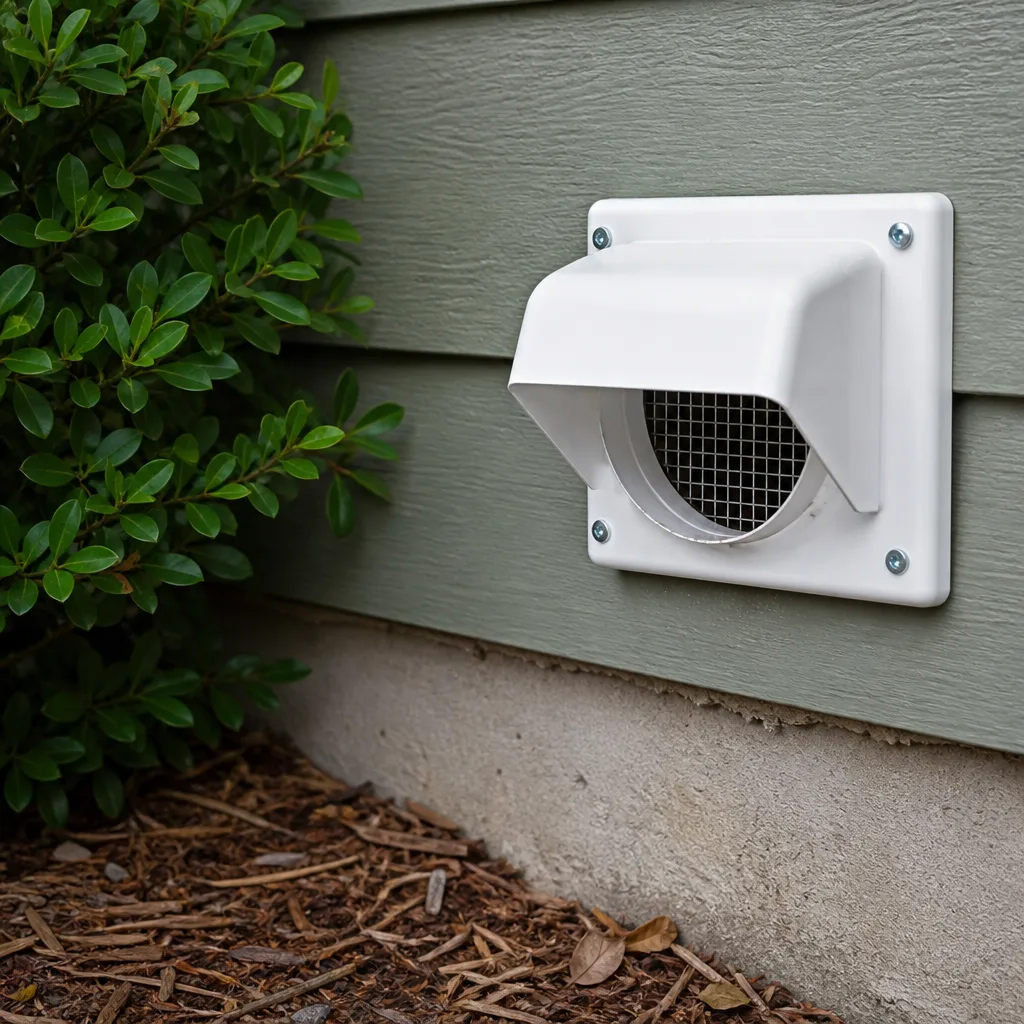
Dryer Vent Cleaning in Fort Worth is often needed in parallel; construction dust clogs dryer vents rapidly and creates fire hazards.
Decision Tree: What Your Symptom Means
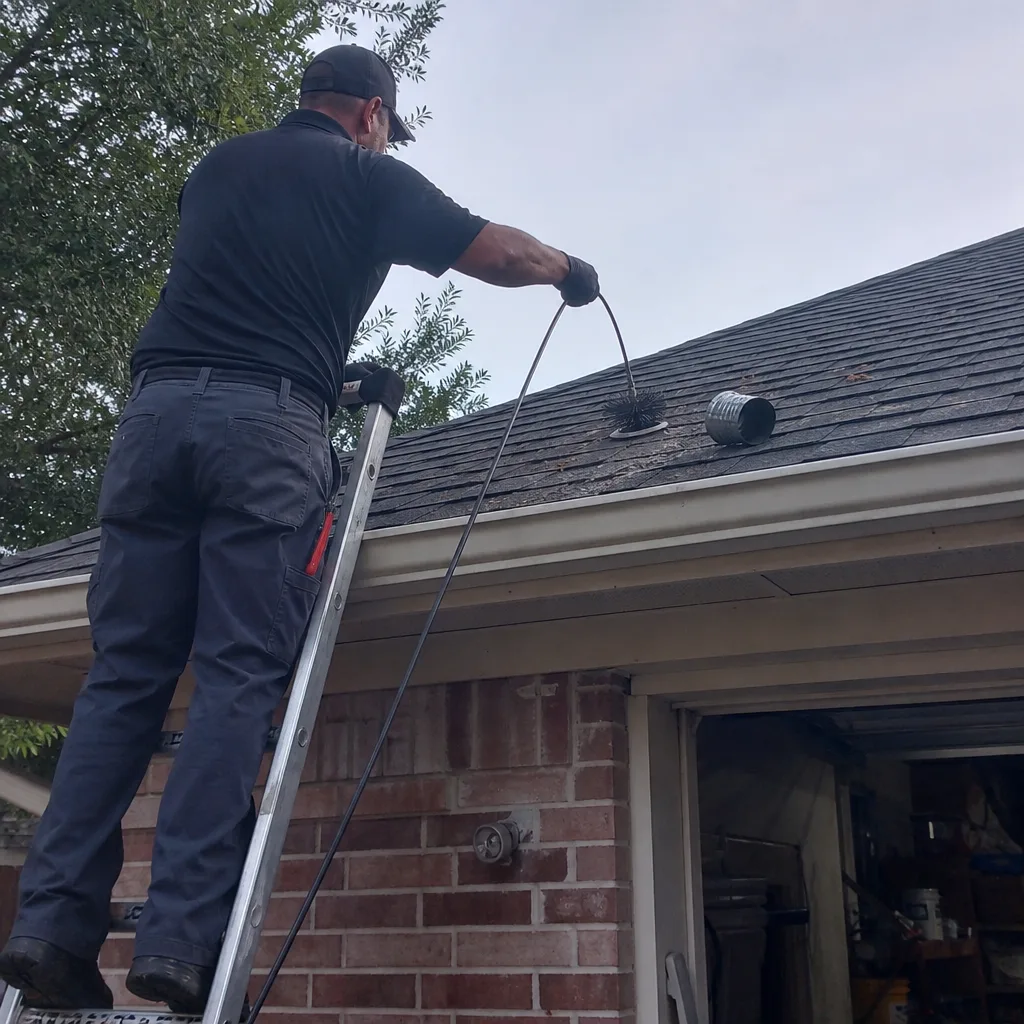
Use this to translate what you see into the most likely cause and next step.
| If you see… | It probably means… | Your next step is… |
|---|---|---|
| Dust on register fins, clean filter, recent filter change | Filter bypass or return leak | Verify filter size/MERV; inspect filter slot for gaps; check attic return connections |
| Dark stains inside duct, musty odor that strengthens at blower start | Active mold growth with moisture source | Professional moisture source identification and remediation; do not clean until source is addressed |
| One room consistently warmer/cooler, others normal | Duct leakage, blockage, or design issue in that branch | Visual attic inspection of that duct run; pressure test if no visible damage |
| Debris visible at register after recent construction | Acute post-construction contamination | Full system cleaning including blower and coil; verify filter upgrade to capture residual dust |
| Weak airflow at register, hissing sound in wall/ceiling | Disconnected or damaged duct | Professional structural inspection; cleaning is contraindicated until repair |
| Fine dust film on all surfaces, rapid recurrence | Inadequate filtration or high envelope leakage | Filter upgrade; blower door test for envelope leakage; duct pressure test for return leaks |
| Increased allergy symptoms, seasonal pattern | Outdoor pollen infiltration, not duct contamination | Envelope sealing; upgraded filtration; humidity control; duct cleaning unlikely to help |
Common Mistakes to Avoid
- Assuming register dust equals dirty ducts. In Fort Worth’s hard-water, high-dust environment, register dust is usually a filter or bypass issue. Clean the duct and the symptom returns.
- Treating dark stains as mold without verification. Surface dust darkens over time and can look alarming. A $15 mold test kit from a hardware store, or a professional assessment, prevents unnecessary remediation spending.
- Cleaning before repairing structural damage. A collapsed flex duct or disconnected joint wastes conditioned air and may worsen under cleaning equipment. Repair first, then assess whether cleaning is still needed.
- Accepting a per-vent or coupon price. The $79 duct cleaning coupon is a well-documented bait-and-switch pattern in the Fort Worth market. The van arrives, the scope expands, and the final invoice reaches $800 or more. Insist on a written whole-system price before work begins, as Haven Standard Clause 1 requires.
- Ignoring the blower wheel and evaporator coil. These components are upstream of the ducts and recontaminate clean ductwork immediately if not addressed. A cleaning scope that omits them is incomplete.
- Scheduling cleaning for seasonal allergies without checking pollen counts. When Fort Worth mountain cedar counts exceed 5,000 grains per cubic meter, indoor symptoms are almost certainly outdoor-driven. Clean ducts won’t change that.
- Failing to document pre-existing conditions. Photograph your registers, filter slot, and any visible ductwork before any contractor arrives. This protects you from scope inflation and establishes a baseline for evaluating results.
When to Call a Professional
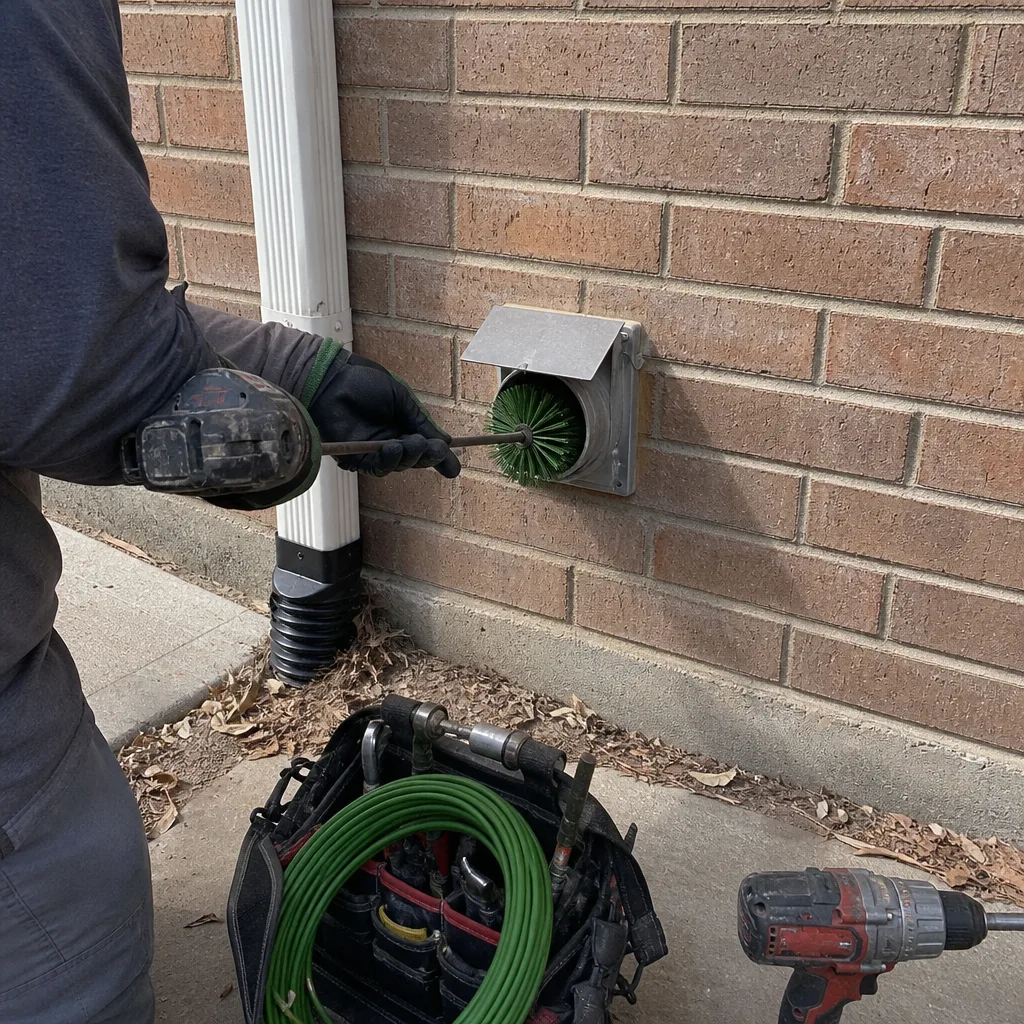
Call for professional evaluation when your self-inspection reveals active mold growth, structural duct damage, or contamination that persists after you’ve addressed filter and envelope issues. Also call when you lack safe attic access or are uncomfortable interpreting what you’ve found. CleanRun Air Duct Cleaning services in Fort Worth offers free estimates - call (817) 520-8797. Every estimate includes a written price before any work begins, a documented photo record of every duct run inspected, and the 365-Day Done Right Promise backed in writing. We put our estimate next to any competitor’s written quote at no charge through our Free Second Opinion program.
Frequently Asked Questions
Whole-system air duct cleaning for a typical Fort Worth home ranges from $450 to $850 depending on system size, accessibility, and contamination level. CleanRun provides a written flat price per system before any work starts, with no per-vent add-ons or surprise charges. Call (817) 520-8797 for an exact quote - estimates are free.
The $79 to $149 coupon offers in Fort Worth typically cover a brief vacuuming of accessible registers, not a full system cleaning. The technician then identifies “additional problems” and presents a revised invoice on site. CleanRun’s written price, delivered under Haven Standard Clause 1, covers the complete scope with no post-arrival changes.
CleanRun delivers a Documented Photo Record of every duct run, before and after, as a standard deliverable on every job since 2013. You receive the photo set as part of your job record, not as an optional add-on. If a contractor cannot or will not provide this, the work cannot be verified.
For most Fort Worth homes with proper filtration and no recent construction, every 5 to 7 years is adequate. Homes with pets that shed heavily, recent remodeling, or ongoing filter maintenance issues may need more frequent service. We assess each home individually and do not recommend cleaning on a fixed schedule when inspection shows minimal accumulation.
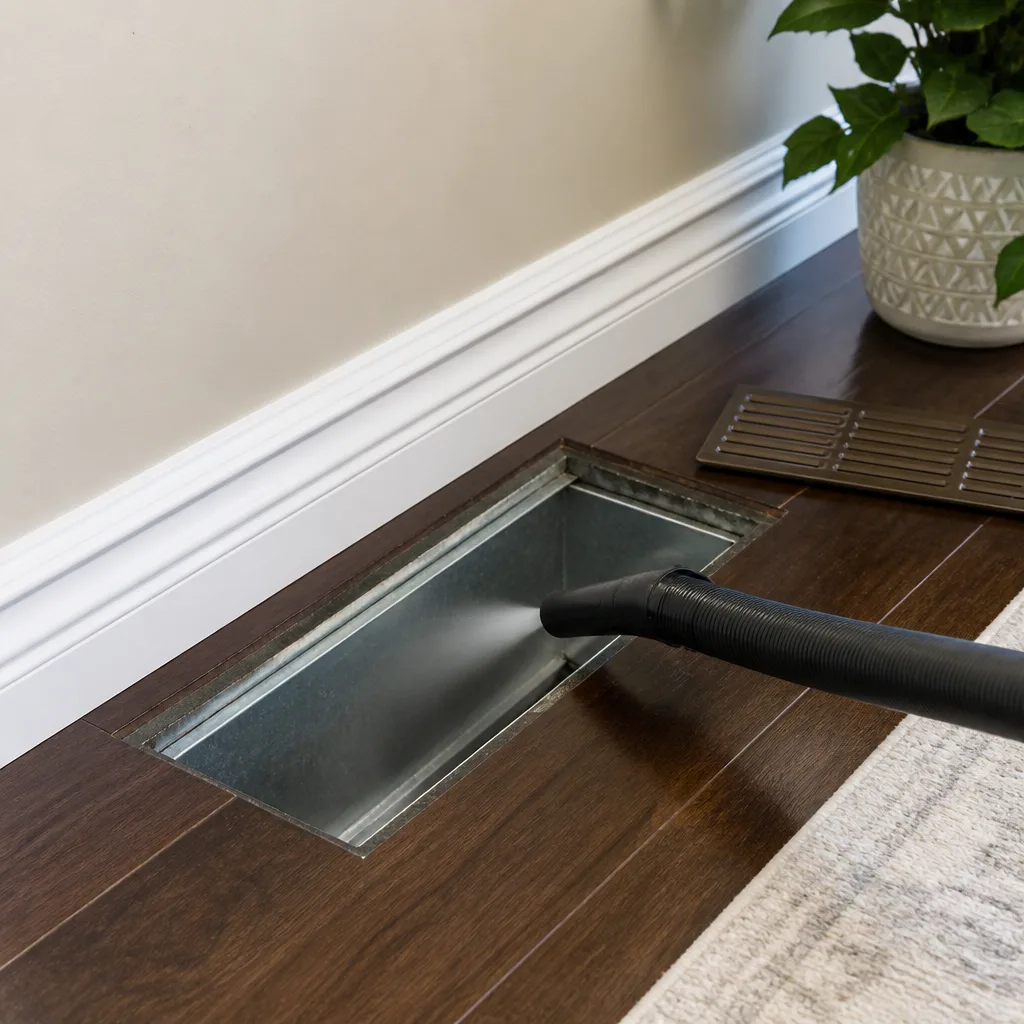
Accessible registers and the filter slot can be safely cleaned by a homeowner. The internal duct runs, blower wheel, and evaporator coil require professional-grade negative-pressure extraction equipment and should not be accessed without training. DIY attempts with household vacuums can damage flex duct and disturb contaminants without adequate containment.
Fort Worth’s long cooling season and high summer humidity create conditions where moisture can accumulate in ductwork, particularly in attics. The clay soil and foundation movement common in older neighborhoods can also crack slab ducts and introduce groundwater. These are climate-specific factors that make proper inspection and moisture source identification especially important in this market.
The Bottom Line
Visible symptoms like dust, odors, and temperature variation are signals, not diagnoses. The homeowner who can connect each symptom to its likely mechanical cause, filter, equipment, envelope, or duct, makes better decisions and avoids paying for work that does not solve the problem. Use the self-inspection procedure, apply the decision tree, and demand written documentation of any proposed scope. In an industry built on opaque pricing and unverifiable claims, evidence is your protection. CleanRun has operated on this principle since 2013: written price first, documented result last, accountability in between.
Written by Tomas Reyes, Owner at CleanRun Air Duct Cleaning Fort Worth, serving Fort Worth since 2013.