
Last updated September 23, 2026
Whole-system duct and dryer vent check with before-and-after photos - you see exactly what came out of your vents
That "$99 whole-house special" is a bait ad - the real number appears once they are in your hallway, or the "clean" is a shop-vac at the register. We photograph the inside of your ducts before and after instead.
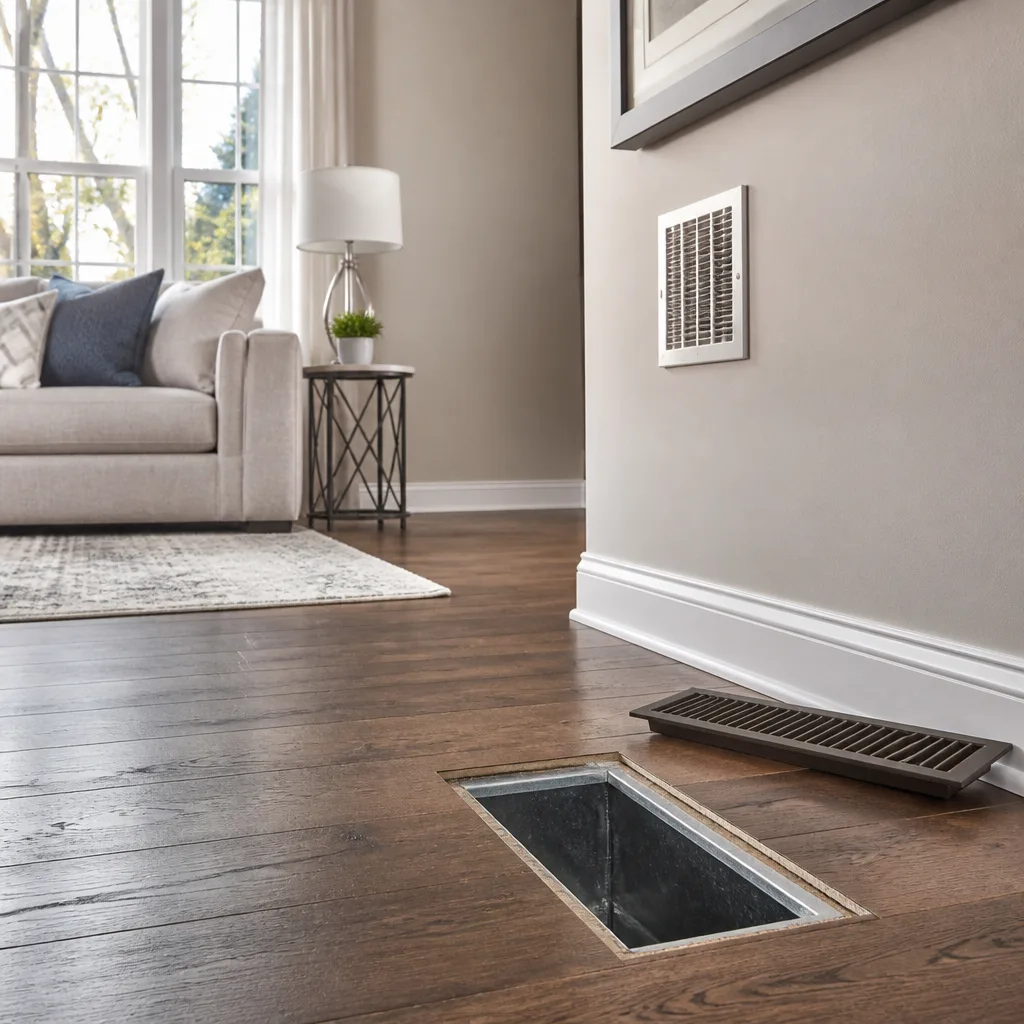
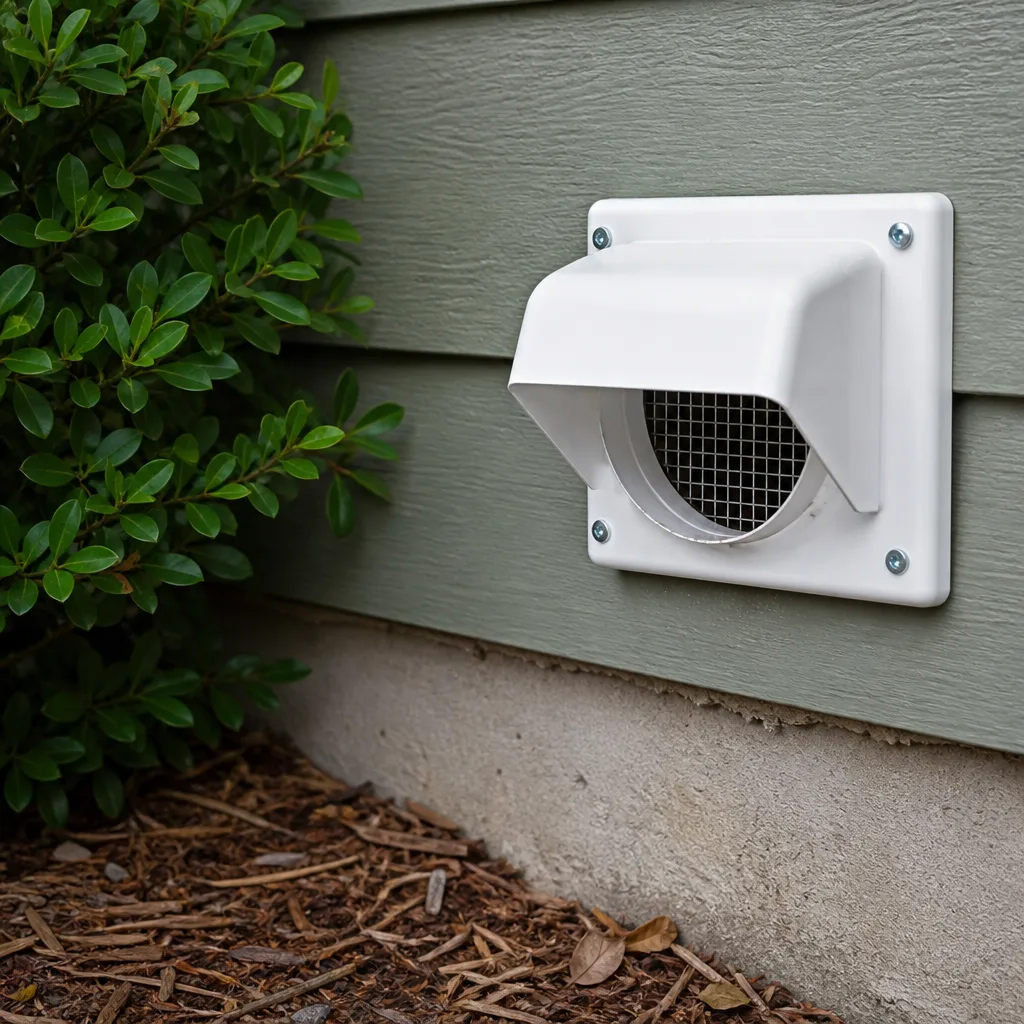
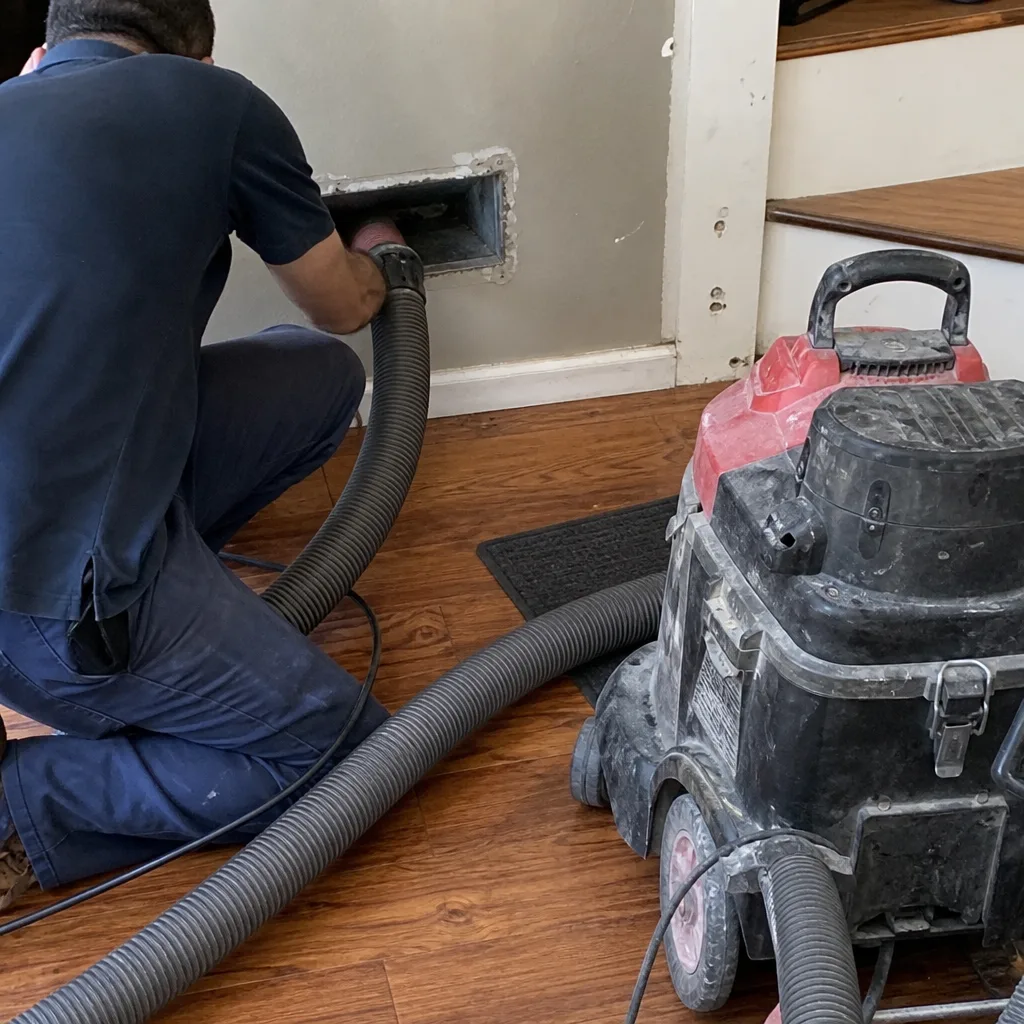 Before
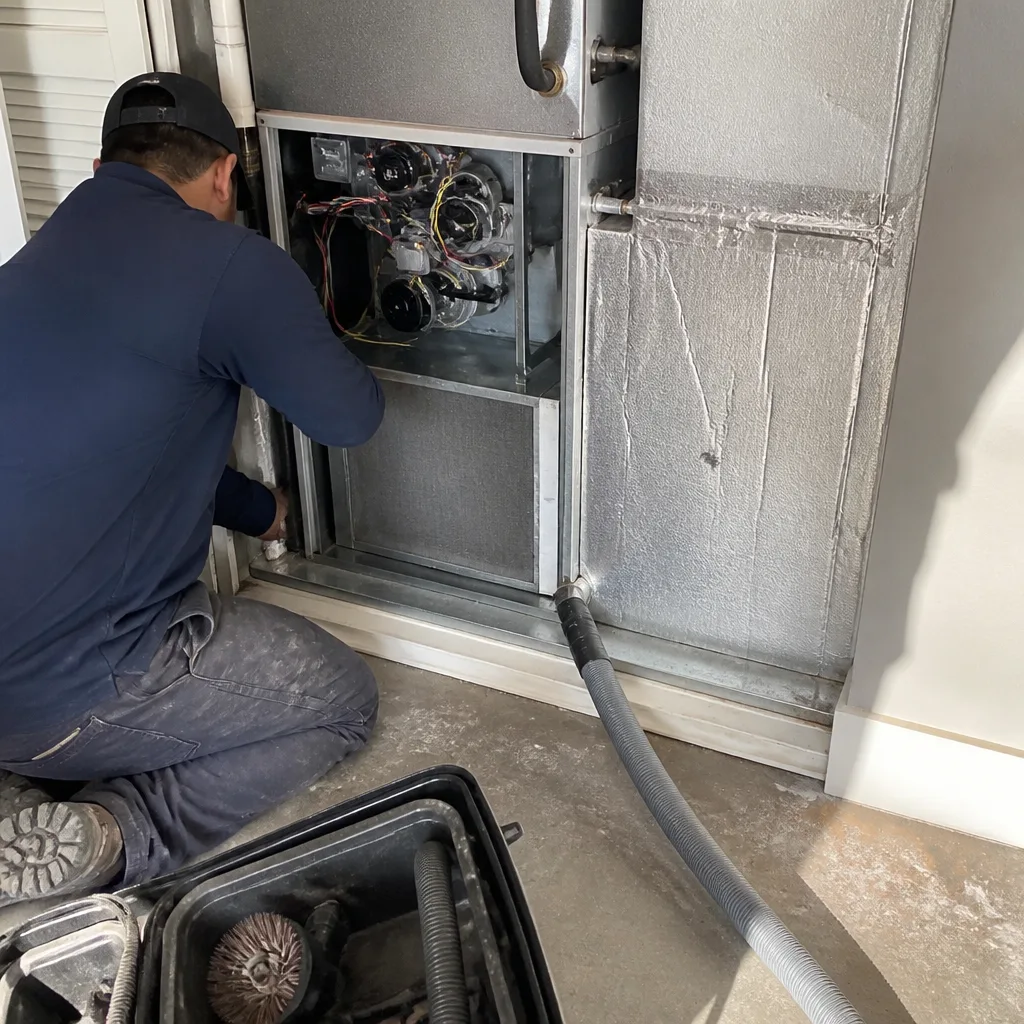 After
After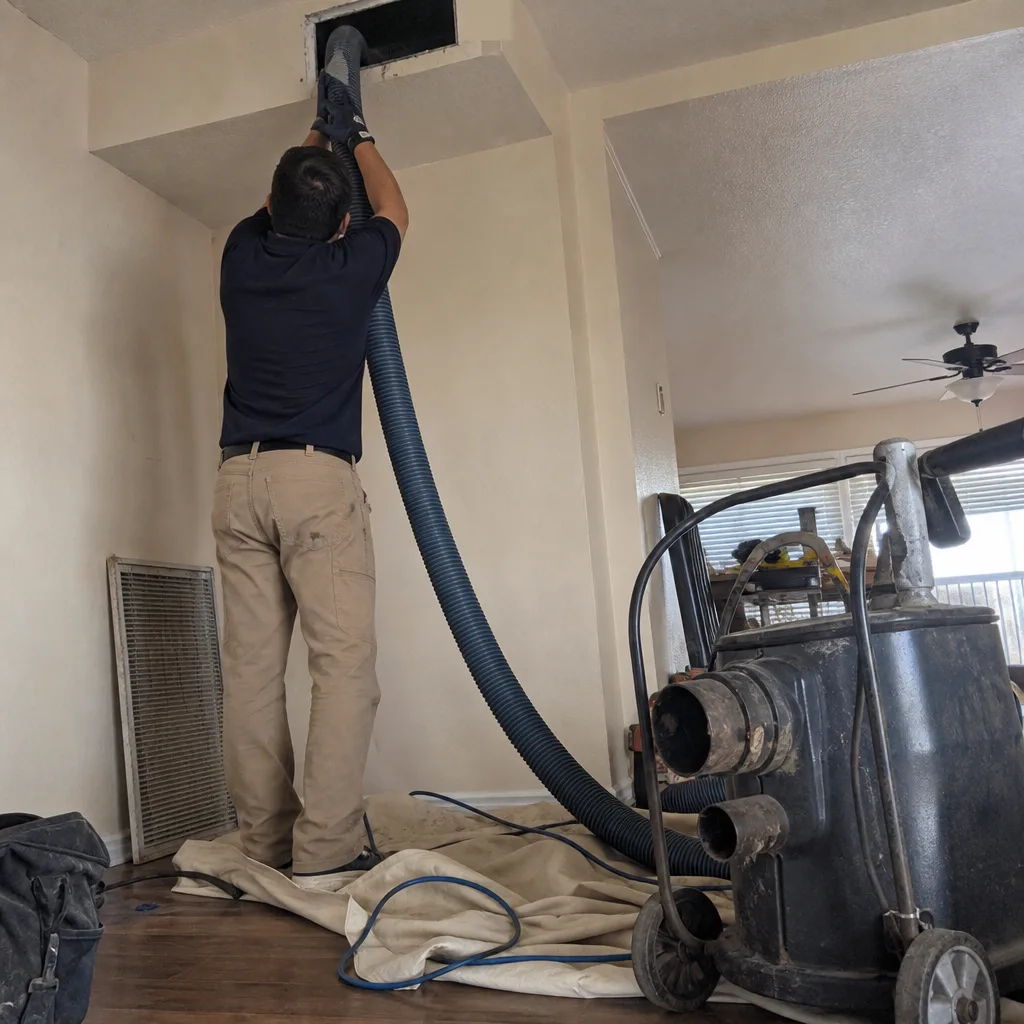 Before
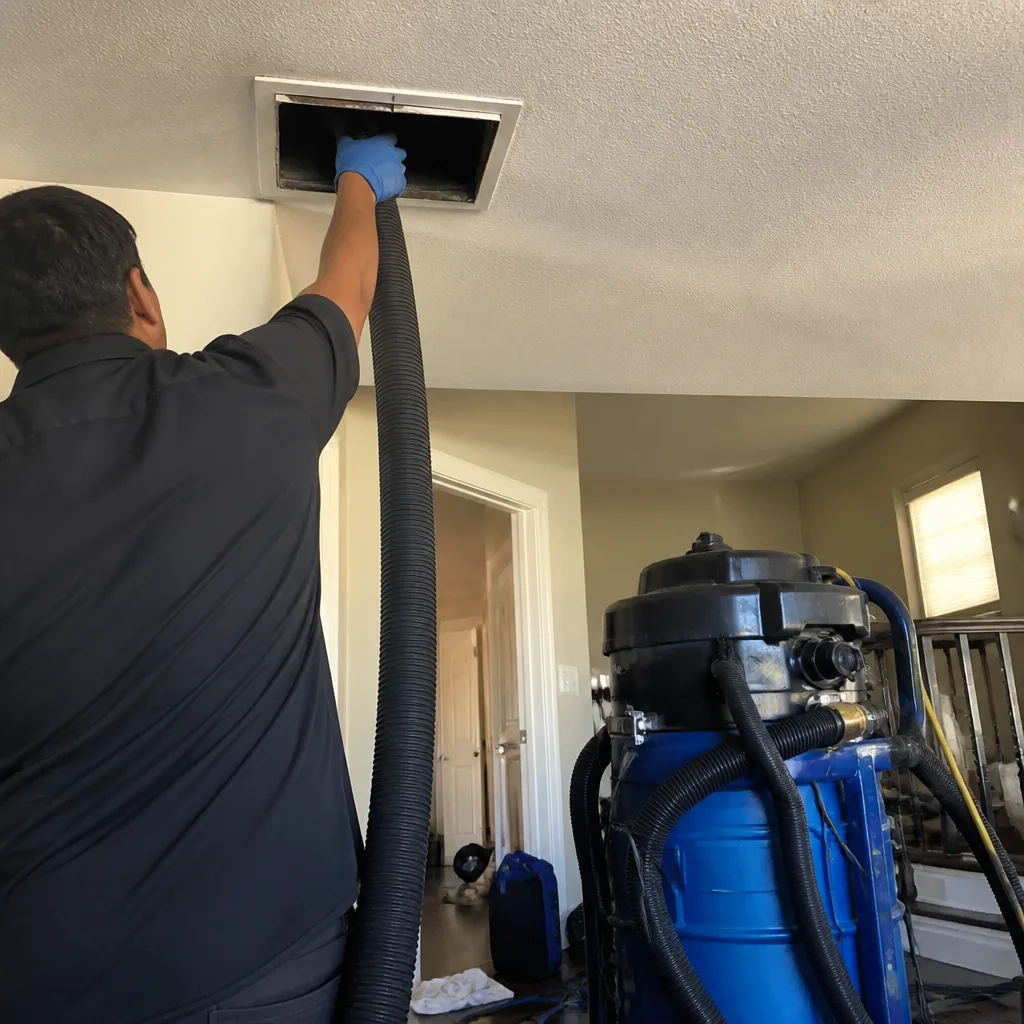 After
After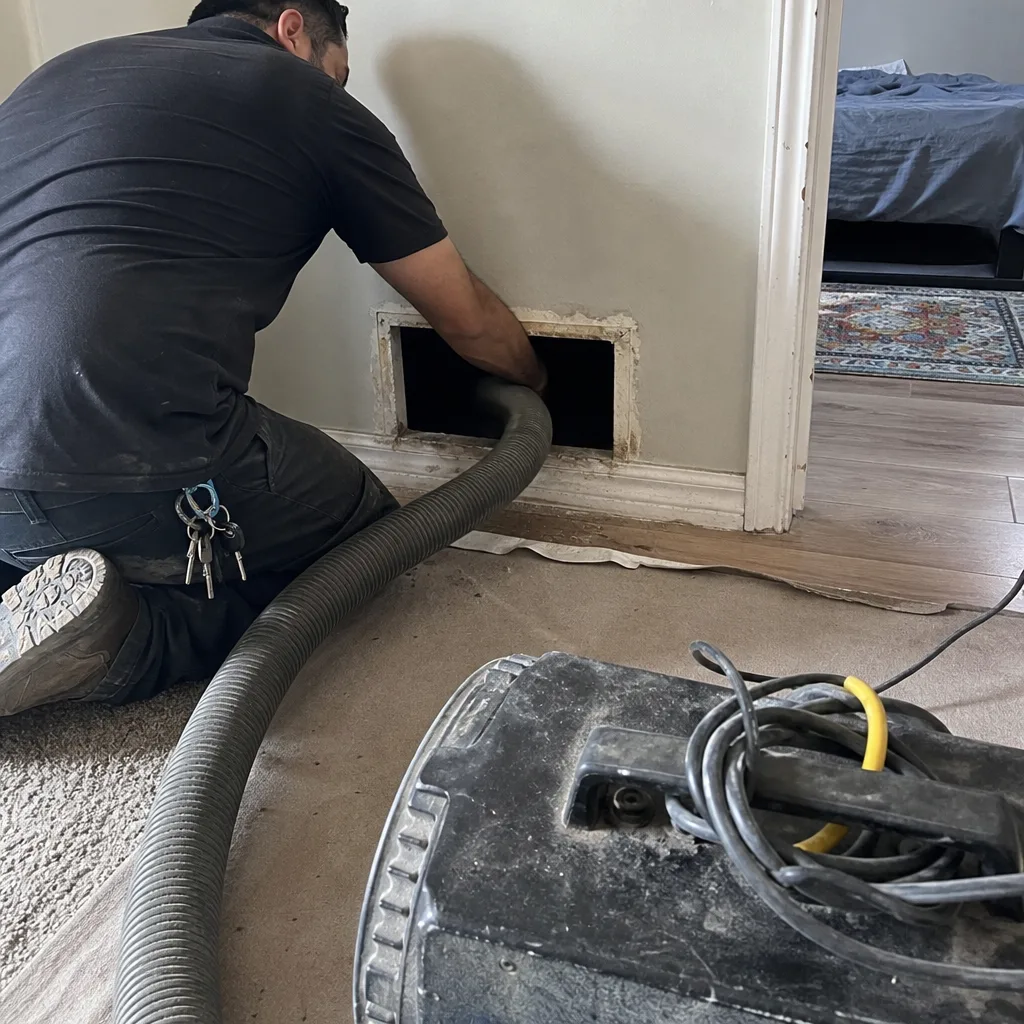 Before
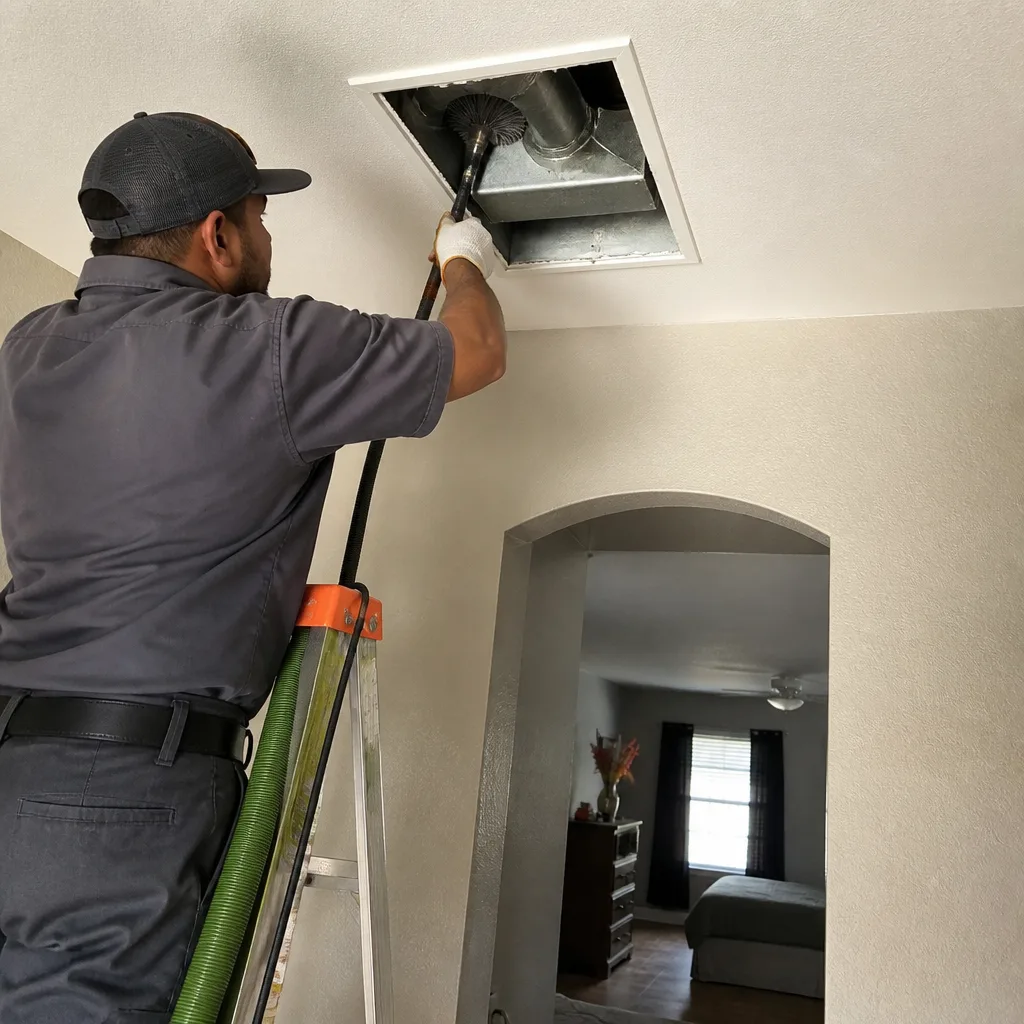 After
AfterThe Complete Guide to Air Duct Cleaning in Fort Worth
The EPA has never found evidence that duct cleaning prevents health problems. That single fact undercuts most of what the industry advertises. Yet in Fort Worth, where summer humidity pushes 80% and pollen counts routinely hit “very high” from March through May, homeowners receive thousands of mailers promising cleaner air, better health, and lower energy bills, all for $79. Most of those visits end with a sales pitch for services that weren’t in the original offer. This guide explains what our Air Duct Cleaning services actually accomplish, when the evidence supports doing it, and how Fort Worth’s specific climate and housing stock affect whether your home needs the service at all. We’ll cover what a legitimate inspection looks like, how to read a before-and-after photo record, and the four conditions that genuinely warrant cleaning versus the dozens that don’t.
Quick Answer
Air duct cleaning in Fort Worth is warranted when a camera inspection documents one of four conditions: visible mold growth, vermin intrusion, construction debris, or measurable airflow restriction from contamination. For most homes, the starting point should be a documented inspection with photo evidence, not a scheduled cleaning. In Fort Worth’s climate, humidity and pollen are real factors, but they don’t automatically mean ducts need cleaning.
Table of Contents
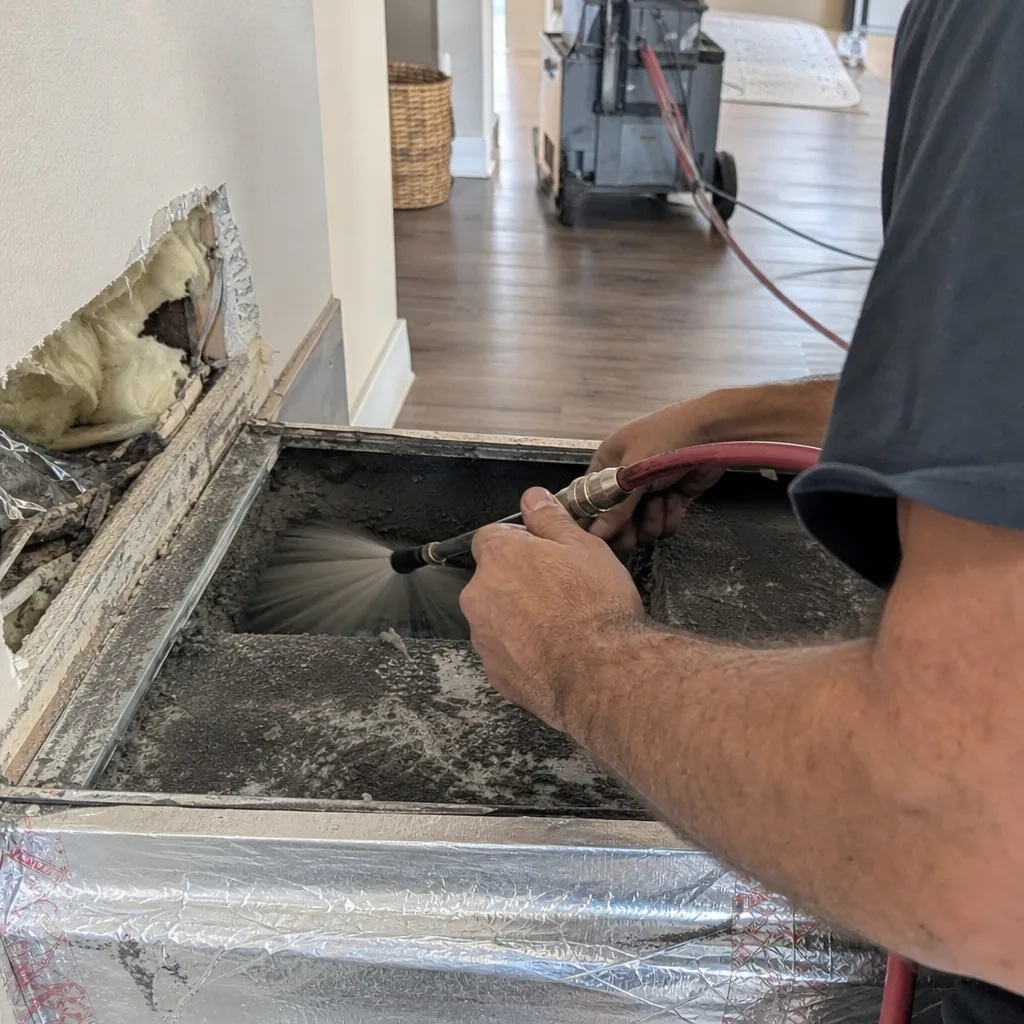
- What Air Duct Cleaning Actually Does (and Doesn’t Do)
- How Fort Worth’s Climate Affects Your Ductwork
- Which Fort Worth Homes Have the Most Duct Problems
- Inspection First: The Camera Doesn’t Lie
- The Four Conditions That Warrant Cleaning
- What the NADCA ACR Standard Means in Plain Language
- How to Read a Before-and-After Photo Record
- Choosing a Contractor in Fort Worth
BeforeAfterWhat Air Duct Cleaning Actually Does (and Doesn’t Do)
Air duct cleaning removes accumulated debris from the interior surfaces of a forced-air system’s ductwork. The process typically involves negative-pressure extraction, a method where a large vacuum unit creates suction throughout the duct system while agitation tools, brushes, or compressed air whips loosen debris from the walls. A duct run, the individual pathway from your air handler to a specific room, is accessed at multiple points so the vacuum can pull dislodged material out rather than pushing it deeper into the system.
What cleaning does not do is prevent respiratory illness, eliminate allergies, or automatically improve HVAC efficiency. The EPA’s position remains unchanged: “Duct cleaning has never been shown to actually prevent health problems.” Studies sponsored by the industry itself have found no consistent evidence of health benefits in homes without specific contamination issues. The CleanRun Air Duct Cleaning Fort Worth home page outlines our approach, which begins with documentation rather than assumptions.
Where cleaning can help is mechanical. Debris buildup at elbows, transitions, and the plenum, the large central chamber where conditioned air collects before distribution, can measurably restrict airflow. A 2010 Florida Solar Energy Center study found that heavy debris accumulation could reduce airflow by 10-15% in some systems. That restriction forces the blower motor to work harder, increasing energy consumption and wear. But this is not the norm in most homes; it’s the exception that requires documentation to identify.
Cleaning also addresses specific contamination events. Construction debris from a recent renovation, rodent nesting material, or visible mold growth are documented problems with documented solutions. The service becomes valuable when it responds to evidence, not when it’s sold as preventive maintenance to every homeowner regardless of condition.
How Fort Worth’s Climate Affects Your Ductwork
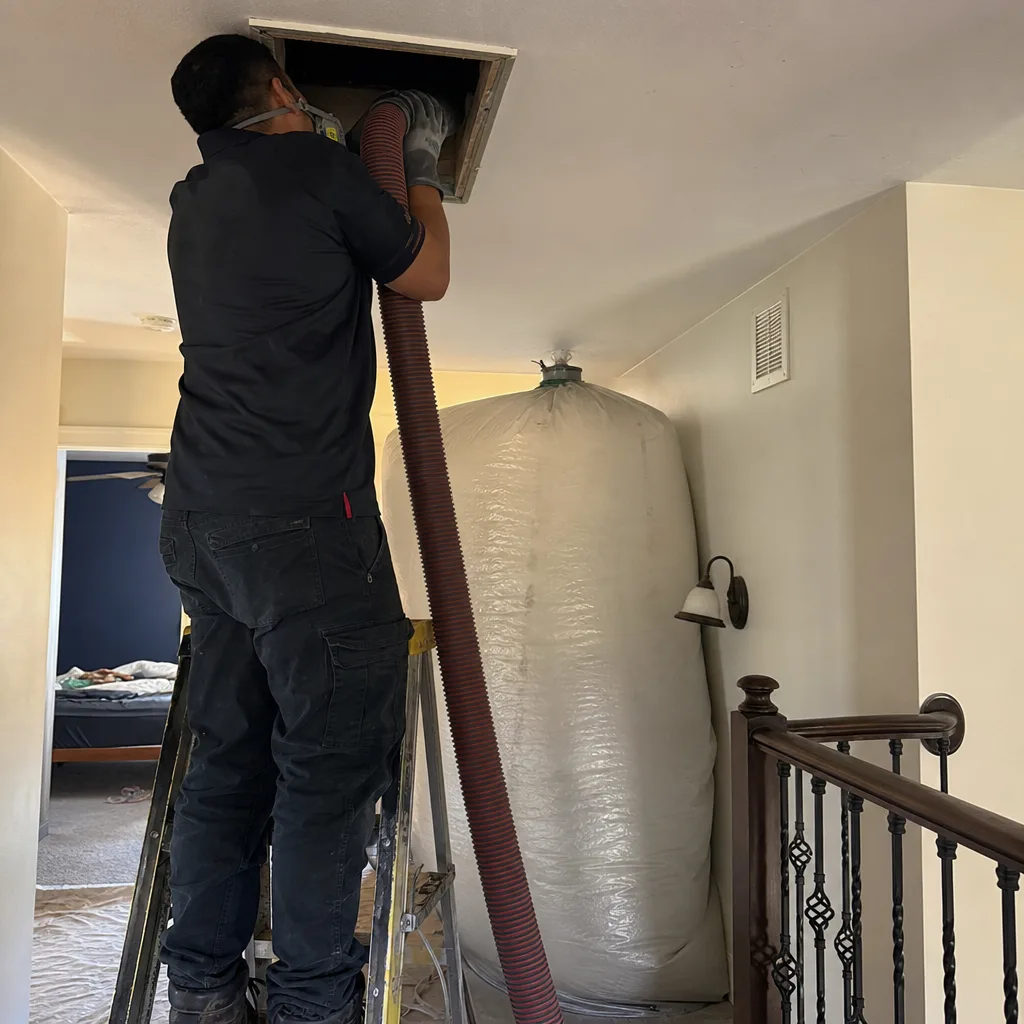
Fort Worth sits at the western edge of the humid subtropical zone, with summer highs regularly exceeding 95°F and relative humidity climbing through July and August. The Metroplex also experiences significant temperature swings, with winter lows occasionally dropping into the teens. These conditions create specific stress patterns on duct systems that differ from drier western climates or more consistently humid Gulf Coast environments.
Humidity drives condensation in ductwork, particularly in unconditioned attics where Fort Worth’s many slab-built homes from the 1960s through 1980s often route their ducts. When cool air passes through metal ducting in a 130°F attic, condensation forms on the exterior. That moisture can migrate to interior surfaces through seams and joints, creating conditions where mold can establish if organic debris is present. In our work across Fort Worth neighborhoods from Ridglea to Meadowbrook, we’ve documented this pattern most frequently in homes with original fiberglass duct board that has degraded at the corners.
Pollen is the other significant factor. Fort Worth’s location at the crossroads of prairie and cross timbers ecological regions means high spring pollen loads from oak, cedar, and ragweed. While most pollen is filtered at the return grille or trapped by the HVAC filter, some enters the duct system. Over years, this material combines with household dust, skin cells, and fabric fibers to form the gray, felt-like accumulation visible in camera inspections. In homes near the Trinity River bottomlands, we’ve also noted higher mineral dust content from the caliche soils that become airborne during dry periods.
These climate factors don’t mandate cleaning. They explain why some Fort Worth homes develop contamination issues while others remain clean for decades. The determining factor is almost always the condition of the duct system itself: tight seams, intact insulation, and proper filter maintenance prevent the problems that climate alone cannot create.
Which Fort Worth Homes Have the Most Duct Problems
Fort Worth’s housing stock spans from pre-war bungalows near the cultural district to sprawling 2020s builds in Walsh and Pecan Square. The era of construction predicts duct problems more reliably than neighborhood price point or maintenance history. Here’s what we’ve documented across our 52,000+ service records since 2013.
1970s-1980s Slab Homes: The Hidden Deterioration
These homes, concentrated in neighborhoods like Wedgwood, Wedgewood East, and parts of Arlington Heights, typically feature galvanized steel ductwork embedded in the slab or routed through unconditioned attics. The steel corrodes from the inside where condensation accumulates, and the fiberglass insulation wrapped around exterior ducting degrades after 30-40 years. In camera inspections, we regularly find rust scale flaking into the airstream and insulation fragments that have separated from the duct wall. The plenum connections in these homes were often sealed with cloth-backed tape that has long since failed, pulling attic air directly into the system.
1990s Two-Stories: The Zoning Challenge
Two-story homes from this era, common in Keller, Colleyville, and southwest Fort Worth, were built with single-zone systems struggling to serve both levels. Builders often compensated with undersized ductwork and excessive flex duct, the corrugated plastic tubing that reduces airflow efficiency with every bend. The result is systems that run longer, move air slower, and allow more time for debris to settle. In these homes, we frequently find the heaviest accumulation at the second-floor branches, where reduced velocity lets particles drop out of the airstream.
Post-2000 Builds: The Construction Debris Legacy
Newer isn’t always cleaner. Homes built during the 2000s construction boom, particularly in master-planned communities like Alliance Town Center and Tanglewood, often have significant construction debris in ducts. Drywall dust, wood chips, and insulation scraps left during rough-in were never fully removed. We’ve photographed 2-inch deposits of gypsum powder in the main trunk lines of homes less than five years old. The problem is worse in homes where the HVAC contractor ran the system during construction to “clear the dust,” which instead distributed it throughout the ductwork.
Pre-1950s Homes: The Adaptation Problem
Historic districts like Fairmount and Ryan Place present a different challenge. These homes were built before forced air, and ductwork was retrofitted during later renovations, often with creative routing through closets, bulkheads, and exterior walls. The irregular pathways create turbulence that deposits debris at turns, and the mixed materials, galvanized steel joined to modern flex duct, create galvanic corrosion at contact points. Camera inspections in these homes often reveal the most surprising findings: abandoned duct sections, disconnected returns, and in one Fairmount case, a 1940s newspaper used as temporary insulation still lodged in a wall cavity.
Inspection First: The Camera Doesn’t Lie
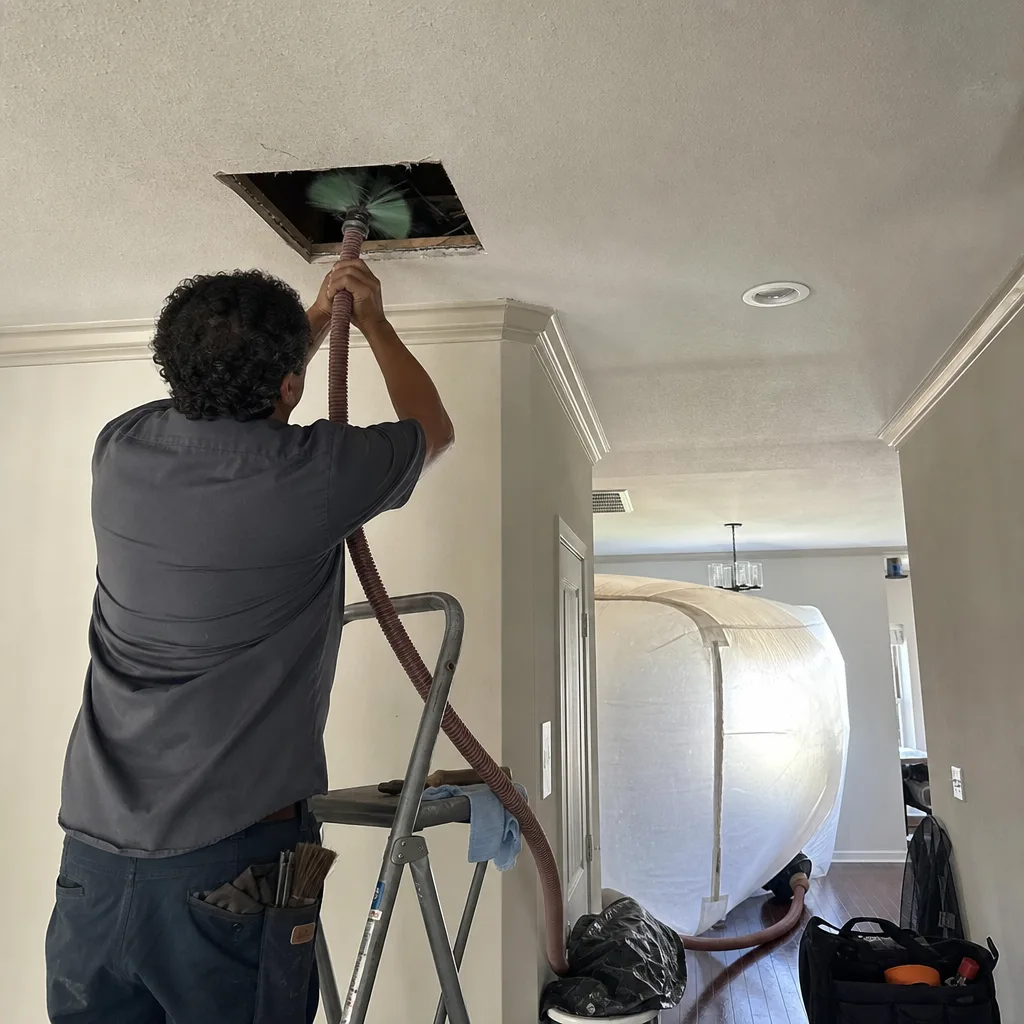
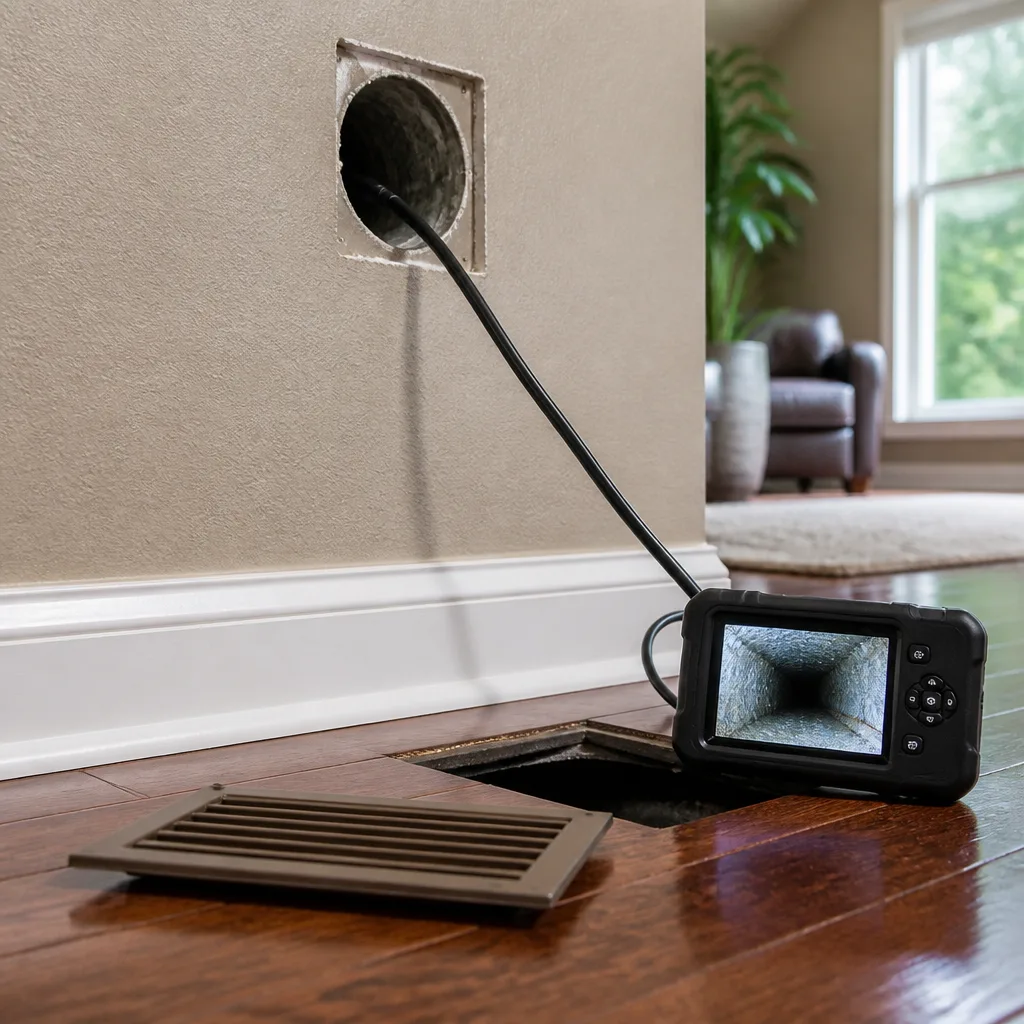
The most important decision a Fort Worth homeowner can make is not which company to hire for cleaning, but whether cleaning is needed at all-read our DIY vs Professional Air Duct Cleaning: The Fort Worth Homeowner’s Decision Guide for help deciding. That decision requires evidence, and the tool that produces it is a borescope camera, a flexible fiber-optic instrument that transmits video from inside the ductwork to a display screen.
A legitimate inspection follows a specific protocol. The technician accesses the duct system at the plenum and at strategic points along the main trunk line, typically through existing service openings or by temporarily removing a register, the visible grille where air enters a room. The camera is advanced through each duct run, with the technician noting footage timestamps that correspond to specific locations. The complete inspection of a 2,000-square-foot home takes 45-75 minutes and produces 15-30 minutes of video.
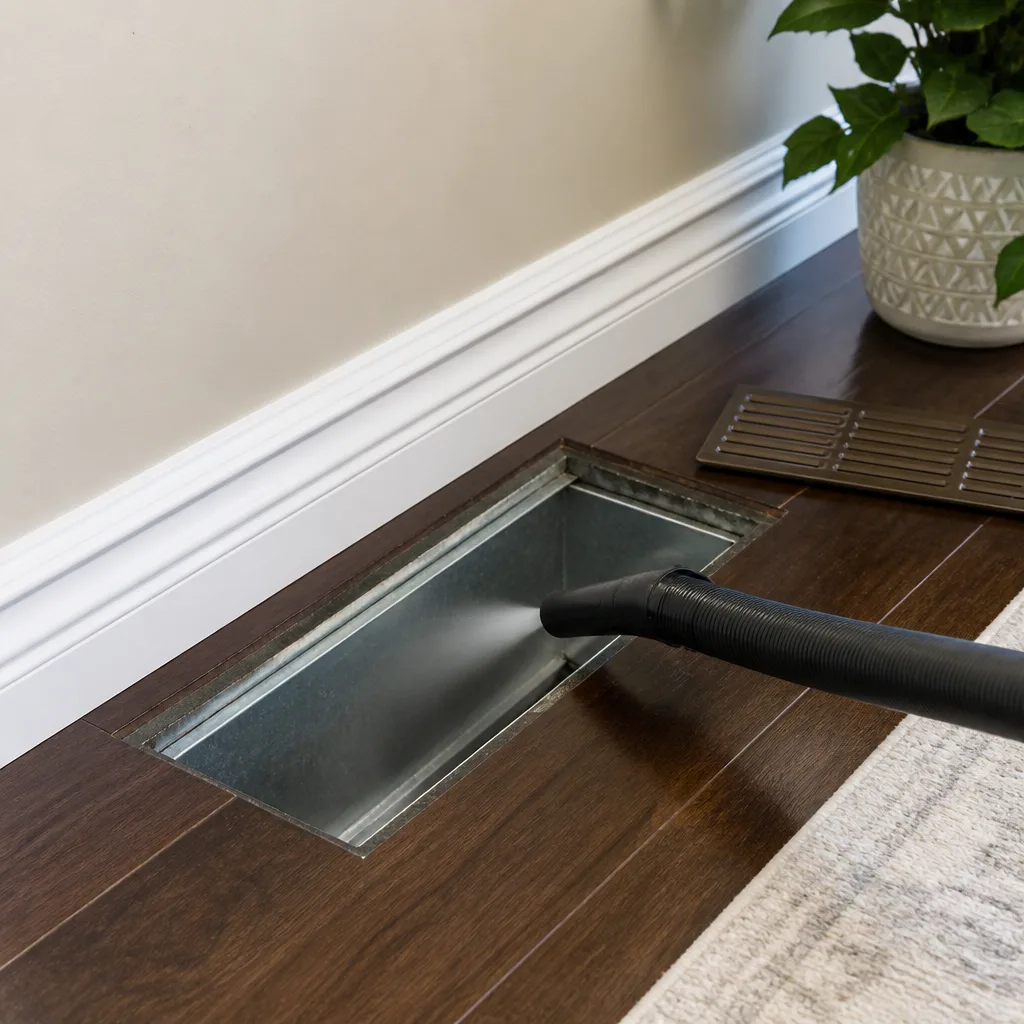
What the camera shows versus what a shop-vac service touches reveals the gap between documented work and cosmetic service. A typical shop-vac cleaning inserts a vacuum hose through the register and extracts material from the first 3-6 feet of ductwork. The camera, however, reveals conditions 20, 30, or 50 feet downstream, at elbows and transitions where debris actually accumulates. In a 2023 inspection of a 1985 Wedgwood home, the camera showed a 4-inch buildup of compacted dust and pollen at a 90-degree elbow 35 feet from the nearest register, a location no shop-vac could reach. The homeowner had paid for “duct cleaning” two years earlier from a company that offered no camera inspection and provided no documentation.
The inspection protocol we follow at Air Duct Cleaning in Fort Worth includes:
- Visual assessment of the HVAC cabinet, filter condition, and accessible ductwork exterior
- Borescope examination of the return air pathway, where debris concentration is typically highest
- Camera inspection of each supply duct run, with footage archived by room location
- Photography of the plenum interior, where temperature differentials create the most condensation
- Airflow measurement at each register using a calibrated anemometer
- Written report with timestamped video stills and specific recommendations
This inspection produces the documentation a homeowner needs to make an informed decision. Without it, any cleaning quote is speculative, and any claimed result is unverifiable.
The Four Conditions That Warrant Cleaning
Based on EPA guidance, NADCA standards, and our own documented findings across Fort Worth homes, cleaning is objectively warranted when inspection confirms one of these four conditions. Everything else is discretionary, and the absence of these conditions means a homeowner is paying for a service with no measurable benefit.
1. Visible Mold Growth
Mold in ductwork requires laboratory confirmation in most cases, but visible growth on interior duct surfaces is sufficient cause. The critical distinction: mold on the register or surrounding drywall is a surface problem, not a duct problem. The camera must show growth on the duct interior itself, typically appearing as dark spotting on fiberglass duct board or fuzzy colonization on metal at condensation points. In Fort Worth’s humid summers, we’ve documented this most often in homes with oversized AC units that short-cycle, failing to dehumidify adequately, and in attics with inadequate ventilation where duct sweating is chronic.
2. Vermin Intrusion
Rodents, birds, or insects have entered the duct system and left debris, nesting material, or remains. The evidence is unmistakable: shredded insulation, droppings, or in the case of insects, mud tubes or casings. In Fort Worth, roof rats have become increasingly common in established neighborhoods with mature trees, and we’ve found their nesting material in attic ductwork from River Oaks to Mistletoe Heights. This condition requires both cleaning and exclusion, sealing the entry points, or the problem recurs.
3. Construction Debris
Post-construction or post-renovation contamination is the most straightforward case. Drywall dust, in particular, is extremely fine and settles throughout the system. It also degrades filters rapidly and can damage blower motors if drawn into the HVAC cabinet. Homes in Fort Worth’s active infill areas, like the Near Southside and Magnolia, are particularly susceptible when older homes undergo gut renovations with the duct system left in place.
4. Measurable Airflow Restriction
This condition requires quantification, not visual assessment alone. Using a manometer or calibrated anemometer, technicians measure static pressure or airflow velocity and compare against system design specifications. A supply register producing 40% of designed airflow, with camera confirmation of debris blockage at a transition or elbow, documents a mechanical problem that cleaning can solve. Without the measurement, a visual finding of “some dust” is not justification.
Conditions that do not warrant cleaning include: routine household dust visible at registers, a vague sense that “the air feels stale,” recent installation of a new filter, or the elapsed time since last service. Time-based cleaning schedules have no basis in research; condition-based decisions do.
What the NADCA ACR Standard Means in Plain Language
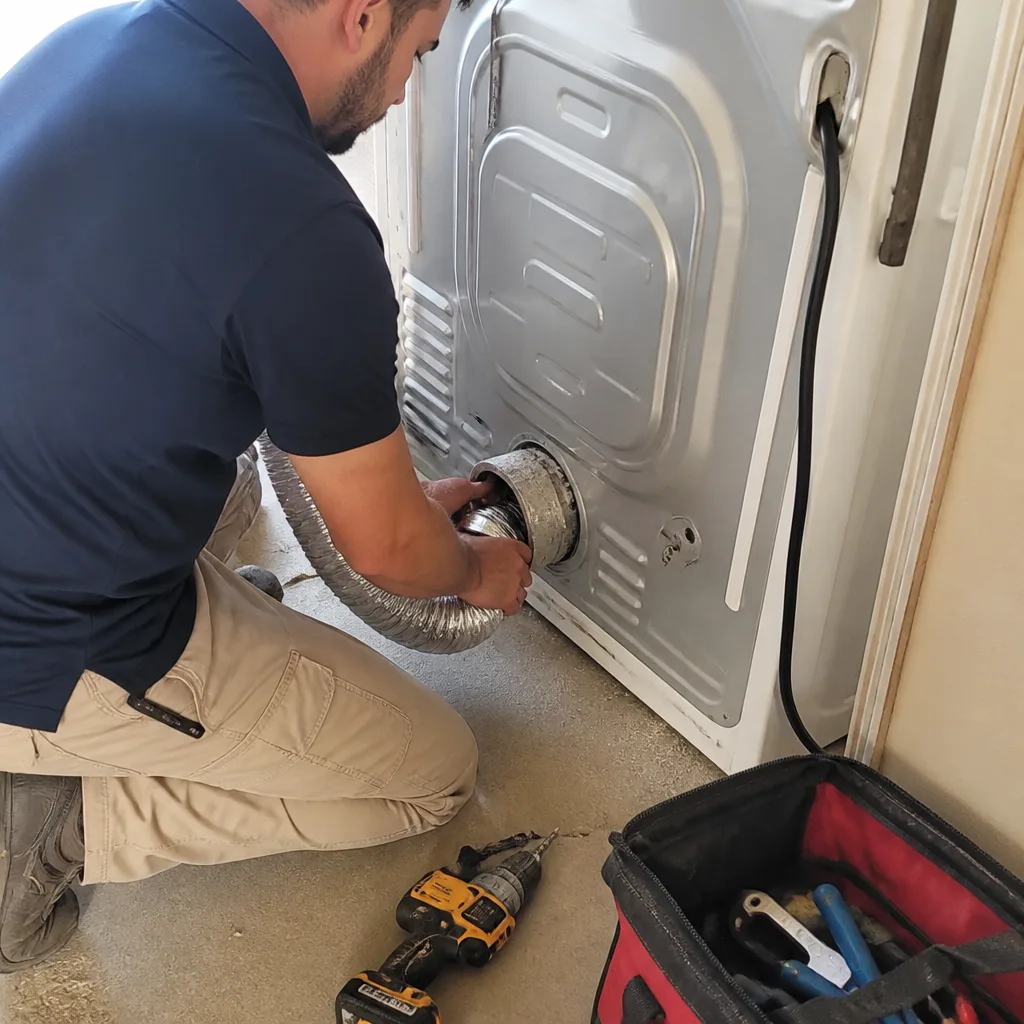
The National Air Duct Cleaners Association publishes the Assessment, Cleaning, and Restoration of HVAC Systems standard, commonly called ACR. It’s the only widely recognized benchmark for duct cleaning work, and understanding its basic requirements lets homeowners hold any contractor accountable to measurable performance rather than marketing claims.
The ACR standard specifies four core requirements that translate directly to what you should expect:
- Pre-cleaning assessment: The contractor must evaluate the system condition before work begins, including documentation of accessibility, contamination type, and any mechanical defects. This is where the camera inspection belongs.
- Containment and protection: The work area must be isolated to prevent debris migration into occupied spaces. This means sealing registers, protecting flooring, and using negative-pressure equipment that exhausts outside the home, not into the living space.
- Cleaning method verification: The contractor must demonstrate that their chosen method, brushing, air washing, or contact vacuuming, achieved the intended result. This requires post-cleaning inspection, not assumption.
- Post-cleaning documentation: The customer receives a written record of work performed, including any deviations from standard practice and recommendations for follow-up.
The ACR standard also defines “clean” in functional terms: the duct interior should be free of visible debris, with no objectionable odors, and with airflow restored to design specifications where restriction was documented. It does not promise sterile ducts or health improvements, because those claims exceed what cleaning can deliver.
When evaluating a Fort Worth contractor, ask specifically: “Do you follow NADCA ACR standards?” Then ask how they document compliance. A contractor who names the standard but cannot produce the corresponding documentation, pre-cleaning assessment, post-cleaning verification, is citing credentials without accountability.
How to Read a Before-and-After Photo Record
The documented photo record is where the duct cleaning industry’s two tiers separate. One tier hands you a pamphlet or a single printed image of a dirty filter. The other provides timestamped, location-specific photography of every duct run in your home. Understanding the difference protects you from paying for vacuum noise instead of actual work.
A legitimate photo record from a Fort Worth home should include these elements:
- Location identification: Each image is labeled by room and duct run, “Master Bedroom, South Supply,” not generic “before” and “after” with no context.
- Consistent camera position: The before and after images show the same section of ductwork, identifiable by a seam, joint, or structural feature visible in both frames.
- Timestamp or sequence marker: The images are recorded in sequence, demonstrating that the after image was captured following the claimed work, not pulled from a different job.
- Depth reference: The camera footage shows how far into the duct run the image was captured, typically measured from the register or access point. A before image at 6 feet and an after image at 2 feet is not a valid comparison.
- Plenum documentation: The central chamber receives specific attention, as it’s the most common location for heavy accumulation and the most difficult to clean thoroughly.
What invalid documentation looks like: a single blurry image of a dirty duct interior with no location data; before-and-after images with different lighting, camera angles, or apparent duct diameters; images of the register face or surrounding ceiling rather than the duct interior; or no images at all, replaced by a verbal assurance that “we got it all.”
At CleanRun, the Documented Photo Record is a standard deliverable on every job, archived with the written scope and warranty. Haven Standard Clause 2, Documented Results, requires this record for every duct run, not a sampling. When comparing contractors in Fort Worth, ask to see a sample record from a completed job. The response will tell you whether documentation is a marketing claim or an operational practice.
Choosing a Contractor in Fort Worth
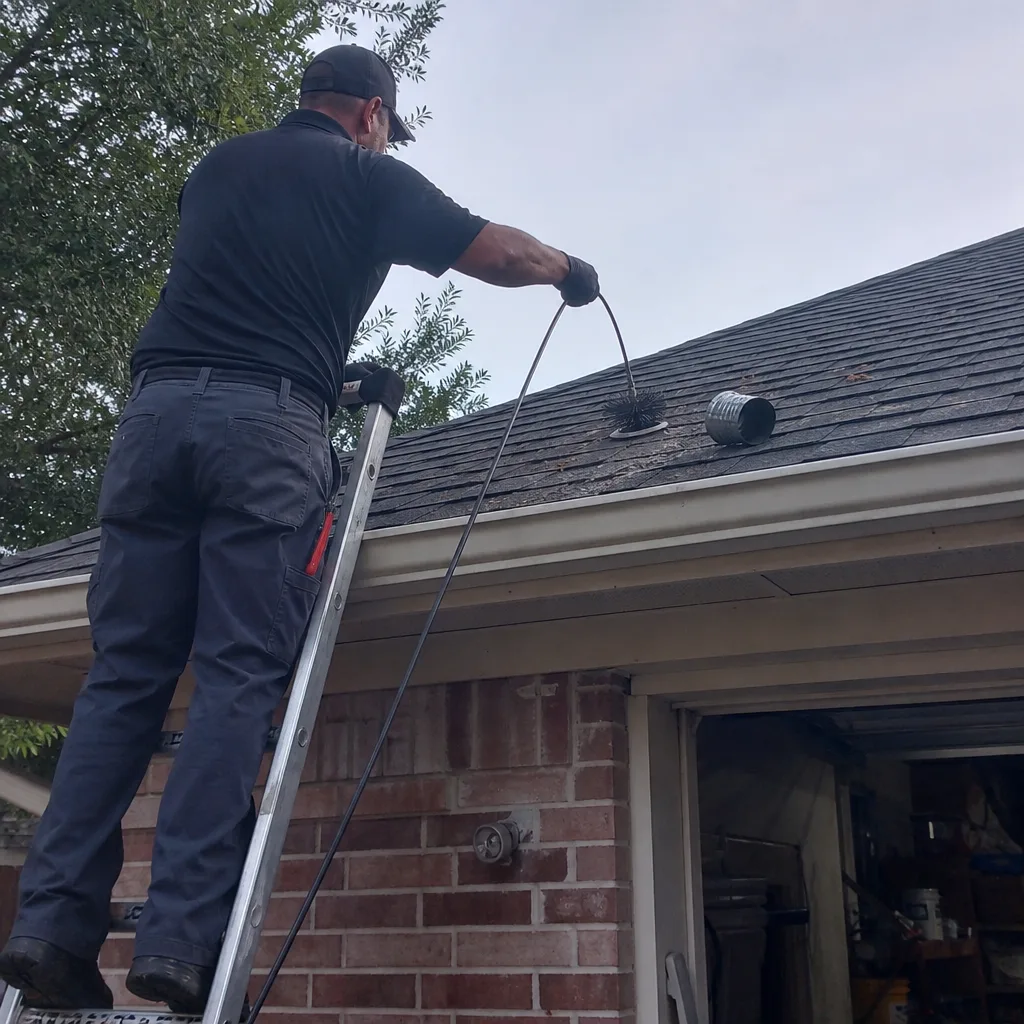
The Fort Worth market includes national franchise operations, independent contractors, and HVAC companies that added duct cleaning as a secondary service. The selection criteria that matter are verifiable and specific-see our How to Hire a Air Duct Cleaning Contractor in Fort Worth: A Step-by-Step Guide for details; they do not include longevity, fleet size, or advertising frequency.
License verification: Texas requires HVAC contractors to hold a TDLR license. The number should be published on the company’s website and provided on request, not buried in a footer or withheld until asked. CleanRun publishes its license number and operates under the H.A.V.E.N. Standard, with Haven Standard Clause 3, Verified Crews, requiring background checks and uniformed identification for every technician.
Equipment specificity: Professional-grade duct cleaning requires equipment that generates sufficient negative pressure and proper agitation. Ask what equipment the contractor uses and verify the brands independently. CleanRun’s equipment roster includes Rotobrush for residential duct agitation, Nikro and Abatement Technologies for negative-pressure extraction systems, and Aprilaire and Honeywell components for air quality integration. These are trade-recognized manufacturers with published specifications, not proprietary or unverifiable claims.
Pricing transparency: The written price before work starts is non-negotiable under Haven Standard Clause 1. Any contractor who cannot provide a fixed price for a defined scope, who requires “seeing it first” before quoting, or who offers a low initial figure with “additional services” to be determined, is operating on a bait-and-switch model. Our Free Second Opinion on Any Written Estimate lets Fort Worth homeowners bring a competitor’s quote for direct comparison.
Documentation commitment: Ask whether the contractor provides the documented photo record as standard or as an add-on. Ask to see a sample. The answer reveals whether accountability is built into the service or offered as an upgrade.
Warranty in writing: The 365-Day Done Right Promise means the work is accountable long after the truck leaves. A verbal assurance or “satisfaction guarantee” with no written terms is not equivalent. The warranty should specify what constitutes a valid claim and how it will be resolved.
For related services, Dryer Vent Cleaning in Fort Worth addresses a separate fire-safety issue that often accompanies duct cleaning inquiries, and HVAC Cleaning in Fort Worth covers the mechanical components that duct cleaning does not service.
Common Mistakes to Avoid
- Scheduling cleaning without inspection: In Fort Worth’s competitive market, companies book “cleanings” that are actually sales visits. The technician arrives, declares the ducts “worse than expected,” and presents a revised quote. Start with a separate inspection that produces documentation you own, regardless of whether you proceed with cleaning.
- Trusting per-vent pricing: This model incentivizes finding more vents to charge for, and it obscures the total cost. A whole-system price for defined work is the only structure that aligns the contractor’s incentive with your interest.
- Confusing register cleaning with duct cleaning: Removing and washing the visible grille is a 10-minute task that some services present as “duct cleaning.” The duct interior begins behind the register; that’s where the camera must go.
- Ignoring the plenum: The plenum is the largest surface area in the system and the most common location for heavy accumulation. A quote that doesn’t specify plenum cleaning is incomplete.
- Accepting health claims at face value: No duct cleaning service in Fort Worth can legally promise health benefits the EPA says are unproven. Claims of “allergy relief” or “cleaner air” without specific contamination documentation are marketing, not medicine.
- Neglecting the cause: Cleaning debris without addressing why it accumulated, failed seals, inadequate filtration, or moisture intrusion, means paying for the same service again. The inspection should identify contributing factors and the proposal should address them.
- Choosing by coupon: The $79 duct cleaning offer is a well-documented lead generation tactic. The average invoice from these visits, according to consumer complaint data, exceeds $400. The low price is not a deal; it’s a qualification step for upselling.
When to Call a Professional
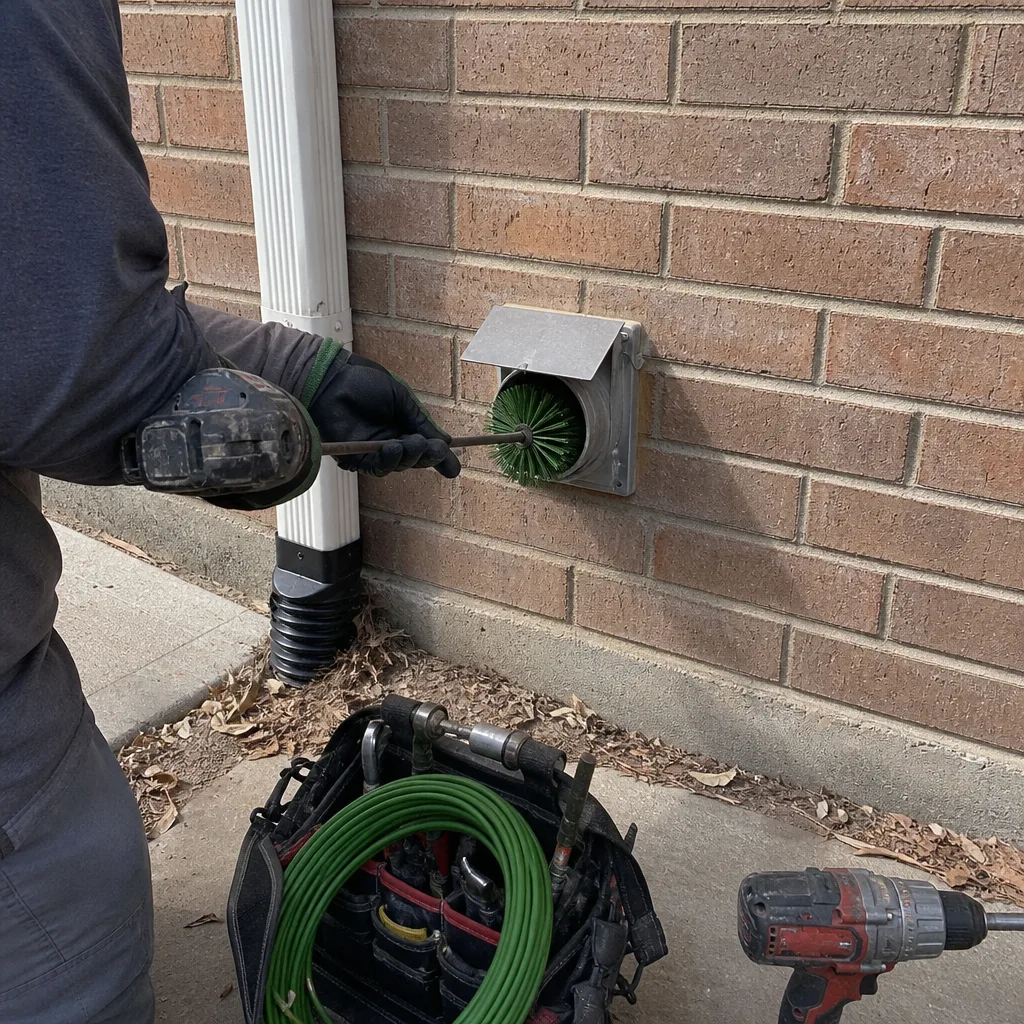
Call a professional when inspection confirms one of the four warranted conditions, when you’ve experienced a specific contamination event like a rodent intrusion or renovation, or when airflow measurements document measurable restriction. For related topics, explore more guides & resources. Don’t call because of elapsed time, vague concerns, or unsolicited marketing that creates worry without evidence.
CleanRun Air Duct Cleaning Fort Worth offers free estimates in Fort Worth. The estimate includes a preliminary assessment and written price for any recommended work, delivered before any commitment. Call (817) 520-8797 to schedule. All calls are answered by a live person, and technicians are background-checked, uniformed, and identified by name before arrival, per Haven Standard Clause 3.
Frequently Asked Questions
Whole-system duct cleaning in Fort Worth typically ranges from $450 to $1,200 for a residential home, depending on system size, accessibility, and contamination level. A small single-story home with straightforward access and light debris falls at the lower end; a large two-story with multiple zones, heavy construction debris, or difficult attic routing falls higher. CleanRun provides a written price before any work starts, with no per-vent add-ons or post-arrival revisions. Call (817) 520-8797 for an exact quote on your home, estimates are free.
Low quotes typically reflect limited scope, not lower margins. A $79 service usually covers register vacuuming only, not full duct runs, plenum cleaning, or negative-pressure extraction. The business model depends on arriving at your home and selling additional services. The final invoice often exceeds what a transparent whole-system quote would have been. Ask any low-priced contractor to specify exactly what equipment will be used, which duct runs will be cleaned, and whether the plenum is included. The answers will explain the price difference.
You know through documentation, not assumption. A legitimate contractor provides timestamped, location-specific photography of every duct run, before and after, with the camera positioned at the same depth in both images. You should receive this record as a standard deliverable, not an extra-cost option. At CleanRun, the Documented Photo Record is included on every job, archived with the written scope and 365-Day Done Right Promise. If a contractor cannot or will not produce this documentation, the work is unverifiable.
There is no fixed interval that applies to all homes. The EPA states that duct cleaning “has never been shown to actually prevent health problems,” which means time-based scheduling has no scientific basis. Cleaning frequency should be determined by condition: after contamination events, when inspection documents one of the four warranted conditions, or when airflow measurements show restriction. Homes with excellent filtration, tight ductwork, and no specific incidents may never need cleaning. Homes with construction debris, rodent history, or failed seals may need attention every few years. The inspection determines the schedule, not the calendar.
Fort Worth’s pollen counts are high, but pollen is primarily an outdoor air issue addressed by keeping windows closed and maintaining quality HVAC filtration. Most pollen that enters a home is captured at the return grille or trapped by the filter. Pollen that bypasses these barriers settles in the home, not primarily in ducts. Camera inspections in Fort Worth homes typically show household dust and fiber accumulation, not pollen-specific deposits. Upgrade your filter to MERV 11-13 if pollen sensitivity is a concern; don’t assume ducts are the pathway.
Duct cleaning addresses the distribution pathways: the trunk lines, branch ducts, and plenum that carry conditioned air. HVAC cleaning addresses the mechanical components: the blower assembly, evaporator coil, and heat exchanger. These are separate services with separate equipment requirements. A dirty blower or clogged coil affects system performance regardless of duct condition, and vice versa. CleanRun evaluates both during inspection and can scope either or both services based on documented findings. See HVAC Cleaning in Fort Worth for specific information on mechanical component service.
The Bottom Line
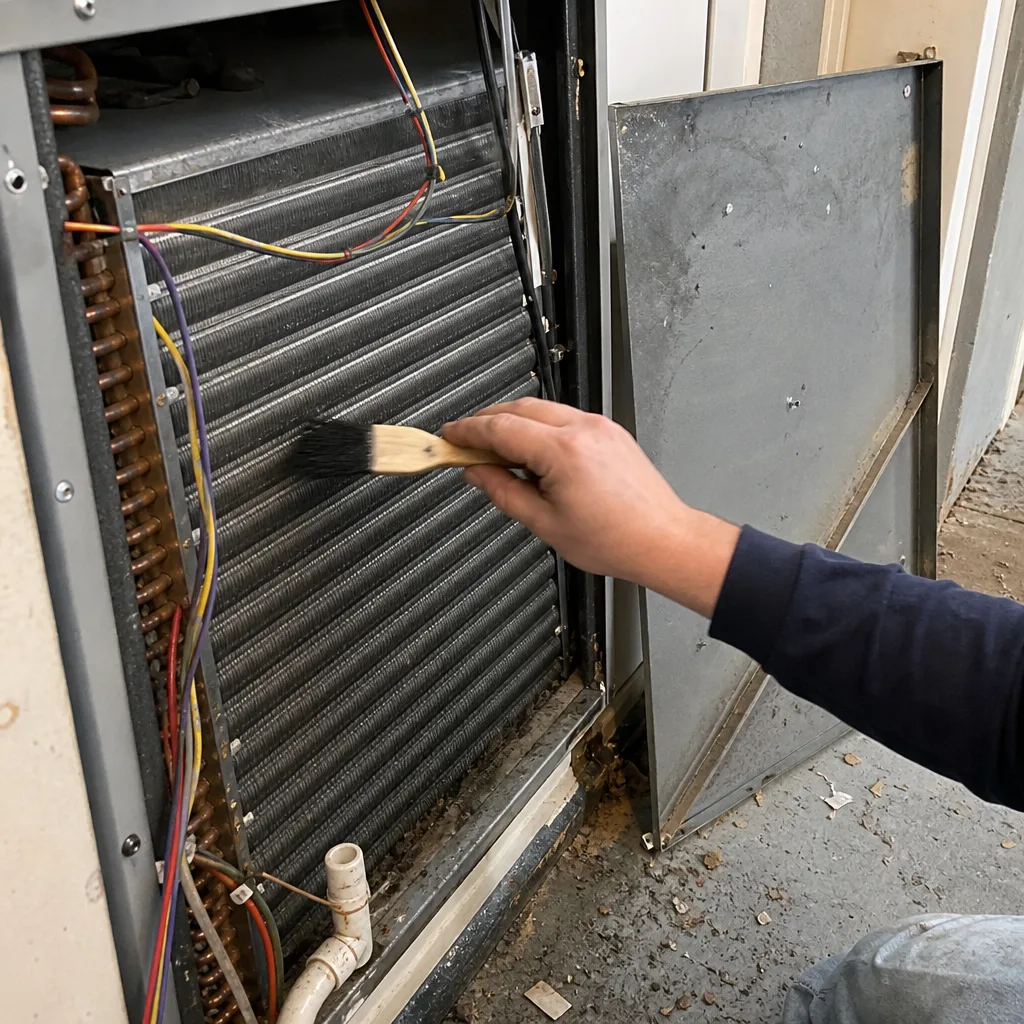
Air duct cleaning in Fort Worth is a conditional service, not a routine one. The starting point is always documentation: a camera inspection that shows what’s actually inside your ductwork, followed by a written price for specific work to address documented problems. The four warranted conditions, visible mold, vermin intrusion, construction debris, and measurable airflow restriction, are the only evidence-based justifications. Everything else is discretionary spending with no proven return. When you do hire, demand the same documentation after work as before: timestamped photography, written scope, and a warranty with specific terms. The contractors who operate this way are the ones whose work you can verify, whose prices you can compare, and whose accountability extends past the day of service.
Written by Tomas Reyes, Owner at CleanRun Air Duct Cleaning Fort Worth, serving Fort Worth since 2013.