
Whole-system duct and dryer vent check with before-and-after photos - you see exactly what came out of your vents
That "$99 whole-house special" is a bait ad - the real number appears once they are in your hallway, or the "clean" is a shop-vac at the register. We photograph the inside of your ducts before and after instead.
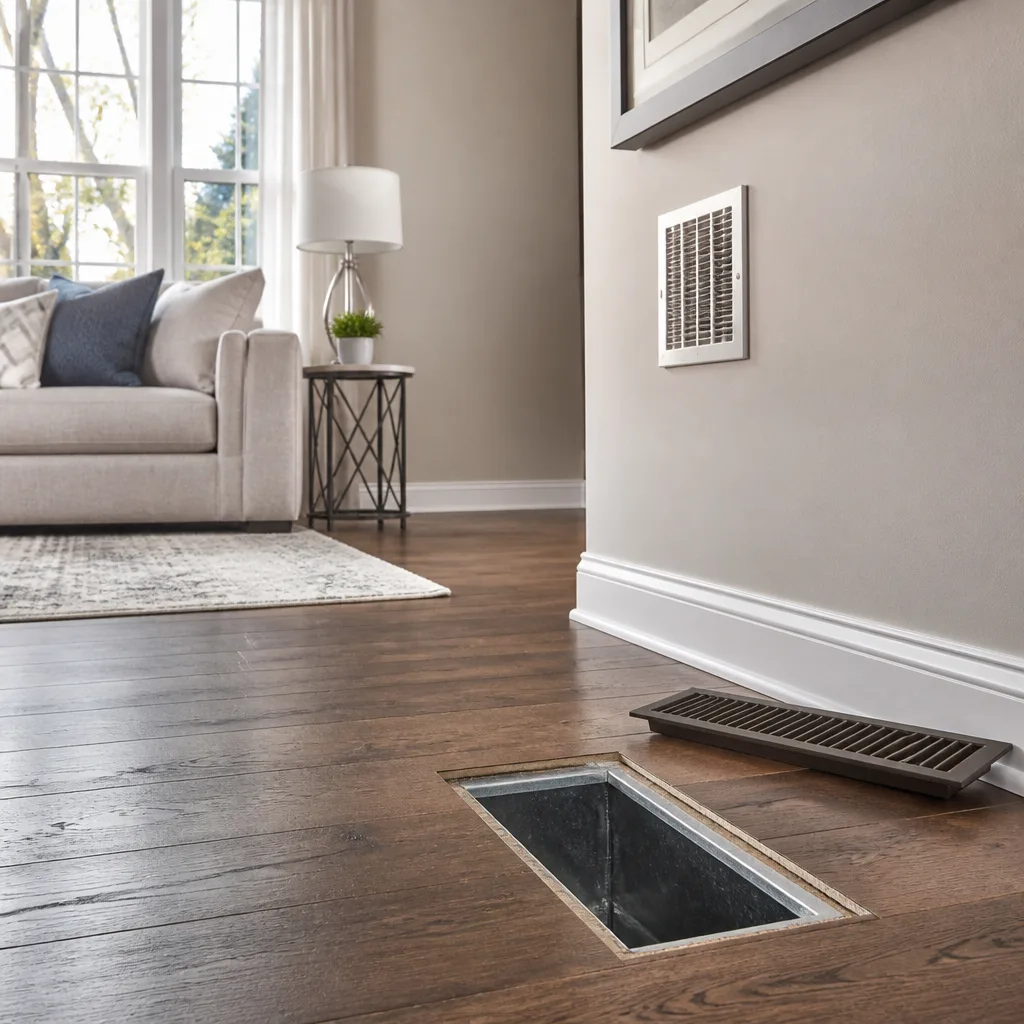
 Before
 After
After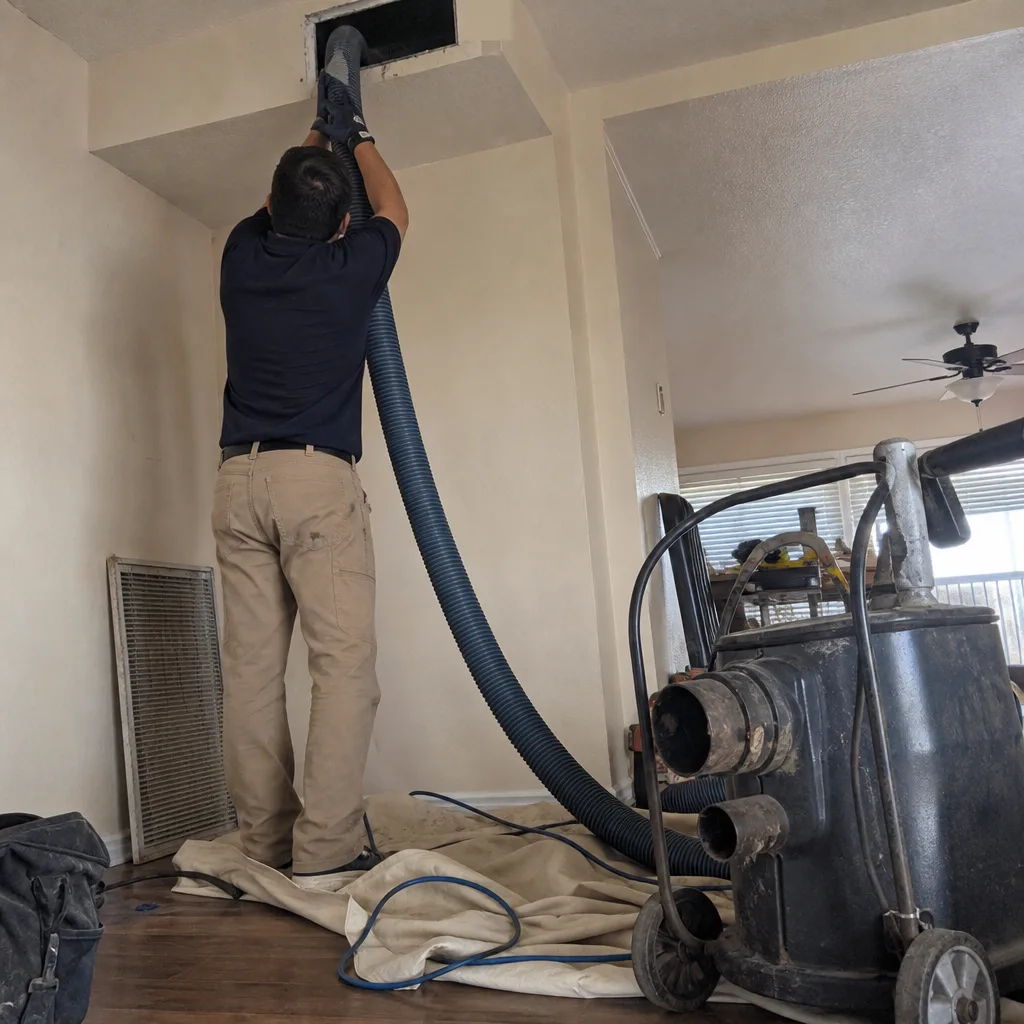 Before
 After
After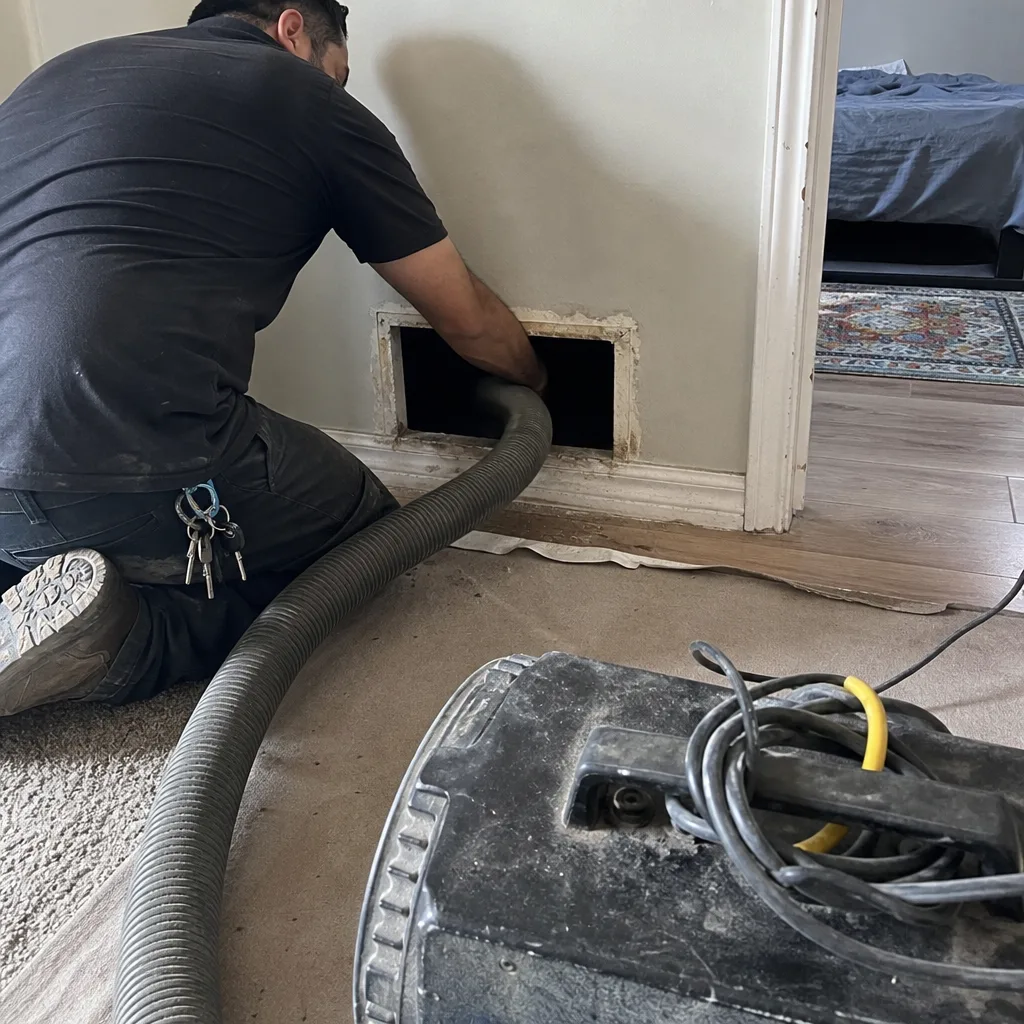 Before
 After
AfterSupply Duct Cleaning in Fort Worth, TX
Supply duct cleaning targets the duct runs that carry conditioned air from your HVAC system outward to every room in your home. In Fort Worth, where summer heat pushes systems to run hard for five or six months straight, those ducts accumulate dust, fibrous debris, and in older construction, compacted insulation fragments at every elbow and transition point. A full Air Duct Cleaning in Fort Worth covers both supply and return sides, but supply ducts carry filtered, pressurized air directly into your living space, which is exactly why cleaning them to a documented standard matters more than a shop-vac pass.
CleanRun Duct Repair & Cleaning has photographed the inside of supply duct runs in Fort Worth homes since 2013 – more than 52,000 homes served, every job quoted in writing before a single panel comes off. When you call (817) 520-8797, you reach a live person who can walk you through what supply duct cleaning involves, what it costs in this market, and what documentation you’ll hold when the job is done.
What Supply Ducts Actually Do (and Why Their Condition Matters)
Supply ducts are the pressurized side of your air distribution system. Your HVAC blower pushes air through the supply plenum – the main distribution box connected directly to your air handler – and from there into individual duct runs that terminate at supply registers in your ceilings, walls, or floors. Because the air is moving under positive pressure, whatever is sitting inside those ducts gets pushed toward the registers and into the room.
That’s the mechanical reality most duct cleaning marketing skips over. Debris in a return duct gets pulled back toward the filter before it reaches you. Debris in a supply duct travels the other direction – outward, into the space you breathe. In Fort Worth’s climate, where systems cycle heavily from March through October, a neglected supply side can move years of accumulated particulate into rooms that looked clean on the surface.
The duct runs themselves vary by construction type. In the ranch-style and two-story brick homes common in neighborhoods like Wedgwood, Westcliff, and Ridglea Hills, supply ducts are often sheet-metal trunk lines with flexible branch runs branching off to individual registers. In newer construction in areas like Fossil Creek or Sycamore School Road corridors, the flex duct tends to dominate from plenum to register. Each configuration traps debris differently, which is why a Video Inspection before cleaning is not optional – it determines the method.
When You Need Supply Duct Cleaning
- Visible dust discharge at registers: If you can see a gray ring forming on the ceiling around a supply register within days of cleaning it, debris is migrating out of the duct during each run cycle. This is the most direct sign that the supply side needs attention.
- Uneven room temperatures across the house: Partial blockages inside a supply run – compacted debris at an elbow, a collapsed flex section, or a disconnected branch – reduce airflow to specific rooms. In Fort Worth summers, a back bedroom that won’t cool below 78°F while the living room sits at 72°F is frequently a supply-duct airflow problem, not a thermostat problem.
- Allergy or respiratory symptoms that worsen indoors: Fort Worth’s spring cedar and fall ragweed seasons are heavy. If filtered air from your system still carries irritants, it suggests particulate has bypassed or accumulated past the filter – often in the supply plenum or the first few feet of each branch run where turbulence drops debris.
- Post-renovation or construction activity: Drywall dust, insulation fragments, and construction debris migrate into duct systems faster than most contractors expect. If a supply register was left uncovered during any remodel work in Tanglewood, Monticello, or anywhere else in Fort Worth, the contents of that run deserve a camera look before you run the system normally again.
- Systems not cleaned in more than five years: The EPA’s guidance references 3-5 years as a general interval for homes with standard occupancy and pets. Fort Worth’s climate – high summer humidity that creates brief but real moisture conditions inside ducts – can move that interval closer to three years in homes that run their systems heavily.
- Purchase of a home built before 2000: Older Fort Worth homes, particularly those in Como, Haltom City-adjacent neighborhoods, and the older TCU-area streets, frequently have original ductwork that has never been professionally cleaned. The camera record from an initial cleaning on these homes is often the most useful documentation a new owner can have.
BeforeAfterOur Supply Duct Cleaning Process
- Written scope and price before work begins. Under Haven Standard Clause 1, no work starts without a written price in your hand. A technician reviews the number of supply runs, the system configuration, access points, and any visible conditions at registers. The scope document names every duct run to be cleaned and the method to be used. There is no “call for a quote” at CleanRun – the number is written before the first panel comes off.
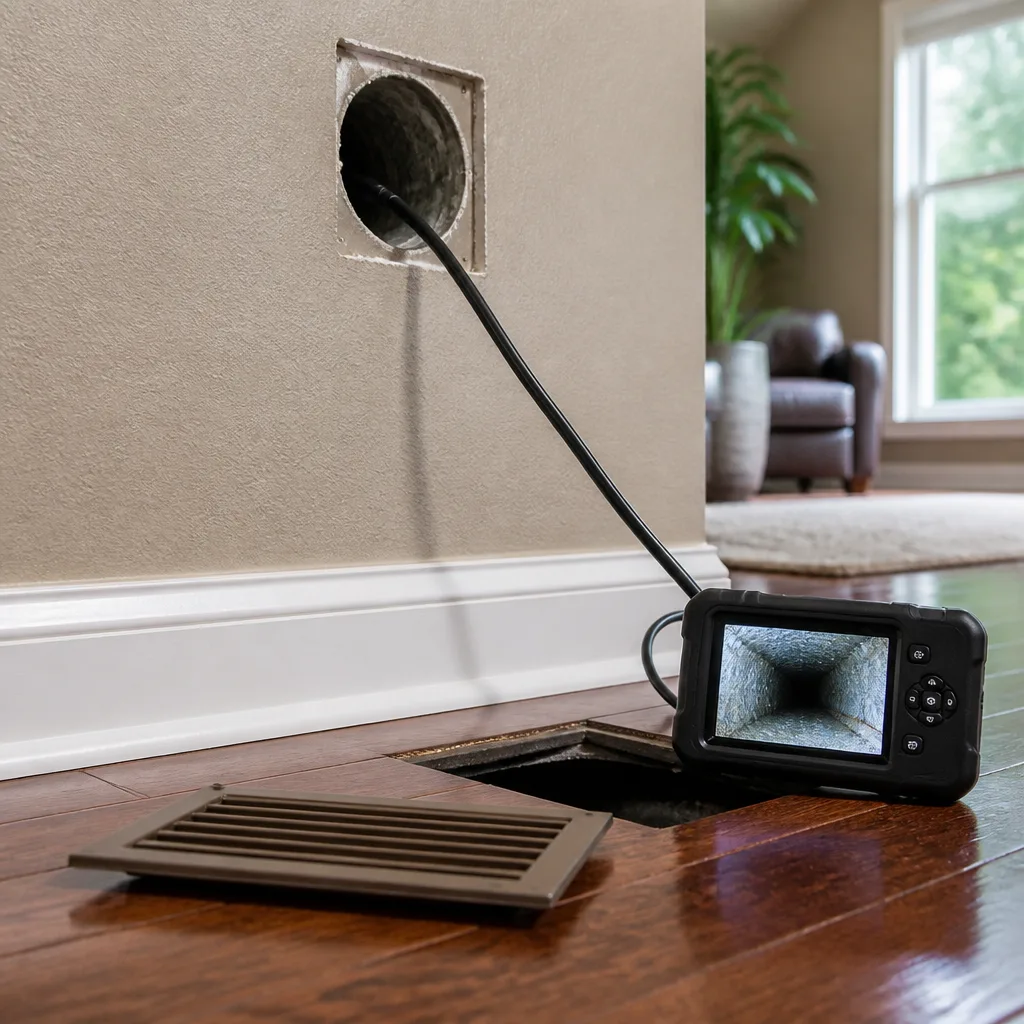
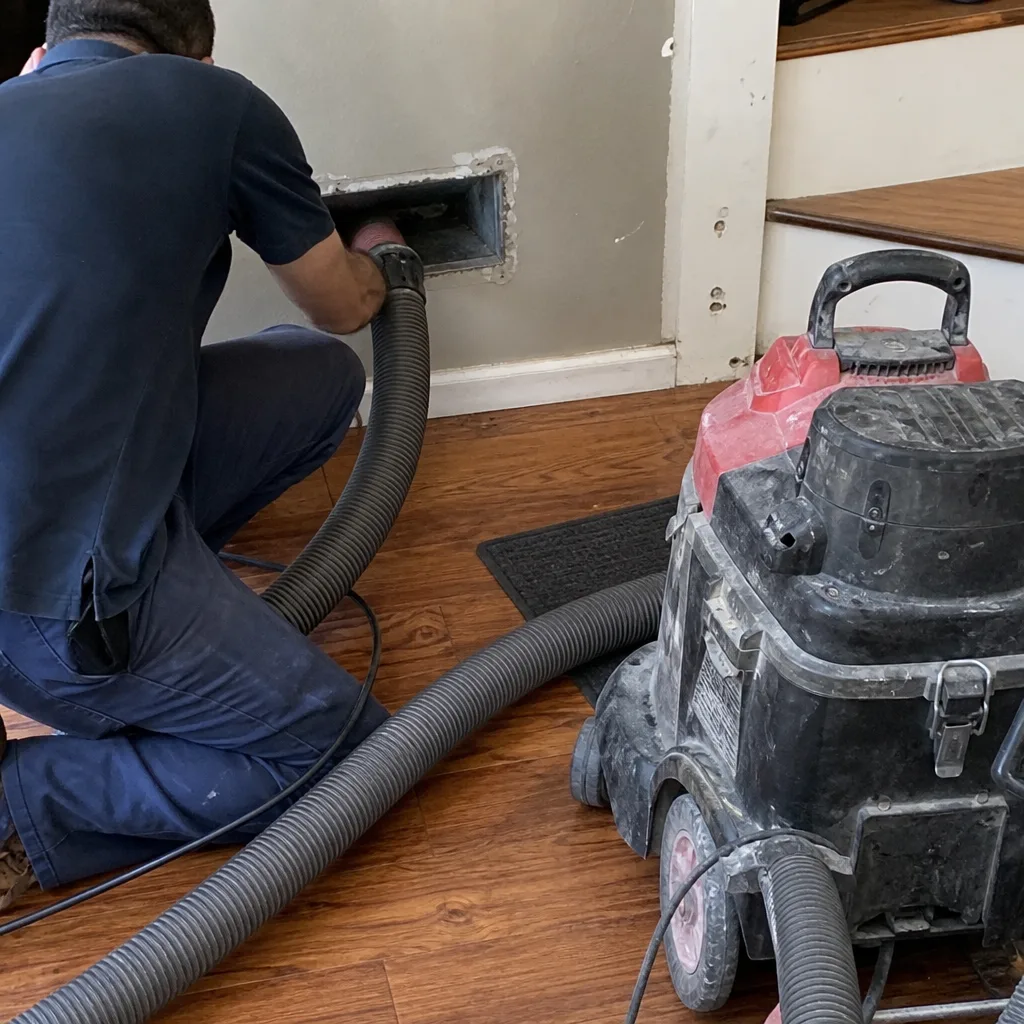
- Pre-cleaning camera inspection and photo record. Before any equipment enters the duct system, a technician runs a camera through each supply run and photographs the interior. What the camera finds – debris depth, debris type, any structural issues like collapsed flex or separated joints – is documented in the before-photo record you receive at job’s end. The camera showed a 3-inch debris build-up at the first elbow is more useful to you than anything we could say about how the ducts looked.
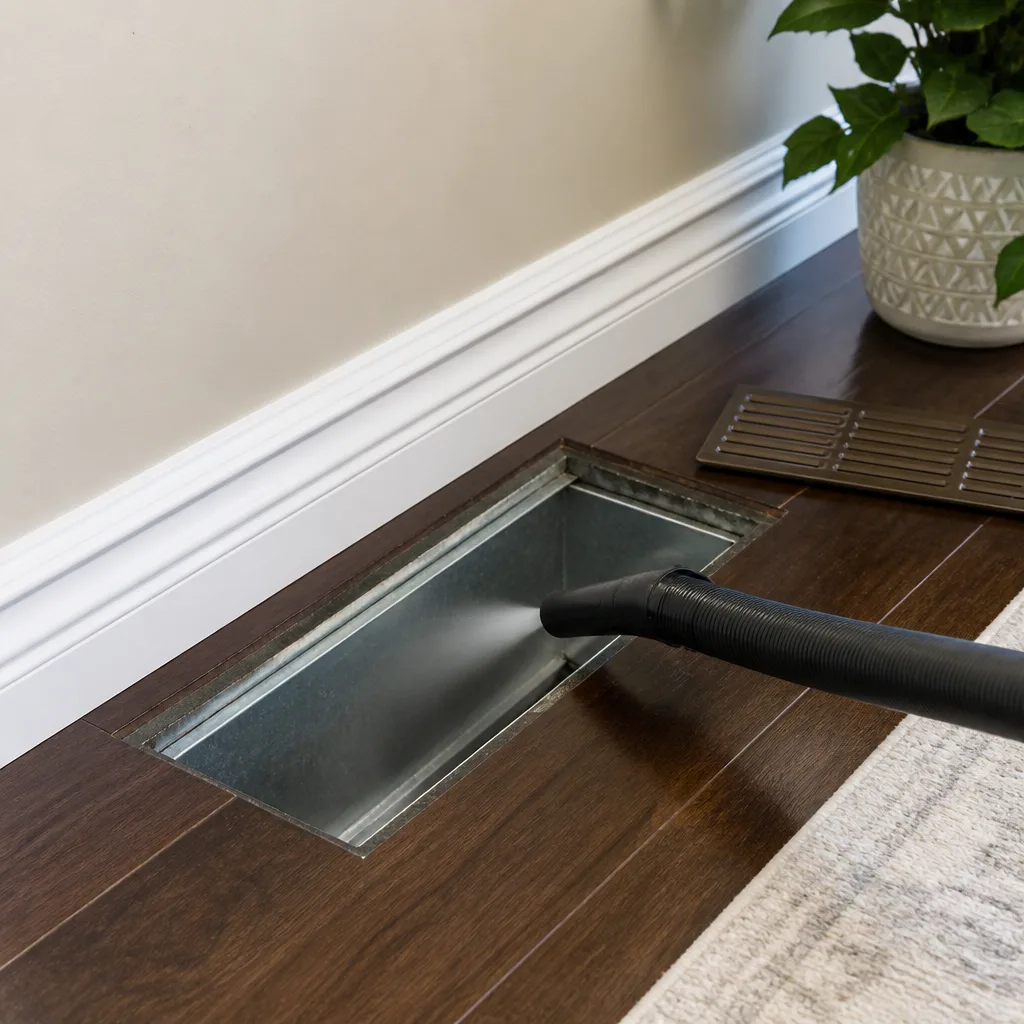
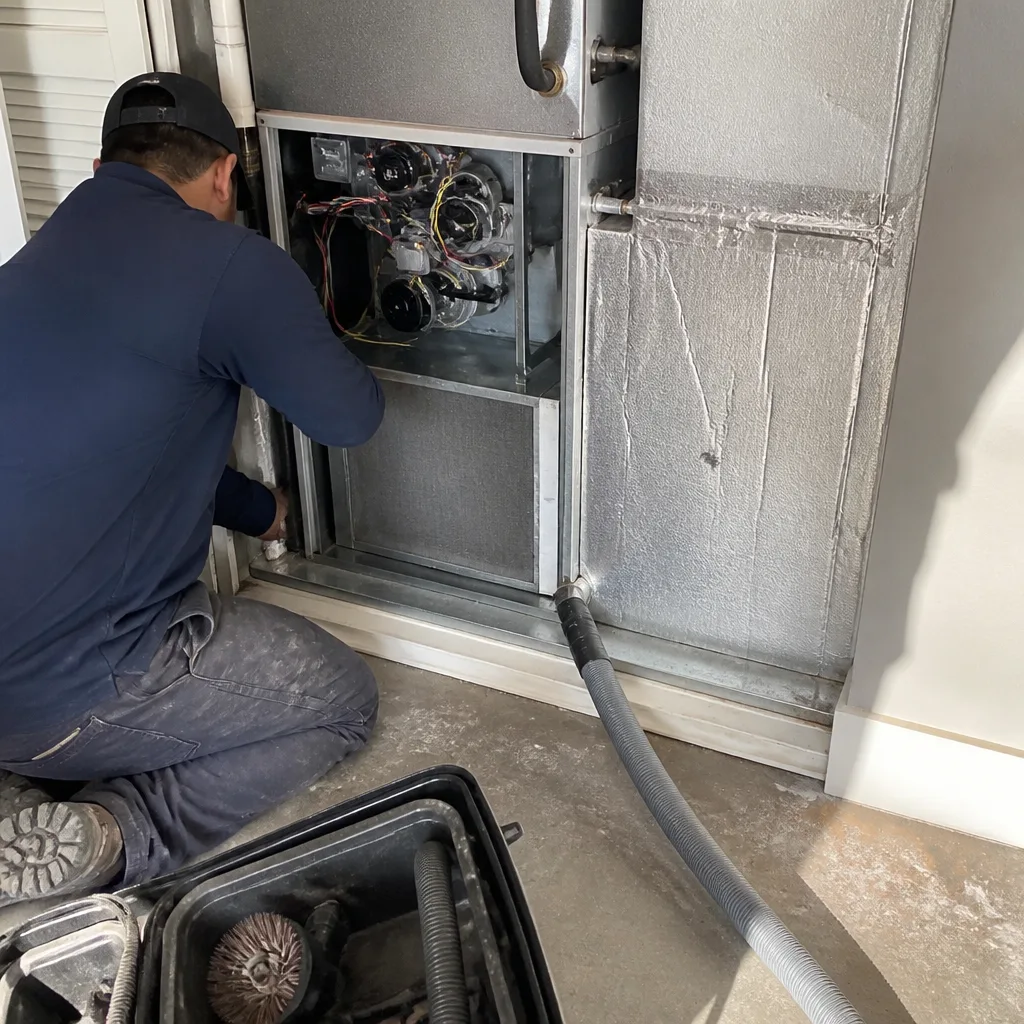
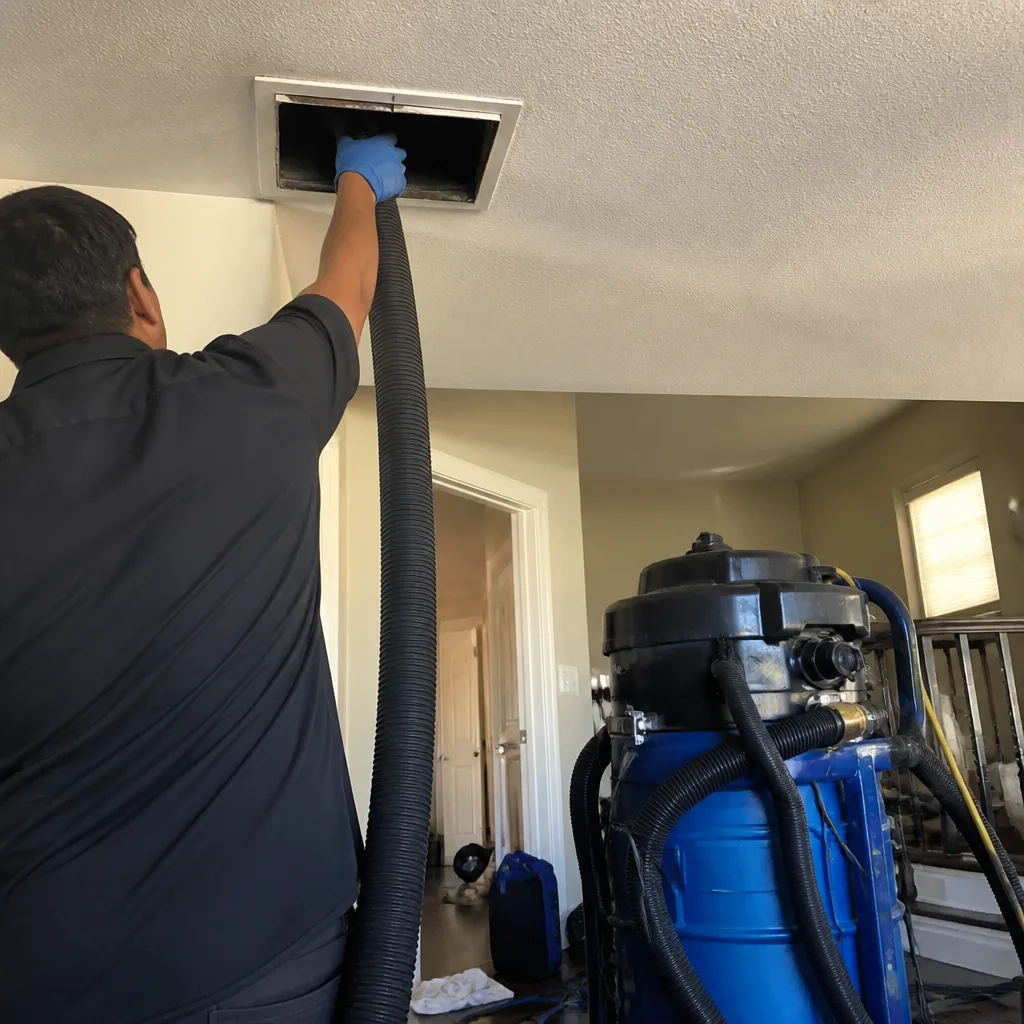
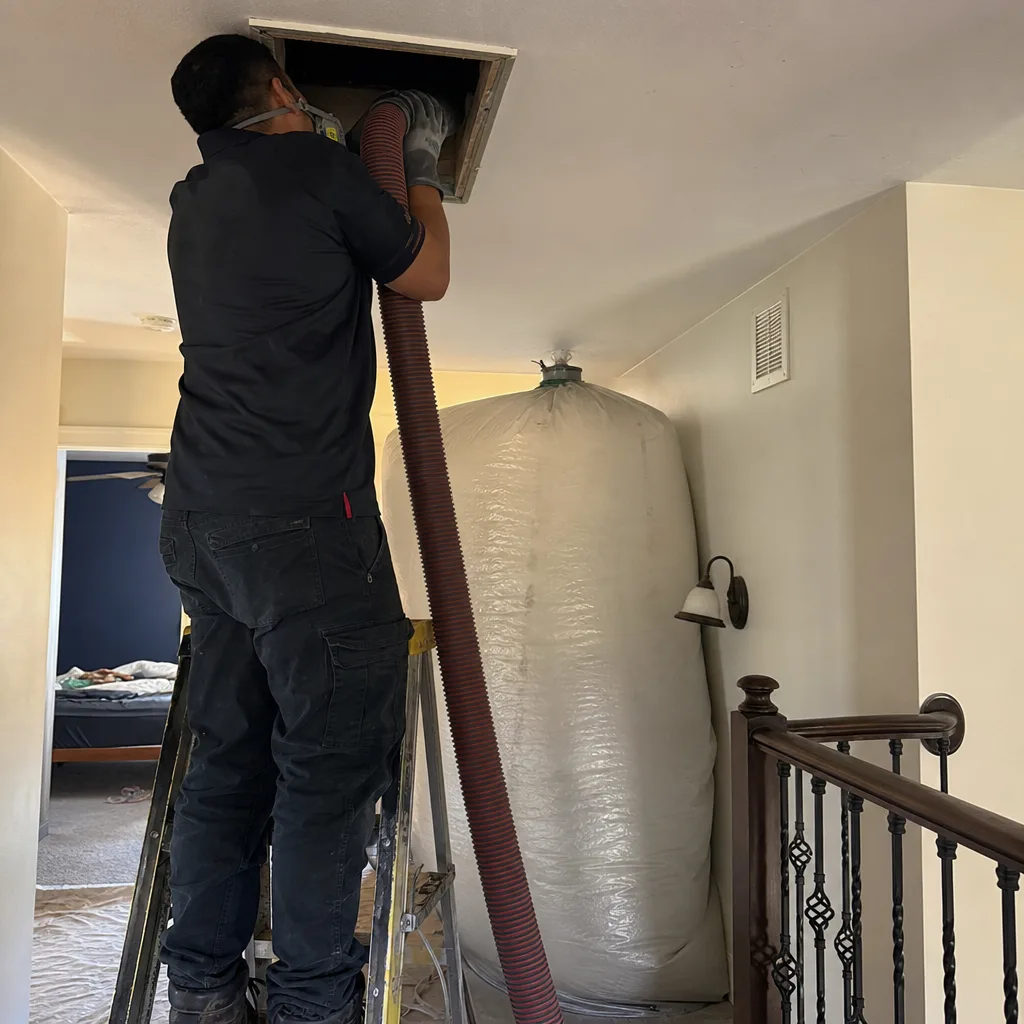
- Negative-pressure setup at the supply plenum. Negative-pressure extraction means a high-capacity collection unit is connected to the supply plenum, creating suction that pulls dislodged debris toward the collection point rather than back into the living space. CleanRun uses Nikro collection equipment on supply-side jobs – a trade-recognized brand customers can look up independently. Every supply register is temporarily sealed during this phase so the pressure is concentrated in the active run being cleaned.
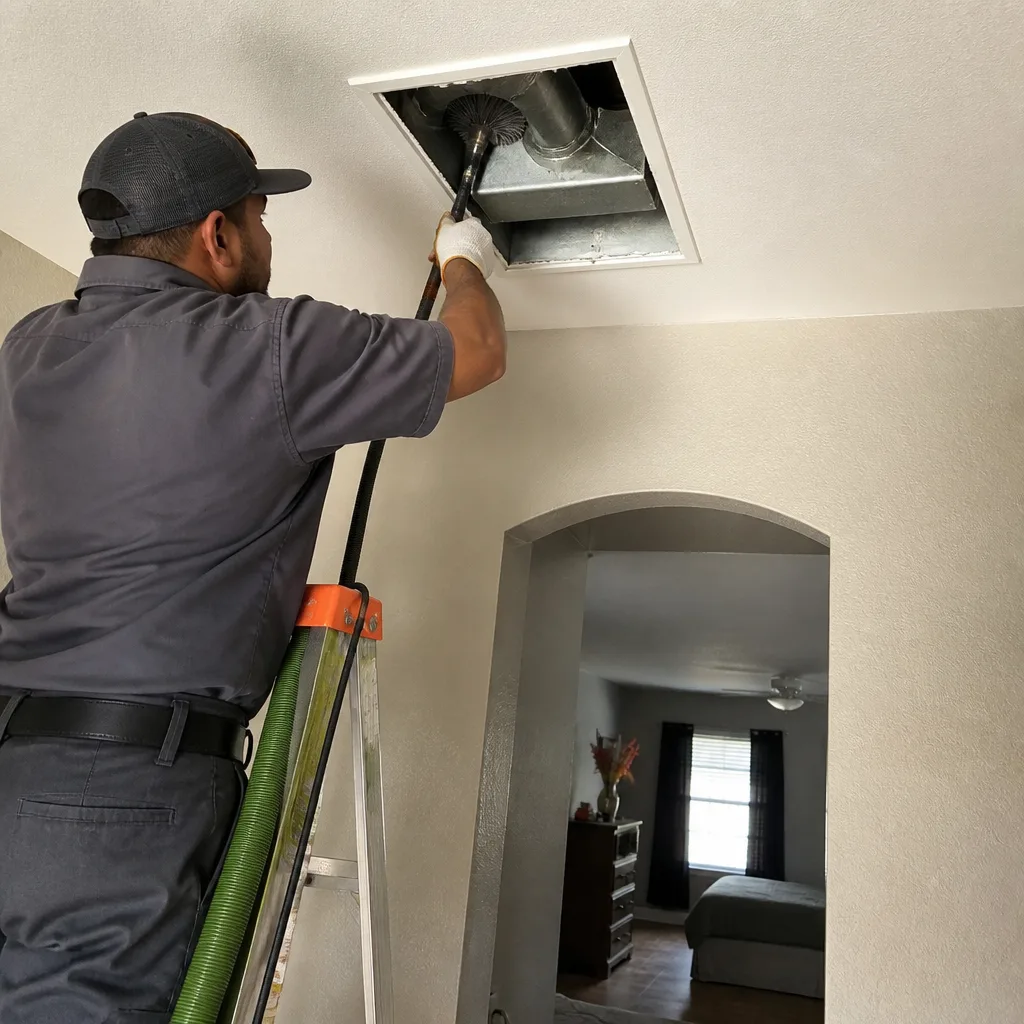
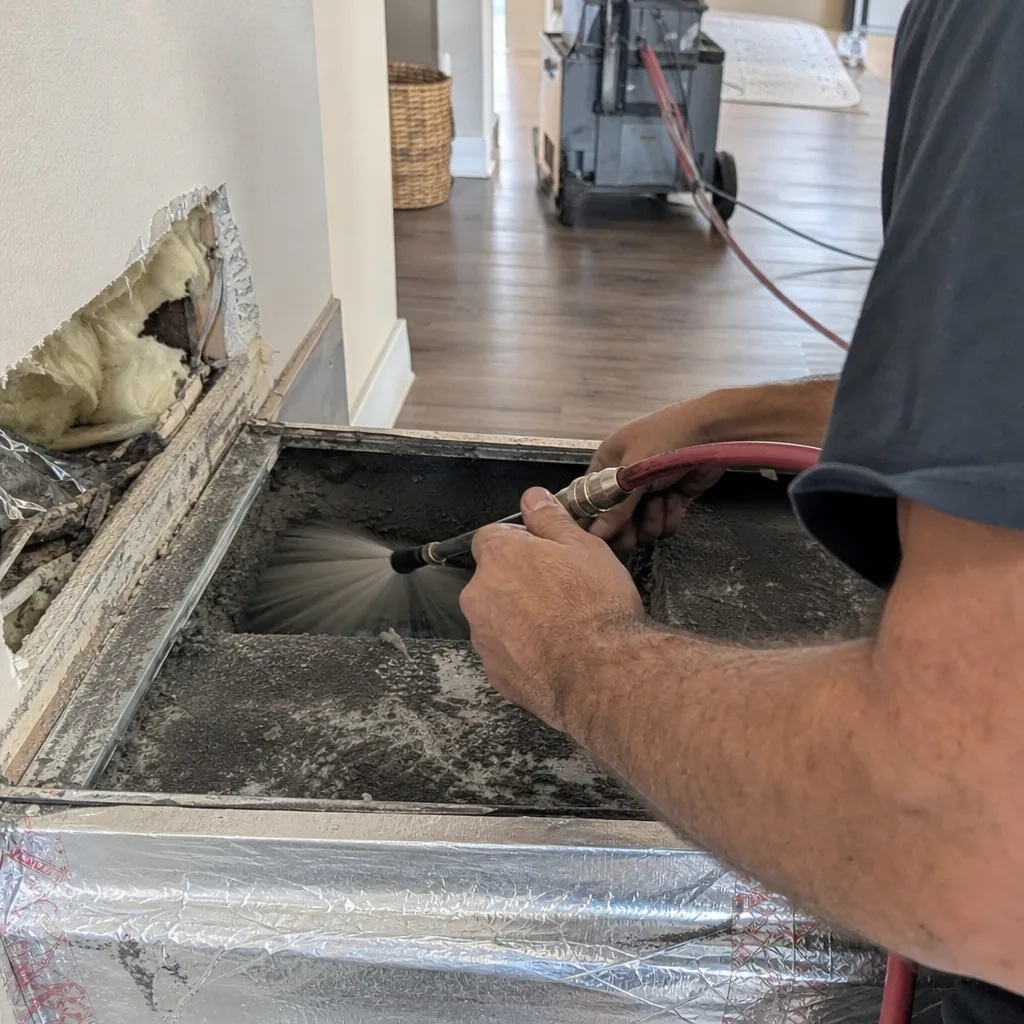
- Mechanical agitation through each supply run. With negative pressure held, a rotary brush system – Rotobrush is the tool of record for most Fort Worth residential supply runs – is worked through each branch duct from the register end toward the plenum. The brush breaks up compacted debris and biofilm; the negative pressure carries the loosened material into the collection unit. Flexible duct runs require a softer brush profile than rigid sheet metal to avoid liner damage, and that distinction is made at the inspection stage, not improvised during cleaning.
- Register and grille cleaning. Every supply register and grille is removed, cleaned separately, and inspected before reinstallation. Registers are a common collection point for grease film in homes near cooking spaces, and that film holds airborne debris the way adhesive does. Cleaning the register but not the grille – or vice versa – leaves part of the problem in place.
- Post-cleaning camera inspection and final photo record. Each supply run is re-inspected with the camera after cleaning. The after photos are included in the same job-record document as the before photos. That document – before, after, every run – is the deliverable, not a verbal summary. The 365-Day Done Right Promise is written on that document: if the work is not right, CleanRun makes it right, backed in writing.
Supply Duct Cleaning Pricing in Fort Worth
Supply duct cleaning in Fort Worth typically runs between $180 and $420 as a standalone service, depending on the number of supply runs, the duct material, and the degree of debris accumulation found on camera. Below is a plain breakdown of how cost factors stack:
| Factor | Lower end | Higher end |
|---|---|---|
| Number of supply runs | 8-10 runs (smaller home) | 18-24 runs (larger home) |
| Duct material | Rigid sheet metal throughout | Mixed or flex-only systems |
| Debris level at inspection | Light to moderate accumulation | Heavy build-up or post-construction debris |
| Access conditions | Standard register access, single story | Attic or crawl-space runs, two-story home |
| System age and configuration | Post-2000 single system | Pre-1990 original ductwork, dual-system home |
Supply duct cleaning is often bundled with our Air Duct Cleaning services covering both supply and return sides – which tends to lower the per-run cost compared to cleaning one side alone. That price is always written before work starts; Haven Standard Clause 1 is not a policy subject to exceptions.
If you’ve received a written estimate from another company, CleanRun offers a free second opinion – our number placed next to theirs in writing, no pressure to switch. Call (817) 520-8797 to schedule an in-home written estimate. Estimates are free, and the written price you receive is the price for the work described.
What CleanRun Technicians Are Looking For Inside Fort Worth Supply Ducts
Fort Worth’s built environment has some patterns that show up reliably in supply duct camera work. Homes built in the 1970s and 1980s in areas like Ridglea Hills and the older sections of Benbrook tend to have original galvanized sheet-metal trunk lines with deteriorating flex branch runs – the flex liner breaks down over time and sheds fibers that collect at elbows and register boots. The camera finds this consistently in homes where the original ductwork was never replaced.
In newer construction along the Alliance corridor and in neighborhoods developed after 2005, all-flex systems are common. These run cleaner in the early years but are more susceptible to kinking and partial collapse at tight bends, which reduces airflow to individual rooms before visible symptoms appear. A collapsed flex run at a branch connection shows up clearly on camera – it looks like a narrowed, corrugated bottleneck rather than a smooth round cross-section.
Moisture events also leave a signature. Fort Worth doesn’t have the sustained humidity of Houston, but attic condensation during shoulder-season temperature swings – particularly in March and October – can create brief wet conditions inside ductwork that sits in unconditioned attic space. The camera shows this as a darker staining pattern along the lower surface of horizontal runs. It doesn’t always mean active mold growth, but it does mean the run needs closer inspection before a cleaning is called complete.
All of this gets documented. The technician doesn’t characterize it verbally and move on – it goes into the photo record, noted by run number and location, and you have it in writing when the job closes.
The H.A.V.E.N. Standard and What It Means on a Supply Duct Job
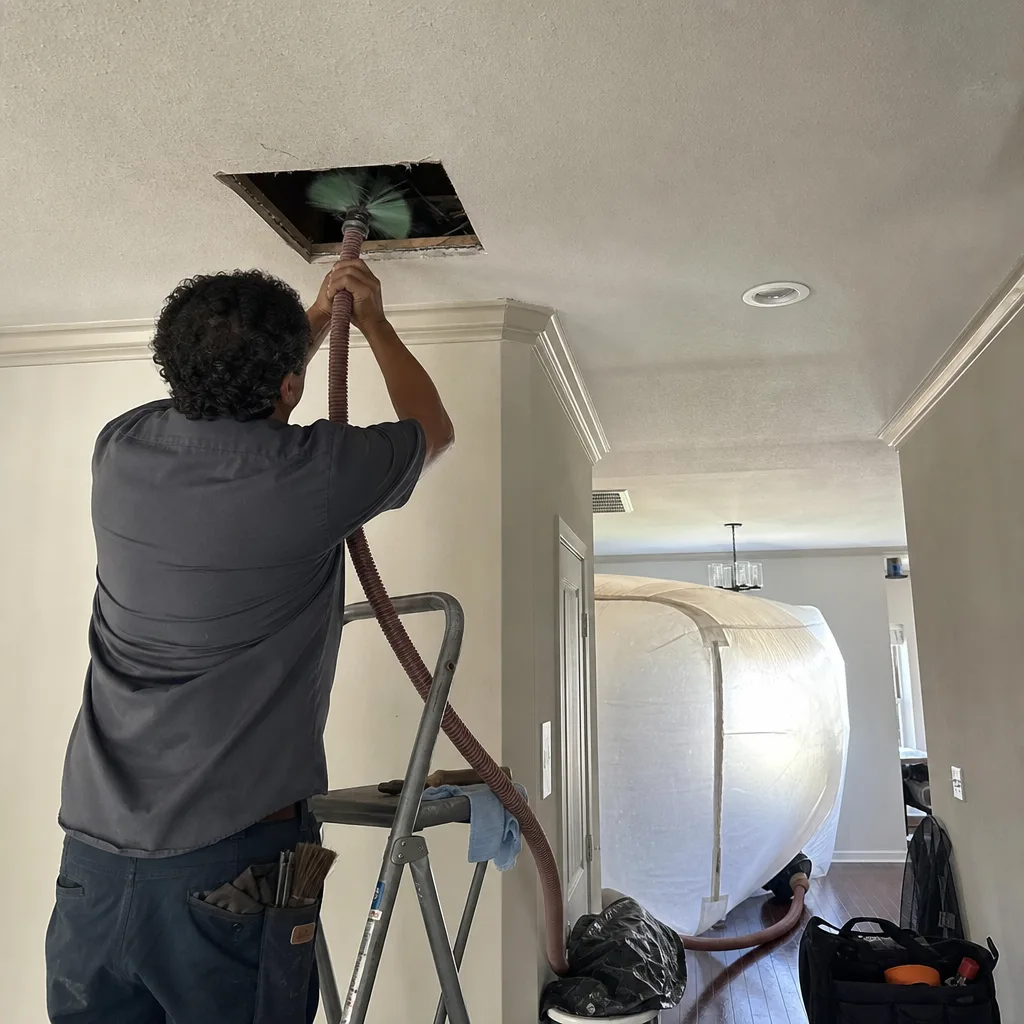
CleanRun operates under the H.A.V.E.N. Standard on every job, which is worth naming plainly here because supply duct work in particular is an area where the industry has a history of cutting corners that customers can’t see.
Haven Standard Clause 3 – Verified Crews – means every technician who enters your home is background-checked, uniformed, and identified by name before arrival. That’s not a marketing claim; it’s an operational requirement. Under Clause 1, the written price exists before work begins – not after the system is opened and a “discovery” is cited to justify a price increase. The 365-Day Done Right Promise is written on your job document: if a supply run was not cleaned to the documented standard, CleanRun returns and corrects it at no additional cost.
The photo record is the mechanism that makes these promises checkable. A before photo shows debris in a run. An after photo shows the same run cleared. If an after photo looks like the before photo, that’s a failure with a paper trail – and the 365-Day Promise means that paper trail belongs to you, not to a manager’s discretion.
Since 2013, that’s been the operating standard on every job CleanRun has run in Fort Worth. It’s also why the home page doesn’t carry urgency language or limited-time offers – the work either holds up to the photo record or it doesn’t.
FAQs – Supply Duct Cleaning in Fort Worth
How much does supply duct cleaning cost in Fort Worth?
How Much Does Air Duct Cleaning Cost in Fort Worth, TX? (2026 Price Guide): supply duct cleaning typically runs between $180 and $420, depending on the number of supply runs, duct material, debris level at camera inspection, and access conditions in the home. A written price is provided before any work begins – that’s a non-negotiable part of how CleanRun operates, not a promotional offer. Call (817) 520-8797 and a live person will schedule an in-home written estimate at no charge.
Is supply duct cleaning different from return duct cleaning?
Yes, and the difference matters mechanically. Supply ducts carry conditioned air from the HVAC system outward to each room under positive pressure, so debris inside them moves toward the living space during each run cycle. Return ducts pull room air back toward the filter and air handler – debris there tends to migrate toward the filter rather than outward. Both sides benefit from cleaning, but supply ducts get priority attention when a homeowner notices dust discharge at registers or uneven room temperatures, because those symptoms point to the supply side specifically.
How long does supply duct cleaning take for a typical Fort Worth home?
A typical Fort Worth home with 10-16 supply runs takes two to three hours when supply duct cleaning is done as a standalone service, including pre-cleaning camera inspection, negative-pressure setup, mechanical agitation through each run, register cleaning, and post-cleaning camera documentation. Larger homes with 20-plus runs, dual systems, or difficult attic access run three to five hours. The written scope provided before work starts will include a time estimate for your specific home’s configuration.
Can supply duct cleaning be done the same day I call?
Same-day service is available in Fort Worth depending on schedule availability – call (817) 520-8797 and a live person will confirm what’s open. The same-day timeline doesn’t change the process: a written price is still prepared and provided before work begins, and the photo record is still completed before the technician leaves. There are no shortened versions of the job for faster slots.
Key Takeaways
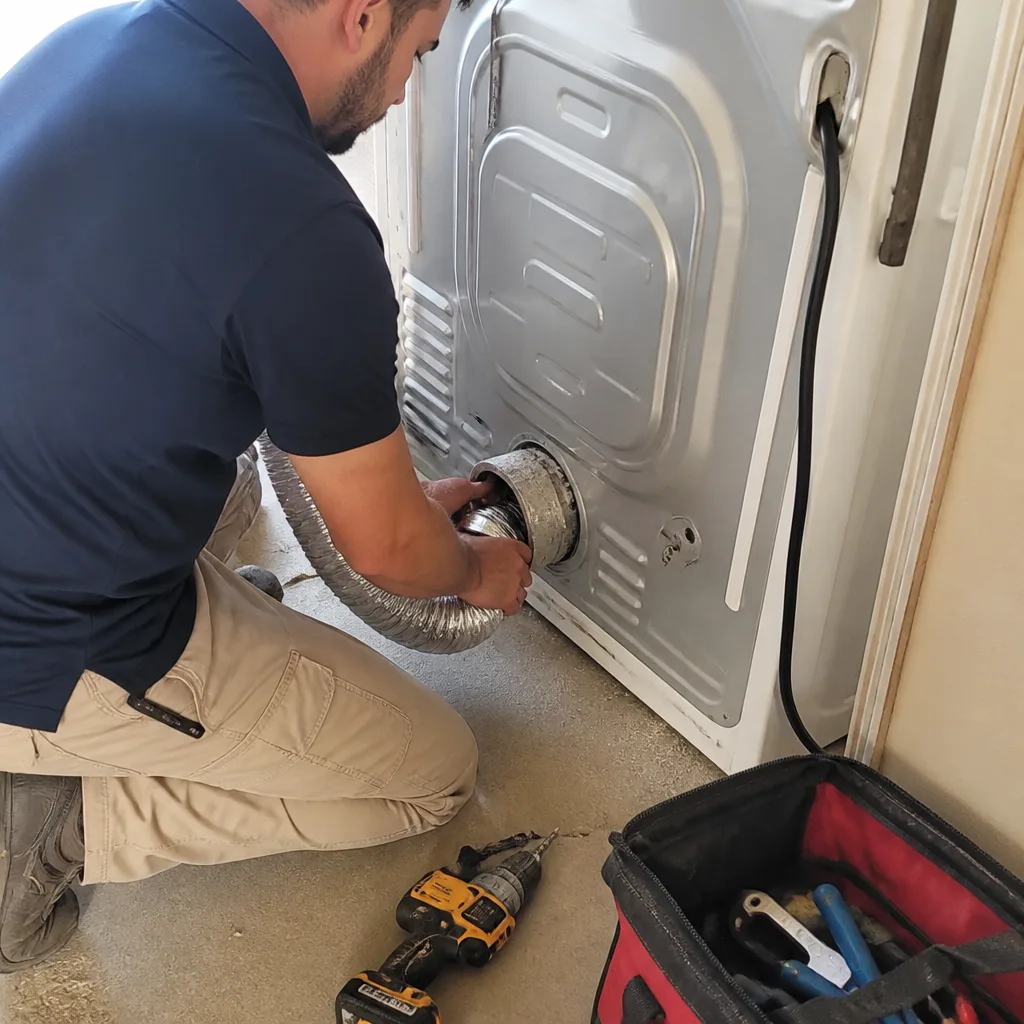
- Supply ducts carry pressurized, conditioned air directly into your living space – debris inside them moves toward the room, not toward the filter.
- Fort Worth homes, especially those built before 2000 in neighborhoods like Wedgwood, Ridglea Hills, and Como, frequently have original supply ductwork that has never been professionally inspected or cleaned.
- CleanRun photographs every supply run before and after cleaning – the photo record is a standard deliverable, not an add-on.
- Written price before work starts, always. Haven Standard Clause 1 has no exceptions.
- The 365-Day Done Right Promise is written on your job document and means CleanRun returns and corrects any work that doesn’t meet the documented standard – at no additional cost.
- Pricing for supply duct cleaning in Fort Worth runs $180-$420 depending on run count, duct type, and condition found at inspection.
- Equipment used includes trade-recognized brands – Rotobrush for mechanical agitation, Nikro for negative-pressure collection – tools you can look up independently before agreeing to a price.
Schedule Your Supply Duct Cleaning in Fort Worth
If you’re seeing dust at your registers, dealing with rooms that won’t cool or heat evenly, or simply haven’t had the supply side of your system inspected since you moved in, a camera inspection is the right place to start. CleanRun will photograph what’s inside, put a written price in front of you, and let you decide whether the work makes sense – no pressure, no discovery pricing after panels come off.
Call (817) 520-8797 to schedule a free written estimate for supply duct cleaning in Fort Worth. A live person answers. Tomas Reyes and the CleanRun team have been doing this work in Fort Worth since 2013, and the photo record from every job speaks for itself.
Written by Tomas Reyes, Owner at CleanRun Air Duct Cleaning Fort Worth, serving Fort Worth.