
Last updated September 23, 2026
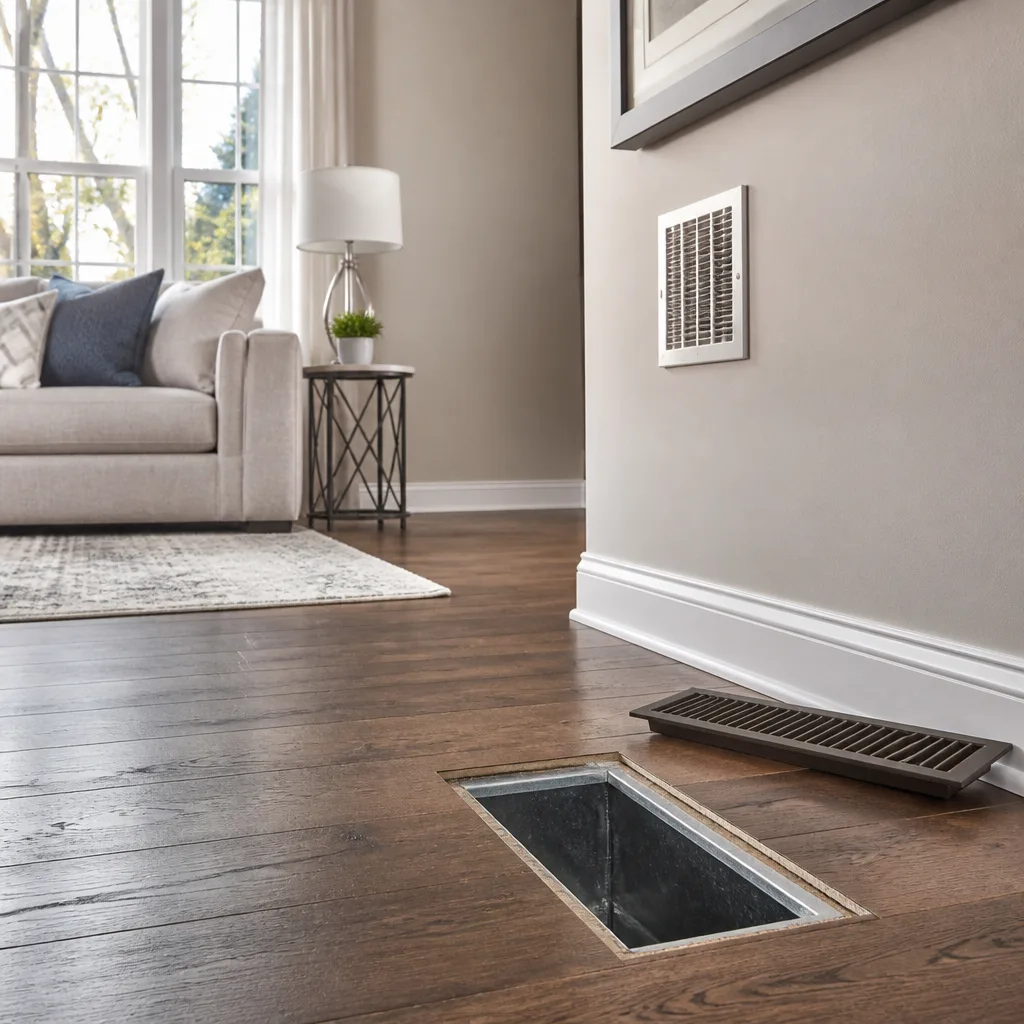
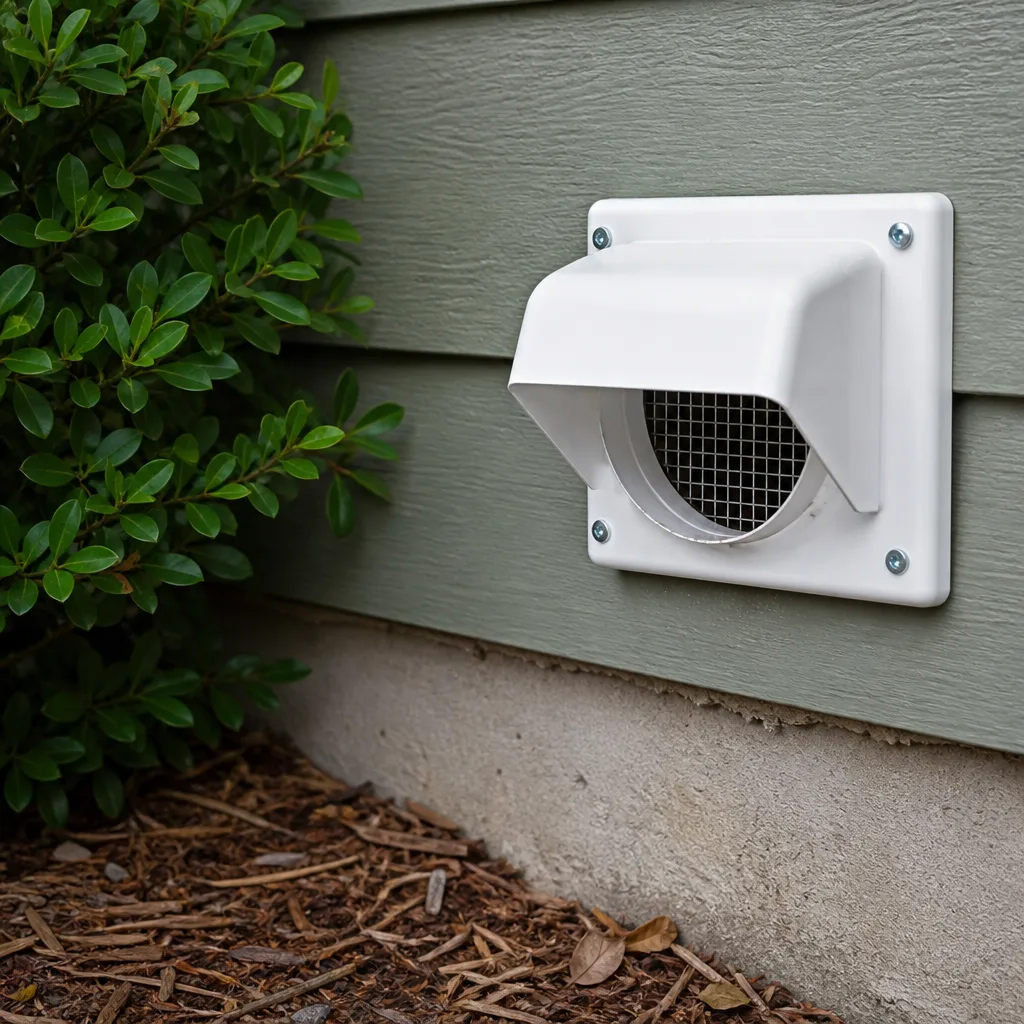
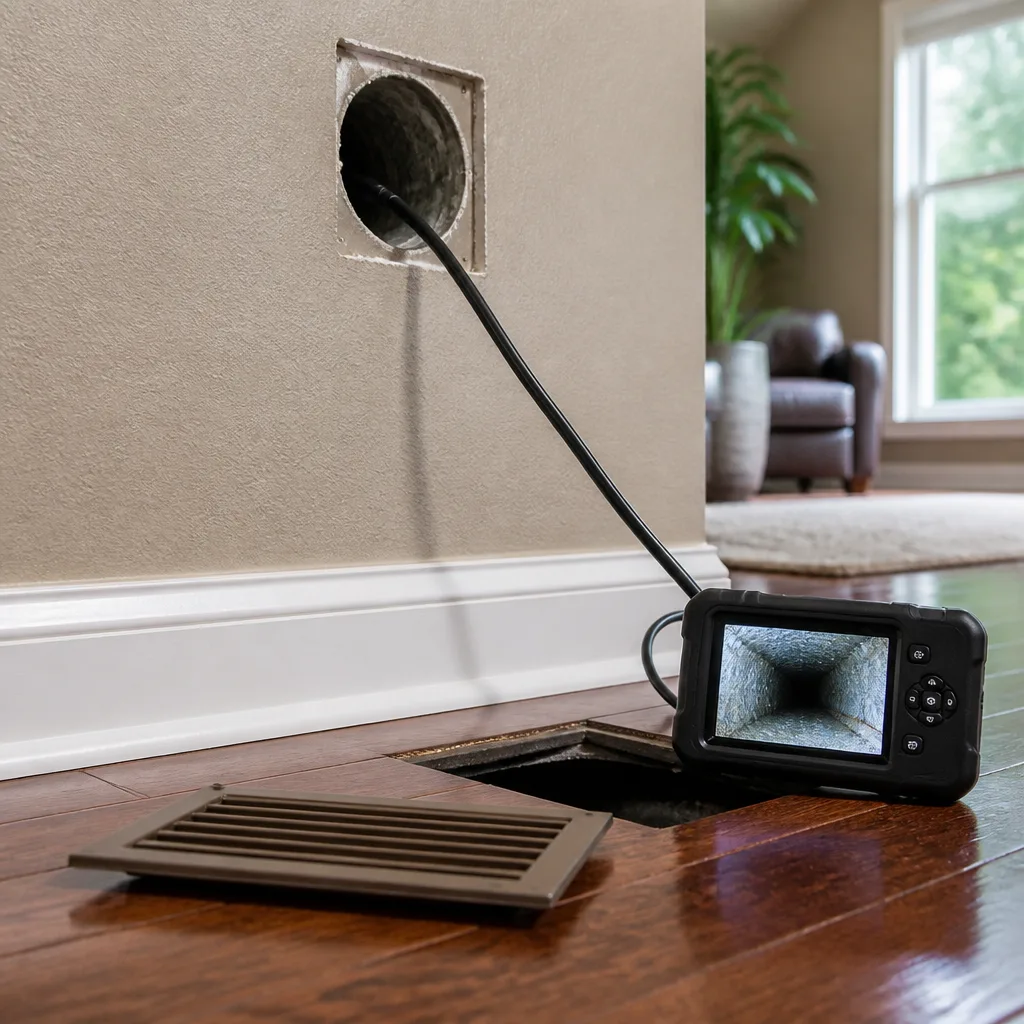
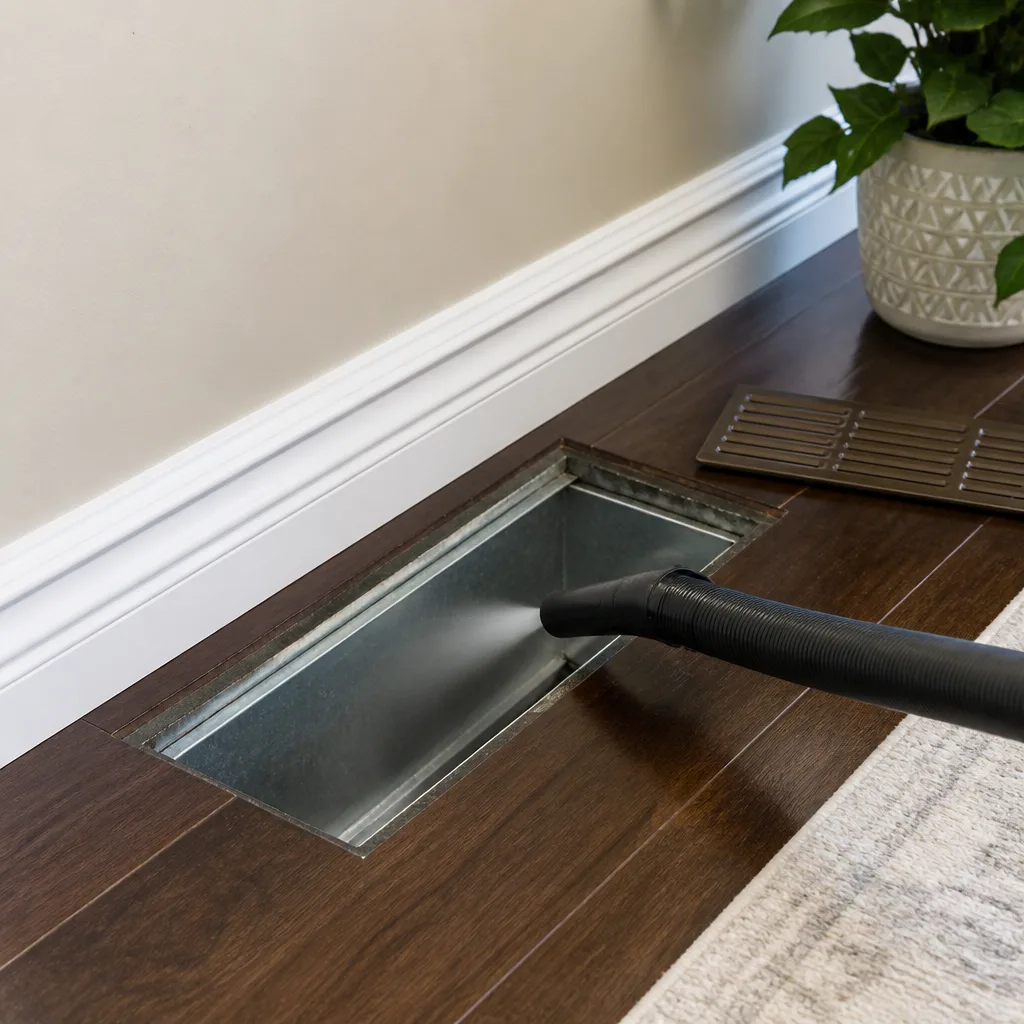
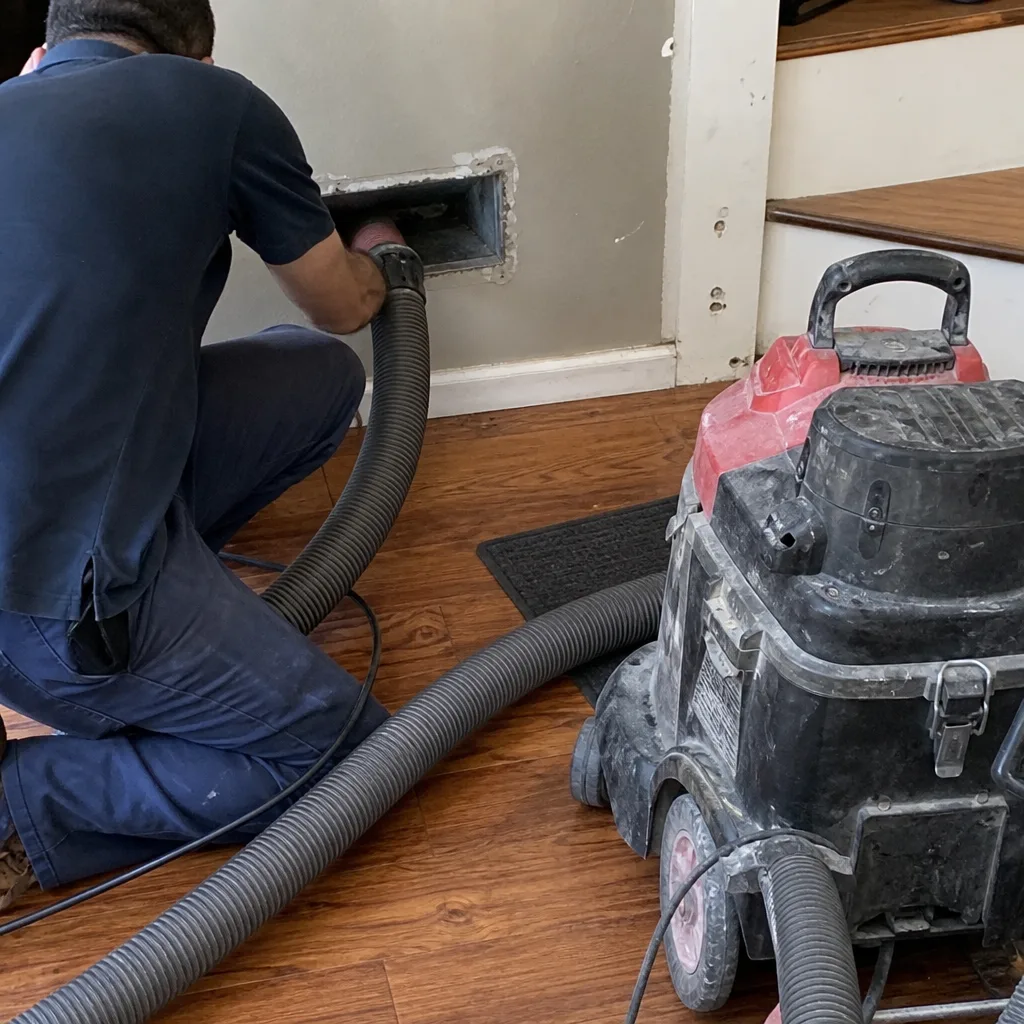
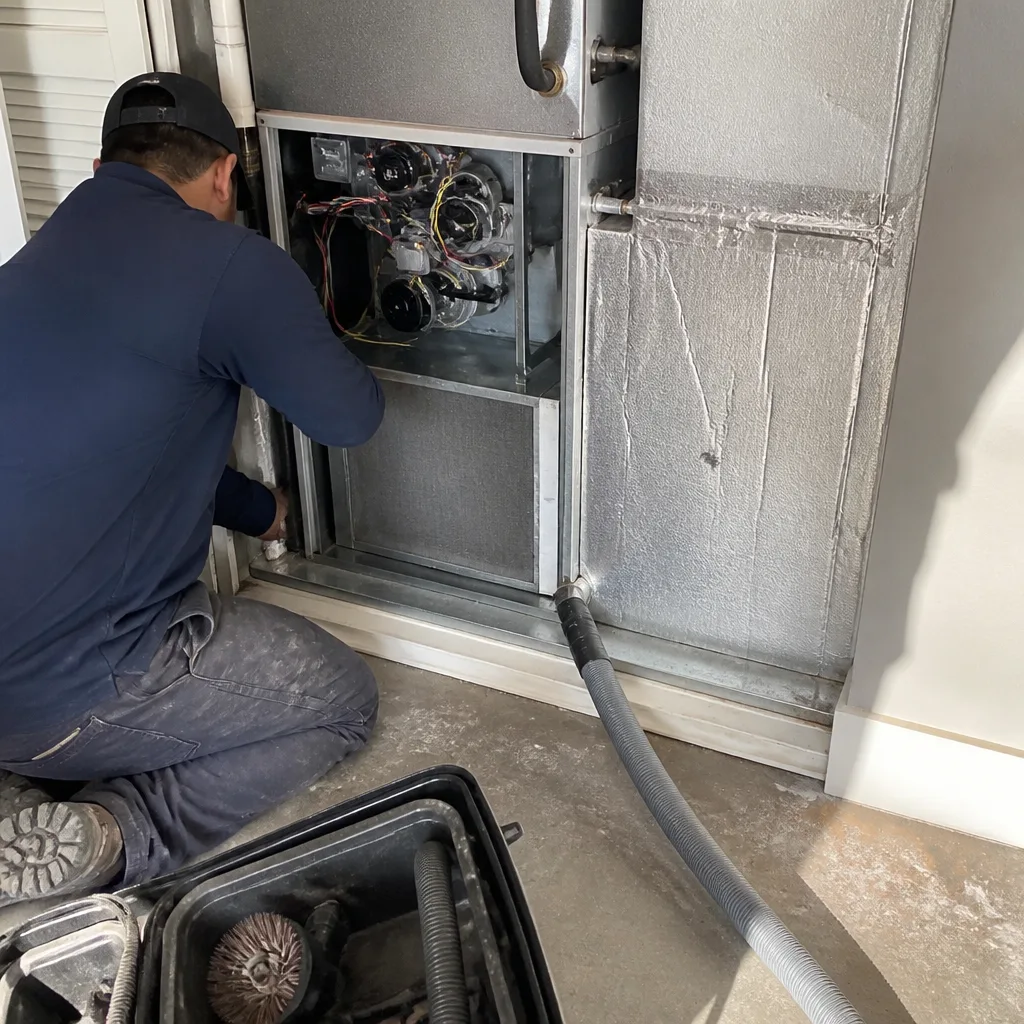
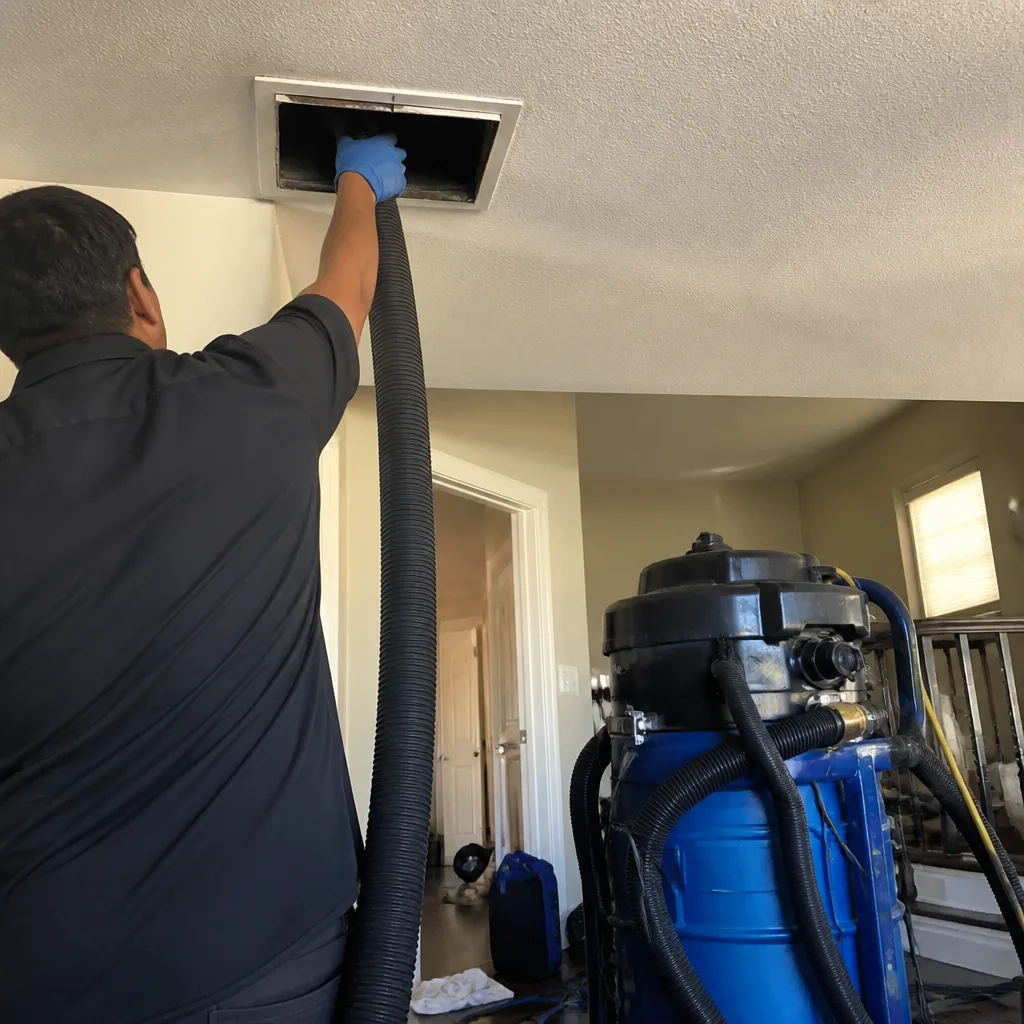
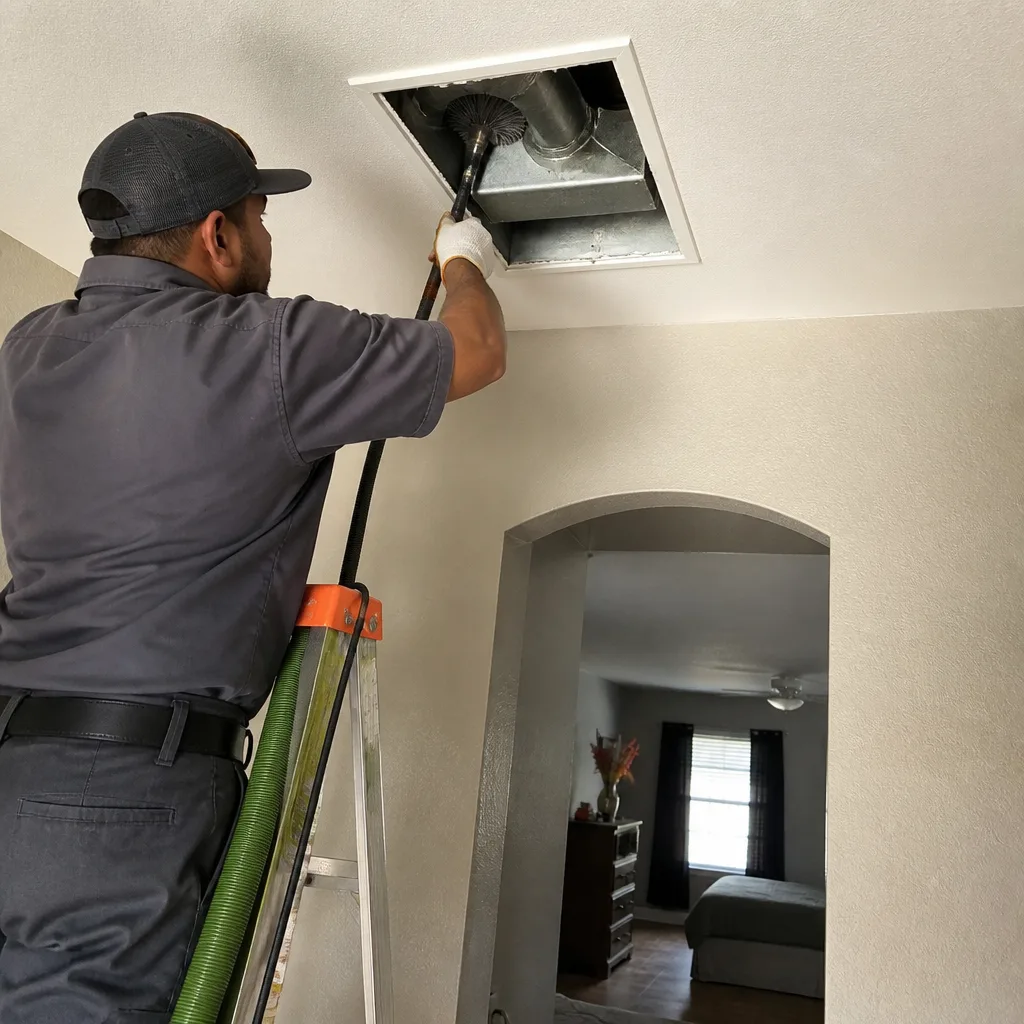
Whole-system duct and dryer vent check with before-and-after photos - you see exactly what came out of your vents
That "$99 whole-house special" is a bait ad - the real number appears once they are in your hallway, or the "clean" is a shop-vac at the register. We photograph the inside of your ducts before and after instead.
 Before
 After
After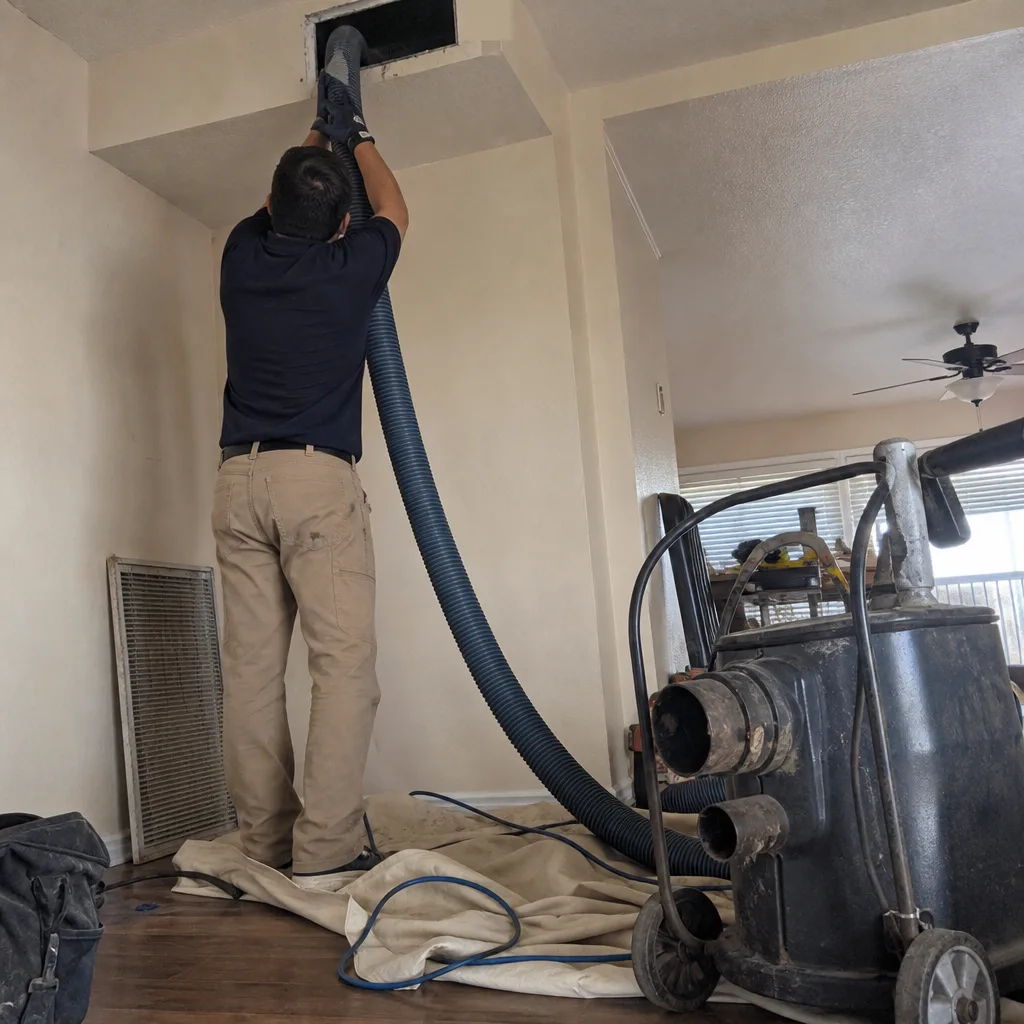 Before
 After
After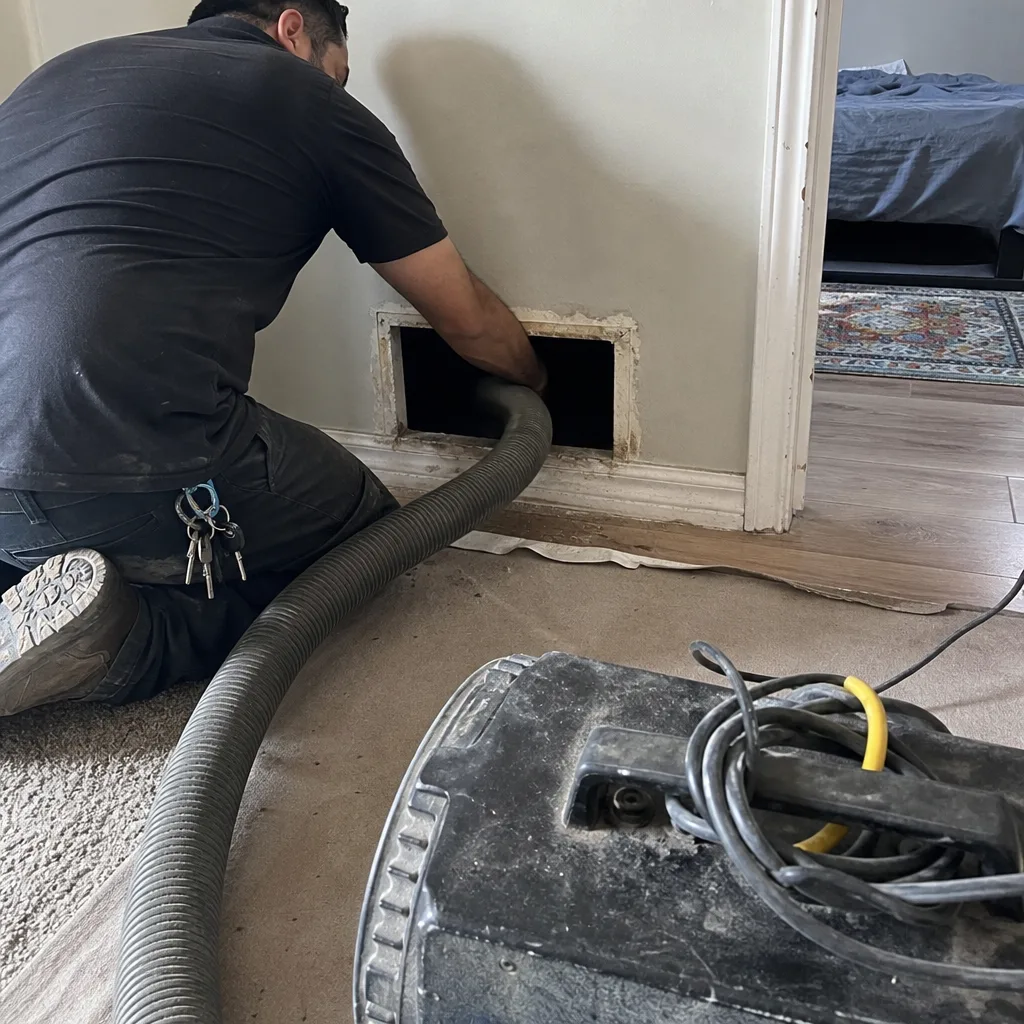 Before
 After
AfterAir Duct Cleaning Maintenance Checklist for Fort Worth Homeowners
Most duct maintenance checklists tell you to change your filter regularly and call it done. That advice ignores the fact that a clogged flex duct connection 30 feet from your air handler causes more energy loss than a dirty filter ever will. In Fort Worth, where summer attic temperatures routinely climb past 130°F and winter cold snaps force systems to cycle hard, the real problems hide in specific mechanical failure points that a filter change cannot touch. This checklist is built around what a technician’s camera actually finds inside Fort Worth homes, organized by location so you inspect what matters in the order that matters.
Quick Answer
A proper Air Duct Cleaning maintenance checklist for Fort Worth homeowners covers five zones: the air handler cabinet, main trunk line, branch runs, flex duct connections, and supply and return registers. Inspect visible components yourself every 90 days during peak cooling season; schedule a professional camera inspection with pressure-drop testing every 2-3 years for homes built 2015-2025, or every 18-24 months for older Fort Worth inventory with original ductwork.
Table of Contents
- The Five Inspection Zones Every Fort Worth Homeowner Should Know
- What You Can Check Yourself vs. What Requires Professional Equipment
- Fort Worth-Specific Maintenance Triggers
- How Often to Inspect: A Schedule Based on Home Age and Usage
- Why a Pressure Drop Test Outperforms Visual Inspection Alone
- Professional Equipment and What It Actually Does
- Common Mistakes to Avoid
- When to Call a Professional
- Frequently Asked Questions
BeforeAfterThe Five Inspection Zones Every Fort Worth Homeowner Should Know
Ductwork is not a single system. It is five interconnected zones, and each fails differently. Our crews at CleanRun Air Duct Cleaning Fort Worth home have documented photo records from over 52,000 homes since 2013, and the pattern is consistent: homeowners who understand the zones catch problems early, before a $200 repair becomes a $2,400 replacement.
Zone 1: Air Handler Cabinet
The cabinet houses your blower motor, evaporator coil, and filter rack. In Fort Worth, this is where we find the most preventable damage. The evaporator coil sits in a dark, wet environment for six months of heavy cooling. Dust that bypasses the filter cakes onto the coil fins, reducing airflow and forcing the blower to draw more amperage. We have measured blower motors pulling 25% more current than spec due to coil restriction alone.
What to check:
- Filter fit: No gaps between the filter and the rack. A 1-inch gap lets unfiltered air bypass entirely.
- Coil visibility: If you can see the coil through the access panel, look for gray fuzz or dark buildup on the fins. Do not touch the fins; they bend easily.
- Condensate drain: The PVC line exiting the cabinet should flow freely. A clogged drain in July means water in the secondary pan, then the ceiling.
- Blower wheel: With power off, shine a flashlight at the wheel blades. Heavy dust buildup throws the wheel out of balance, causing bearing wear and vibration noise.
Zone 2: Main Trunk Line
The trunk is the large rectangular or round duct that distributes air from the handler to the branch runs. In Fort Worth’s 1980s and 1990s housing stock, we see trunks made of fiberglass duct board that degrades where the foil facing separates. In newer construction, sheet metal trunks fail at the seams where sealant ages out.
What to check:
- Accessible seams: In the attic or crawl space, look for disconnected joints or tape that has peeled. Silver duct tape is not rated for this application; foil-backed tape or mastic should be visible.
- Insulation integrity: The trunk should be fully wrapped. Gaps expose metal to attic air, causing condensation in summer and heat loss in winter.
- Sagging: A trunk that dips between supports creates low points where moisture collects.
Zone 3: Branch Runs
Branch runs are the smaller ducts, typically 6-inch diameter, that carry air to individual rooms. In Fort Worth’s Westover Hills, Mira Vista, and similar neighborhoods with larger homes, branch runs often exceed 40 feet to reach distant bedrooms. Long runs amplify any restriction.
What to check:
- Visible damage in accessible areas: Kinks, crushing from storage items, or rodent gnawing at the insulation.
- Room-to-room temperature variation: A bedroom that runs 4°F warmer than the thermostat setting in August suggests a branch restriction or leak.
Zone 4: Flex Duct Connections
This is the highest-failure zone we document. Flex duct, the insulated flexible tubing common in Fort Worth construction since 2000, connects to trunk lines with metal collars and zip ties or band clamps. The collar connection is the failure point. We have photographed hundreds of instances where the flex has pulled off the collar entirely, blowing conditioned air into the attic. The homeowner only notices the high electric bill.
What to check:
- Collar security: Where visible, the flex should be fully seated on the collar with a tight clamp. No gaps, no sagging away from the connection.
- Kinking: Flex duct should follow gentle bends. Sharp 90-degree turns collapse the inner liner and restrict airflow by 30% or more.
- Support spacing: Flex should be supported every 4-5 feet. Unsupported spans sag and create restrictions.
Zone 5: Supply and Return Registers
The visible endpoints. Homeowners often overlook that registers are part of the system, not just decorative covers.
What to check:
- Secure mounting: Loose registers indicate a gap between the duct boot and the drywall, bypassing conditioned air into the wall cavity.
- Blade operation: Adjustable blades should move freely. Stuck blades in closed position starve rooms of airflow.
- Return grille filter: If your system has a filter at the return grille in addition to the handler filter, it needs matching replacement schedule. Double-filtering with mismatched MERV ratings can over-restrict airflow.
What You Can Check Yourself vs. What Requires Professional Equipment
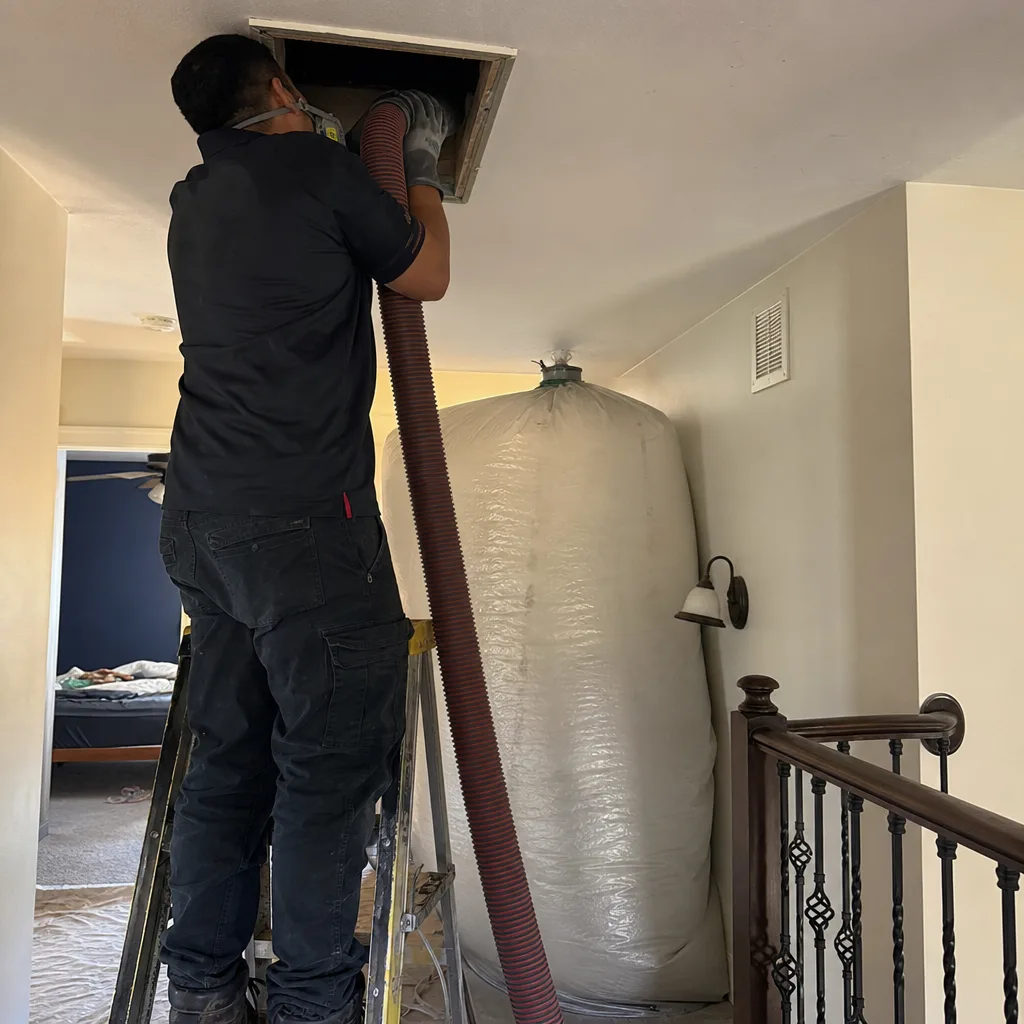
Honest assessment matters. We have met Fort Worth homeowners who tore open sealed ductwork trying to inspect inside, and others who paid for professional camera work on components they could have checked with a flashlight. Here is the dividing line.
Homeowner-Level Inspection
These checks require no special tools and carry no risk of system damage:
- Filter condition and fit: Remove, hold to light. If you cannot see through it, replace it. Check the size printed on the frame against the rack.
- Register airflow: Hold a tissue near each supply register with the blower running. Weak flow or no flow indicates a restriction or leak upstream.
- Visible ductwork in attic or crawl space: Look for obvious disconnections, crushed flex, or missing insulation. Do not move ducts; note location and call.
- Thermostat temperature verification: A $15 digital thermometer at the register should read within 15-20°F of the return air temperature during cooling. Larger gaps indicate coil or airflow problems.
- Condensate line flow: Pour a cup of water into the drain pan access. It should exit the exterior drain within 30 seconds.
Professional-Level Inspection
These require equipment and training that justify the service call:
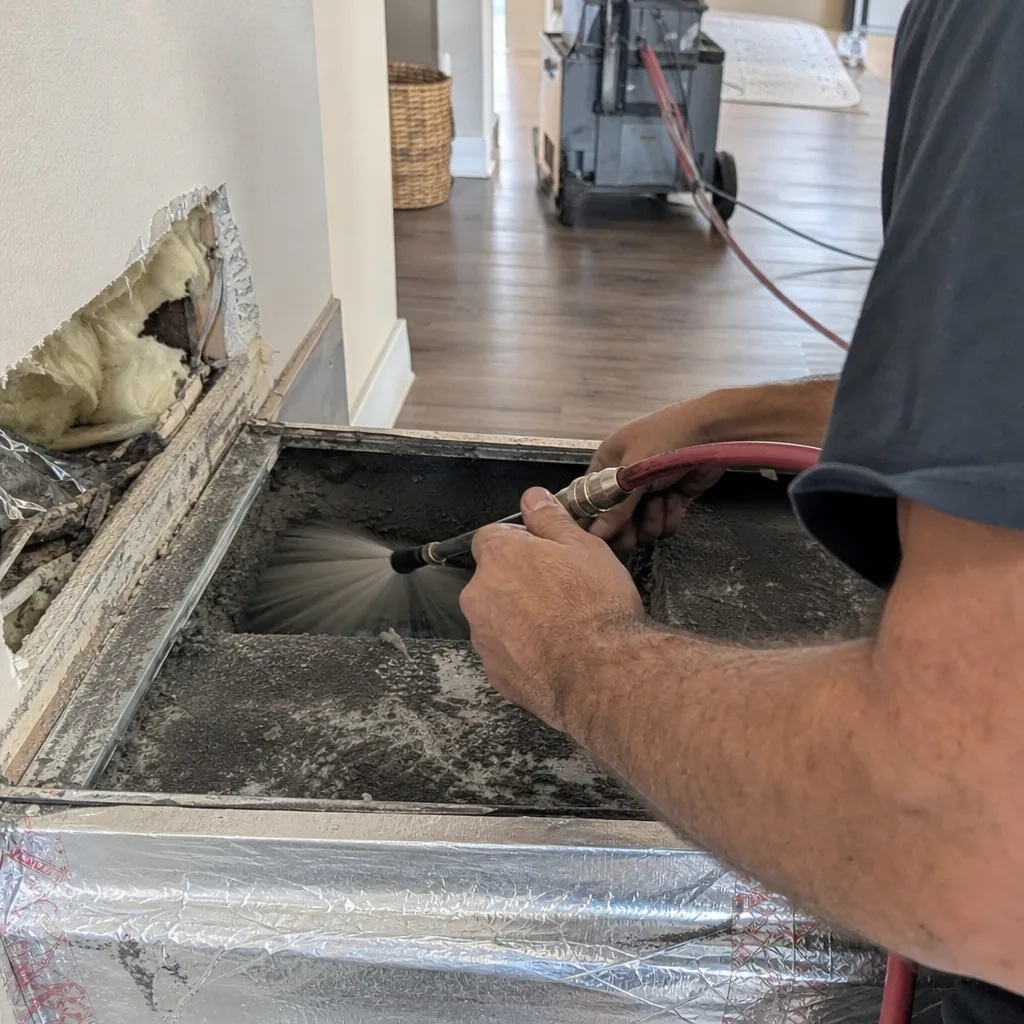
- Camera inspection of interior duct runs: A borescope camera, typically from Rotobrush or Abatement Technologies systems, enters the ductwork through register openings or access ports. It documents debris buildup, mold growth, or construction debris that no flashlight can reach.
- Pressure drop testing: A manometer measures static pressure across the system. We explain this fully in the section below.
- Leak detection with theatrical fog or blower door: Pressurized fog reveals leaks that are invisible to the eye, especially at flex connections and trunk seams.
- Evaporator coil cleaning: Requires refrigerant recovery, coil removal, and foaming cleaner application. DIY attempts bend fins and void warranties.
- Duct sealing with mastic or aerosol: Mastic application to trunk seams requires access and technique. Aerosol sealing, using equipment from manufacturers like Abatement Technologies, pressurizes the system with sealant particles that bond to leak edges.
The Air Duct Cleaning in Fort Worth page details what professional service includes when self-inspection reveals concerns.
Fort Worth-Specific Maintenance Triggers
Climate and local construction practices create maintenance needs that generic checklists miss; for more guides & resources, see our blog. Fort Worth sits in Tornado Alley with specific weather patterns and a building boom that introduced particular ductwork vulnerabilities.
Post-Hail Storm Attic Inspection
Fort Worth sees hail significant enough to damage roofs 2-3 times per decade. After any hail event that warrants a roof inspection, check accessible ductwork. Hail penetrations in roof decking can admit water that pools on duct insulation, saturating it and collapsing the vapor barrier. We have found trunk lines in Keller, Southlake, and West Fort Worth with waterlogged insulation weighing 40 pounds per linear foot, pulling seams apart. The homeowner smelled musty air for months before calling.
Trigger action: After any hail event with roof damage, visually inspect attic ductwork for wet insulation or new gaps. If the roof needed replacement, schedule a camera inspection of the trunk line within 60 days.
Post-Renovation Debris Check
Fort Worth’s inner suburbs, especially neighborhoods like Fairmount, Ryan Place, and Berkeley Place, have seen extensive renovation of 1920s-1950s homes. Even in newer construction, room additions and kitchen remodels generate drywall dust, insulation particles, and sawdust that enters the duct system if registers were not sealed during work. We have photographed renovation debris packed 4 inches deep at the first elbow downstream of a remodeled kitchen.
Trigger action: After any renovation with active ductwork, replace filters immediately and run the system for 48 hours. Then inspect the filter. If it loads faster than normal, schedule a camera inspection before the debris migrates deeper into the system.
Spring Startup After Sealed-Up Winter
Fort Worth winters are mild enough that many homeowners run heat minimally and keep windows sealed for months. The system sits stagnant. Dust settles. In spring, the first cooling cycle stirs everything. We see a 40% increase in service calls the first two weeks of May, as homeowners notice odors or reduced airflow they did not experience the previous fall.
Trigger action: Before the first 85°F day, replace the filter, verify condensate drain flow, and run the system in fan-only mode for 2 hours to circulate air before cooling demand peaks. If you notice musty odor or visible dust from registers, that is not normal; it indicates buildup that needs professional removal. See Air Duct Cleaning Warning Signs: A Fort Worth Homeowner’s Reference Guide for additional indicators.
New Construction First-Year Inspection
Fort Worth’s 2015-2025 building boom produced thousands of homes with ductwork installed before final cleaning. Construction debris in new ducts is so common that we have documented it in roughly 60% of first-year inspections. Drywall mud, wood scraps, and even fast-food wrappers have appeared in our photo records.
Trigger action: If your Fort Worth home was built or completed within the past 24 months, assume the ducts need inspection regardless of occupancy date. The builder’s “final clean” does not include duct interior.
How Often to Inspect: A Schedule Based on Home Age and Usage
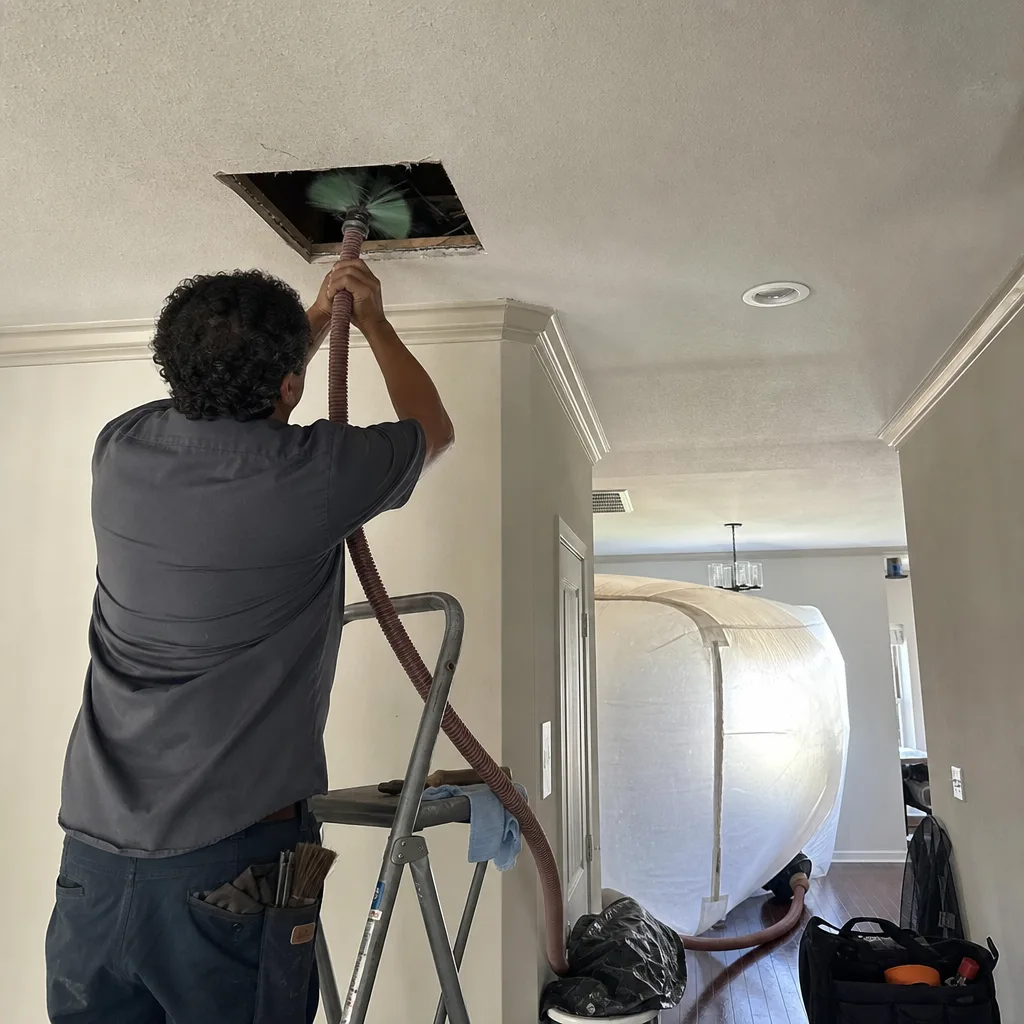
Generic “annual inspection” advice wastes money for some homeowners and misses problems for others. Our documentation from 52,000+ homes supports a tiered schedule.
| Home Profile | Homeowner Self-Check | Professional Camera + Pressure Test |
|---|---|---|
| New construction (0-2 years) | Quarterly | 12-18 months post-occupancy |
| 2015-2025 build, no renovations | Quarterly | Every 2-3 years |
| 1990-2014 build, original ductwork | Monthly in peak season | Every 18-24 months |
| Pre-1990 build, any ductwork age | Monthly in peak season | Annually |
| Post-renovation or post-water damage | Weekly for 4 weeks, then monthly | Within 60 days, then annually for 2 years |
| Home with indoor pets (shedding breeds) | Monthly | Every 18 months |
| Home with allergy/respiratory concerns | Monthly | Annually |
Quarterly self-checks take 15 minutes. The schedule above reflects what we have documented: newer flex duct systems fail at connections, older metal systems fail at seams and insulation, and renovated systems fail from debris migration. Adjust based on what your own inspections reveal. If you find dust loading faster than the table suggests, tighten the schedule.
Why a Pressure Drop Test Outperforms Visual Inspection Alone
A visual inspection, even with a camera, shows you what the duct interior looks like. It does not tell you how the system performs. A pressure drop test measures what actually matters: whether air moves through the ductwork efficiently or fights restriction and leakage.
What the Test Measures
A technician places a manometer, a digital pressure gauge, at strategic points. The key measurement is static pressure, expressed in inches of water column (in. w.c.). A residential system in Fort Worth should typically operate at 0.5 in. w.c. or less total external static pressure. Higher readings indicate restriction or blockage.
We have photographed ducts that looked clean through a camera but measured 0.8 in. w.c. The camera missed a flex duct that had been crushed by a storage box placed in the attic years earlier. The homeowner had accepted uneven cooling as normal until the pressure test quantified the problem.
How It Finds Leaks Cameras Miss
Pressure testing pressurizes the duct system and measures how fast pressure decays. A tight system holds pressure. A leaky system, common in Fort Worth homes with original 1990s duct tape seals, bleeds pressure into the attic. The test locates the leak zone without visual access. We then use fog or acoustic detection to pinpoint the exact location.
The value is documentation. A pressure test before and after sealing work proves improvement in measurable terms. Our photo records include the manometer readings as part of the standard job documentation, so the homeowner has written evidence of system performance, not just a verbal assurance that “it’s better now.”
For HVAC Cleaning in Fort Worth that includes full system diagnostics, pressure testing is standard protocol on every job.
Professional Equipment and What It Actually Does
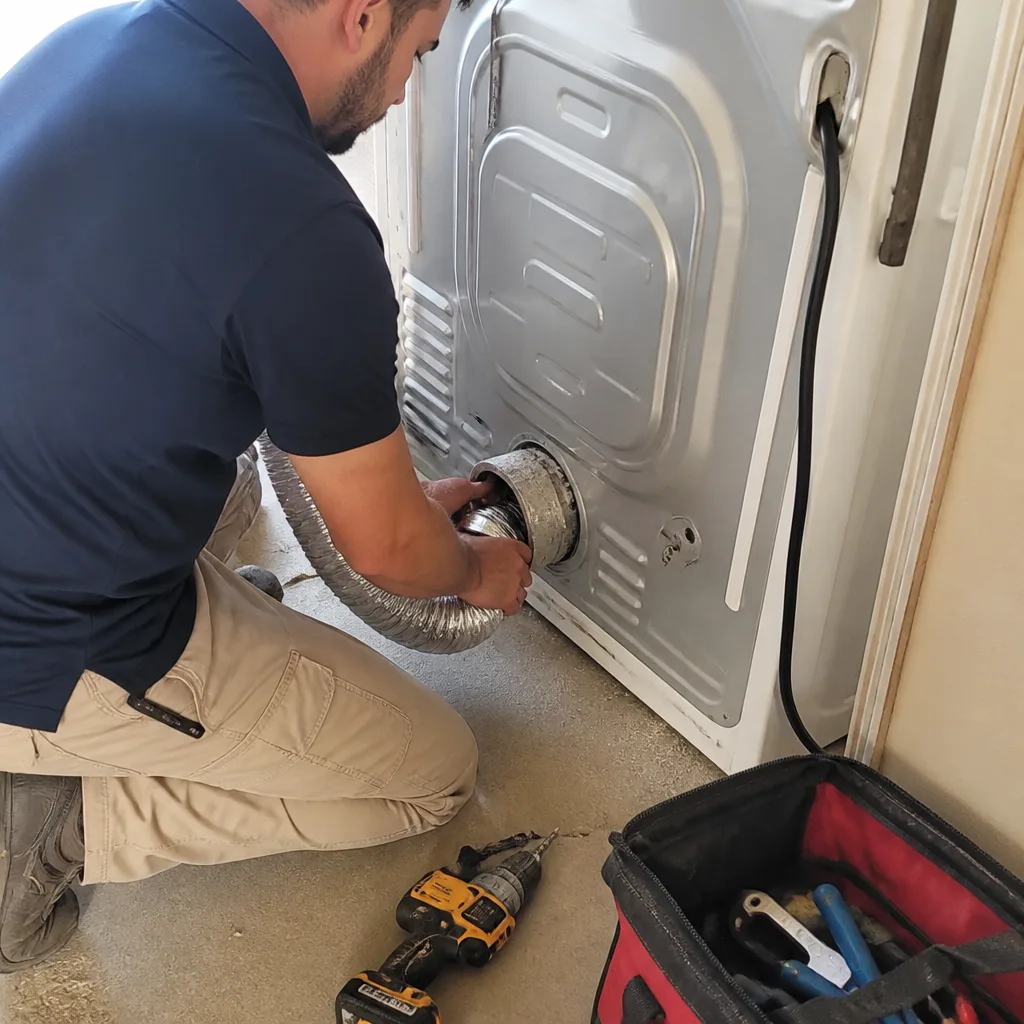
Homeowners should know what equipment enters their home and why. CleanRun’s equipment roster includes trade-recognized brands: Rotobrush, Nikro, Abatement Technologies, Honeywell, Aprilaire, and Guardsman. We name them so customers can verify specifications independently. Here is what specific equipment does in a maintenance context.
Rotobrush Brush-Beast and Similar Systems
A powered rotary brush system with a vacuum collar. The brush agitates debris from duct interior walls while negative-pressure extraction, meaning suction that pulls air and debris out of the duct, collects it in a HEPA-filtered containment. The brush size matches duct diameter. In our Fort Worth work, we use multiple brush heads for the 14-inch trunk and the 6-inch branches.
Nikro Negative Air Machines
High-volume HEPA-filtered vacuums that create suction at 2,000+ CFM. These connect to the duct system through an access port and pull air through the entire network during cleaning. The HEPA filtration means captured particles do not re-enter the home.
Abatement Technologies Aerosol Sealant Systems
Used for leak sealing without physical access to every joint. The system pressurizes ducts with sealant particles that bond to leak edges. Independent testing shows 90%+ leakage reduction in typical residential systems. We document before-and-after pressure readings for every aerosol sealing job.
Aprilaire and Honeywell Media Air Cleaners
Whole-house filtration upgrades that mount at the air handler. Unlike 1-inch pleated filters, these 4-inch or 5-inch media filters maintain airflow longer and capture smaller particles. For Fort Worth homes with allergy concerns or high dust load, we recommend them as part of maintenance planning, not as a replacement for duct cleaning.
Guardsman UV-C Systems
Ultraviolet lamps mounted at the evaporator coil or in the supply plenum. UV-C light suppresses microbial growth on wet surfaces. They do not clean debris from ducts and are not a substitute for mechanical cleaning. We install them where coil mold recurrence is documented.
The Dryer Vent Cleaning in Fort Worth page covers equipment specific to that service, which shares some brands but uses different configurations.
Common Mistakes to Avoid
- Assuming a clean filter means clean ducts. The filter protects the equipment. It does not prevent gradual dust accumulation in duct runs, especially in returns where no filter exists between the register and the trunk.
- Using the highest MERV filter available. A MERV 13 filter captures fine particles but can over-restrict airflow in systems with marginal blower capacity. Many Fort Worth homes built 2005-2015 have blowers that struggle with MERV 11 and above. Match filter to system spec, not to marketing claims.
- Ignoring the return side. Supply ducts push conditioned air to rooms. Return ducts pull air back. Returns run under negative pressure, meaning they suck attic air in through any leak. A leaky return pressurizes your attic with conditioned air and depressurizes your home, pulling in outdoor humidity and pollutants. We find more significant leaks on the return side than the supply side in Fort Worth homes.
- Sealing registers during renovation but not the return. Contractors often cover supply registers with plastic. They rarely seal return grilles. Renovation debris enters through returns, then distributes through the entire system when the blower runs.
- Waiting for symptoms. Musty odor, visible dust, or uneven cooling are late indicators. By the time these appear, the problem has typically existed for 18-24 months. Inspect on schedule, not on symptoms.
- Accepting per-vent pricing. This industry pricing model incentivizes superficial work. A system with 12 vents and 2 trunk lines needs complete service, not a per-vent calculation. CleanRun quotes one flat price per system, agreed in writing before work starts, under Haven Standard Clause 1.
- Skipping documentation. Any duct service should deliver photos, pressure readings, or both. Verbal reports without documentation cannot be verified or compared over time. Our Documented Photo Record on every visit exists precisely because we have seen too many homeowners pay for work with no proof it occurred.
When to Call a Professional
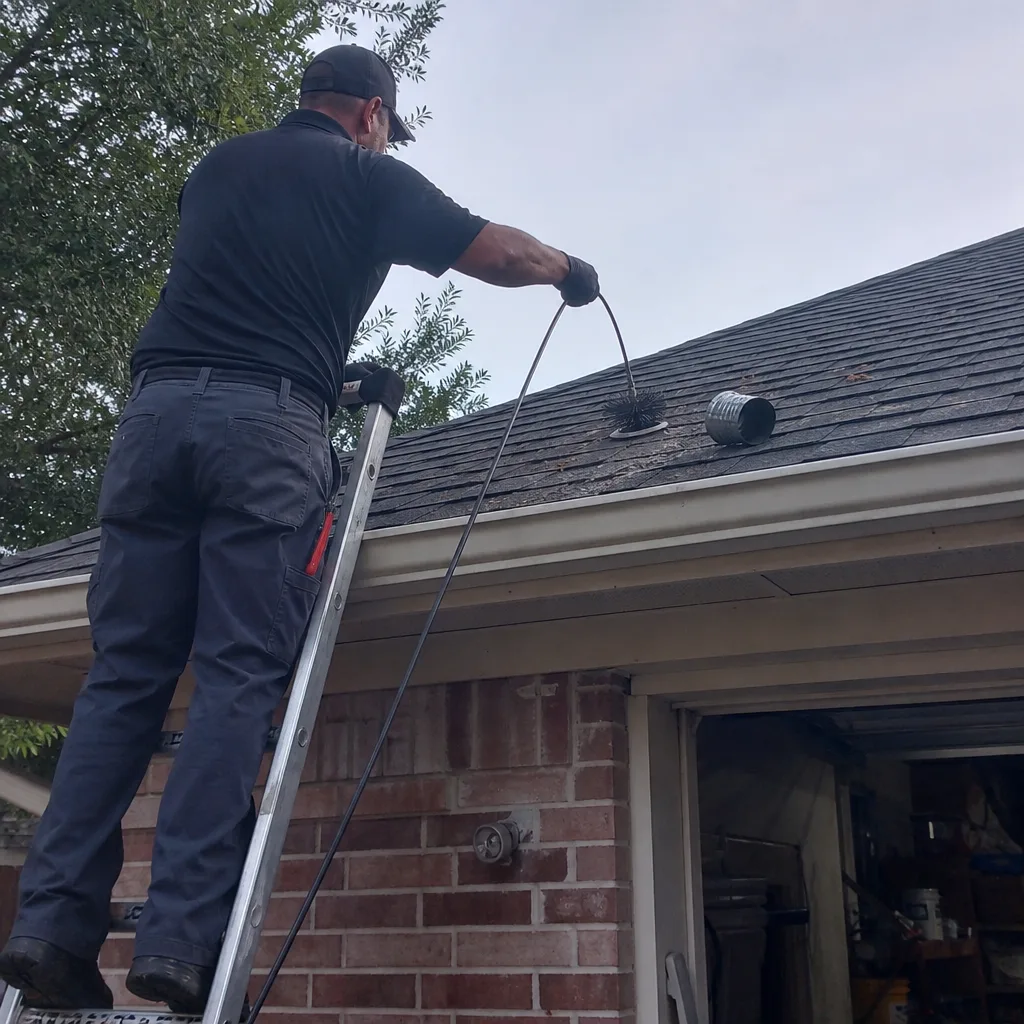
Call when self-inspection reveals any of the following: visible mold on duct interior surfaces, water staining on insulation, disconnected flex duct, temperature variations exceeding 5°F between rooms, or static pressure readings above 0.6 in. w.c. if you have access to a manometer. Also call after any event in the Fort Worth-specific triggers above: hail damage, renovation completion, or new construction occupancy. Be sure to review Air Duct Cleaning Permits, Codes & Inspections in TX: What You Need to Know before scheduling major work.
CleanRun Air Duct Cleaning Fort Worth offers free estimates in Fort Worth. Every estimate includes a written price before any work starts, every time, with no exceptions. Call (817) 520-8797 to schedule. All technicians are background-checked and uniformed under Haven Standard Clause 3: Verified Crews, and identified by name before arrival.
Frequently Asked Questions
Whole-system duct cleaning for a typical Fort Worth home ranges from $450 to $850 depending on system size, accessibility, and condition. Homes with multiple attic access points, extensive flex duct, or documented construction debris fall at the higher end. CleanRun delivers a written price before any work starts under Haven Standard Clause 1; there is no per-vent pricing or call-for-quote process. Call (817) 520-8797 for an exact written estimate at no cost.
The $79-$129 coupon model typically covers a brief vacuum at register openings, not full-system cleaning. The crew arrives, spends 45 minutes, and leaves. A proper service requires 3-4 hours for residential systems, uses powered brush systems and negative-pressure extraction, and includes access to trunk lines and branch runs. The cheap quote becomes expensive when the homeowner pays twice, or when incomplete work leaves debris that damages equipment. Ask for equipment specifics, time estimate, and documentation deliverables before comparing prices.
Demand a documented photo record showing the interior of every duct run before and after service. CleanRun includes this as standard on every job, delivered to the customer as part of the job record. Without photos, you have only the technician’s word. With photos, you have verifiable evidence that matches what you paid for.
For homes built 2015-2025 with no special risk factors, every 3-5 years with professional camera inspection every 2-3 years. For pre-2015 homes, every 2-3 years. For homes with pets, allergies, recent renovation, or post-water damage, every 18-24 months. Fort Worth’s pollen load and dust events justify the shorter end of national ranges.
You can maintain registers, replace filters, and inspect accessible components. You cannot safely or effectively clean interior duct runs without powered rotary equipment, negative-pressure containment, and camera verification. DIY attempts with shop vacuums and brush attachments typically redistribute debris and damage flex duct liners. The cost of professional service is lower than the cost of repairing self-inflicted damage.
The H.A.V.E.N. Standard is CleanRun’s operating framework: Honest Pricing, Accountable Work, Verified Crews, Evidence-Based Service, and No Exceptions. Every clause is backed in writing on every job. Haven Standard Clause 1 requires written price before work starts. Clause 3 requires background-checked, uniformed technicians identified by name. The 365-Day Done Right Promise extends accountability for a full year. It is not marketing language; it is the documented terms under which we operate.
The Bottom Line
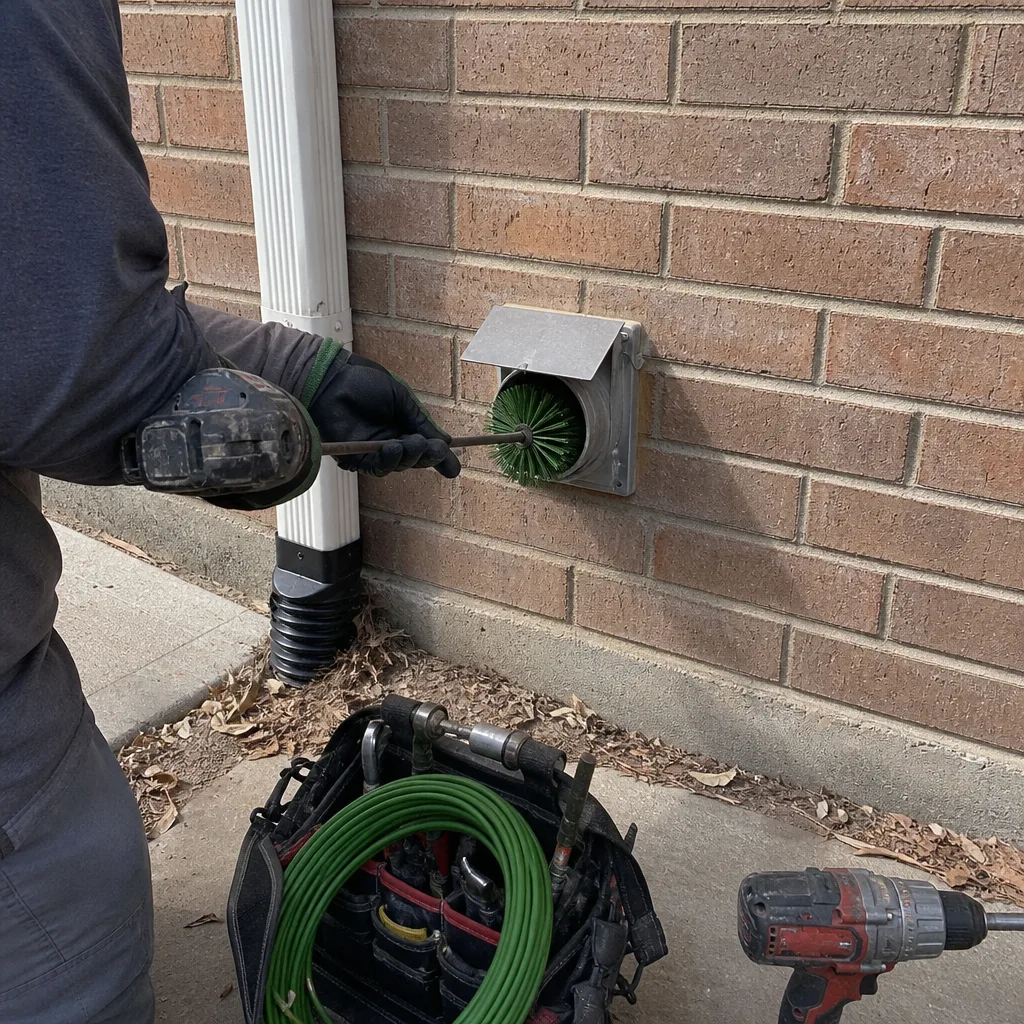
Effective duct maintenance in Fort Worth is not a calendar event. It is a targeted inspection of five specific zones, triggered by home age, local weather events, and observable symptoms, verified by pressure testing rather than guesswork. The homeowners who spend least on ductwork over time are those who inspect systematically, document findings, and address problems before they force equipment failure. Generic advice fails because it treats all homes identically; this checklist reflects what we have documented across 52,000+ homes since 2013, with equipment from Rotobrush, Abatement Technologies, and Aprilaire, and every job backed by written price and photo record.
Written by Tomas Reyes, Owner at CleanRun Air Duct Cleaning Fort Worth, serving Fort Worth since 2013.